Key takeaways
- The organization uses agentic AI to build agentic solutions, compressing deployments from months to days.
- AWS FDE focuses on business outcomes and leaves customers self-sufficient with AI.
- Customers worldwide, such as the Allen Institute, Cox Automotive, the NBA, the NFL, Ricoh, and Southwest Airlines are already working with AWS FDE teams.
Customers have moved past exploring what AI can do; they want to make it core to how they operate. They want to recreate their business processes with agentic AI built in so they can increase productivity and deliver AI-powered products. I have also heard loud and clear that many customers need expert AI engineers working directly with their teams to help them build and become AI-native organizations.
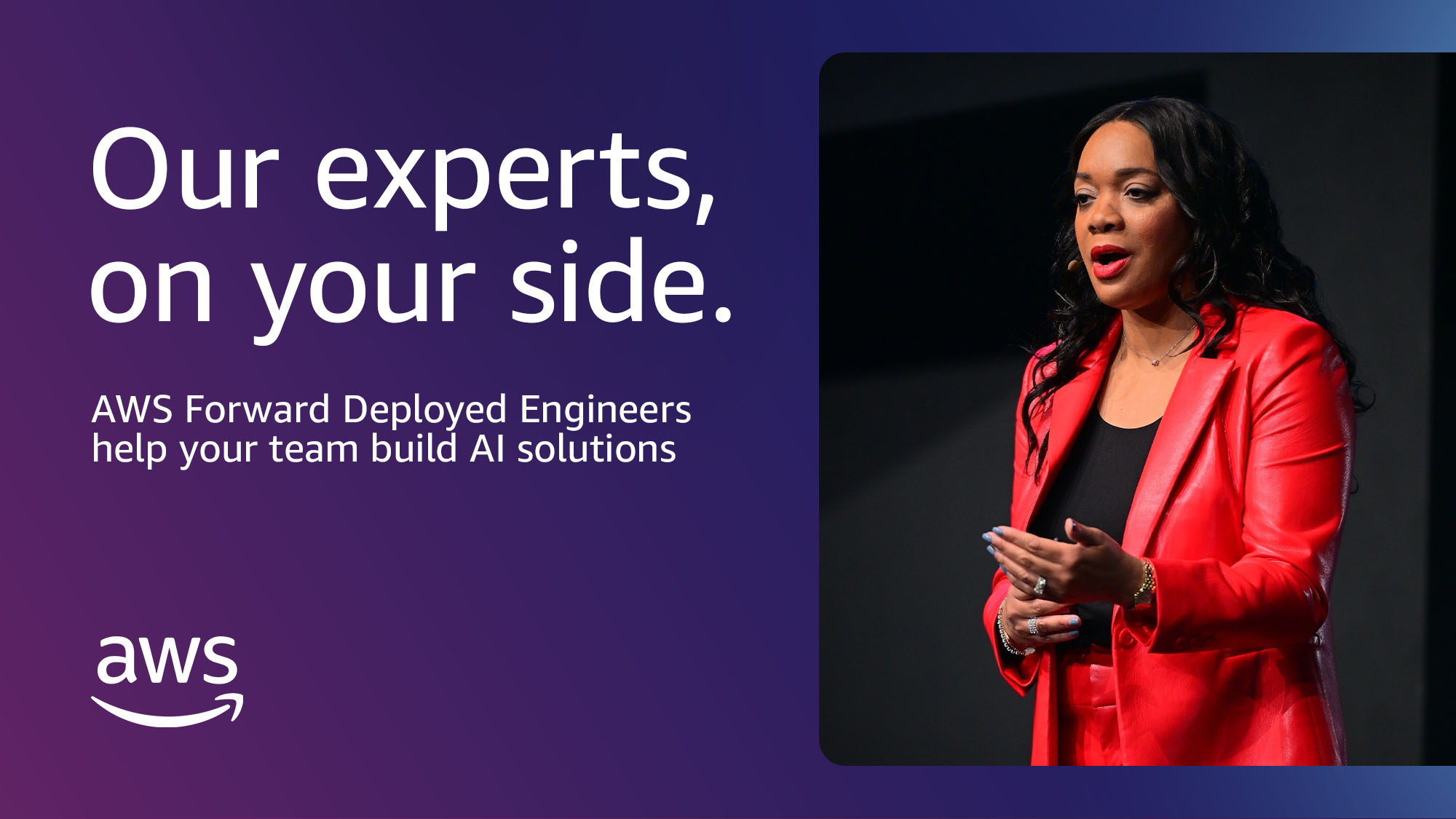
Today, I'm excited to announce that we are meeting that demand by creating a dedicated AWS Forward Deployed Engineering (FDE) organization. Backed by a $1 billion investment, the AWS FDE model is different in three key ways: it is agentic-first, it compresses timelines from months to days, and it is designed so customers are self-sufficient when a deployment ends.
AWS FDE embeds AWS frontier teams—working with purpose-built agents—directly inside customer teams. These experienced engineers, many of whom build our AWS AI services, partner with a customer’s business, engineering, and security teams to build and deploy production AI systems with their data, governance, and processes.
Unlike traditional consulting that assesses, recommends, and treats each deployment as a standalone project, AWS FDE builds for the long term. Customers leave AWS FDE deployments with both new solutions and new engineering capabilities. Along with agentic systems running in their own AWS environment, they gain lasting AI skills, workflows, and patterns they can use to innovate independently. Deployments are structured around shared goals and business results, not billable hours. When customers succeed, we succeed.
AWS’s new engineering organization compresses timelines

AWS FDE uses agentic deployment technology and the AI-Driven Development Lifecycle—a new approach to software development that emphasizes AI-powered execution with human oversight and dynamic team collaboration. Each customer project compounds intelligence for their next. This isn’t an AI tool layered onto existing workflows. Agents accelerate every phase of the lifecycle while human engineers verify and guide.
As they always do, AWS Partners will play an important role here, contributing model expertise, industry knowledge, and complementary skills to ensure the right engineers are available to customers. We are investing in partner training, tools, and resources to accelerate AWS FDE engagements.
Confident self-sufficiency

Customer self-sufficiency is designed into AWS FDE engagements. As projects advance, customer engineers move from observers to co-builders to autonomous operators.
Customers gain deployed systems, knowledge graphs, runbooks, architectural documentation, and trained internal champions ready to operate independently. Every engagement produces codified expertise that grows long after the engagement ends.
At the heart of this is a semantic layer that FDE teams deploy into the customer's own AWS account. It connects to enterprise data sources, enriches metadata, and uses AI to publish a governed, versioned knowledge graph. Agents reason over that knowledge graph, so domain expertise lives in the customer’s code, not in institutional knowledge that could rotate off. We deliver through customers’ agents and systems, not just through people who may leave, so the benefits are long-lasting.
Security is built in from the start, as well: hardware-based isolation, end-to-end encryption, and customer data that never leaves the customer's governance framework.
How AWS is building with the NFL
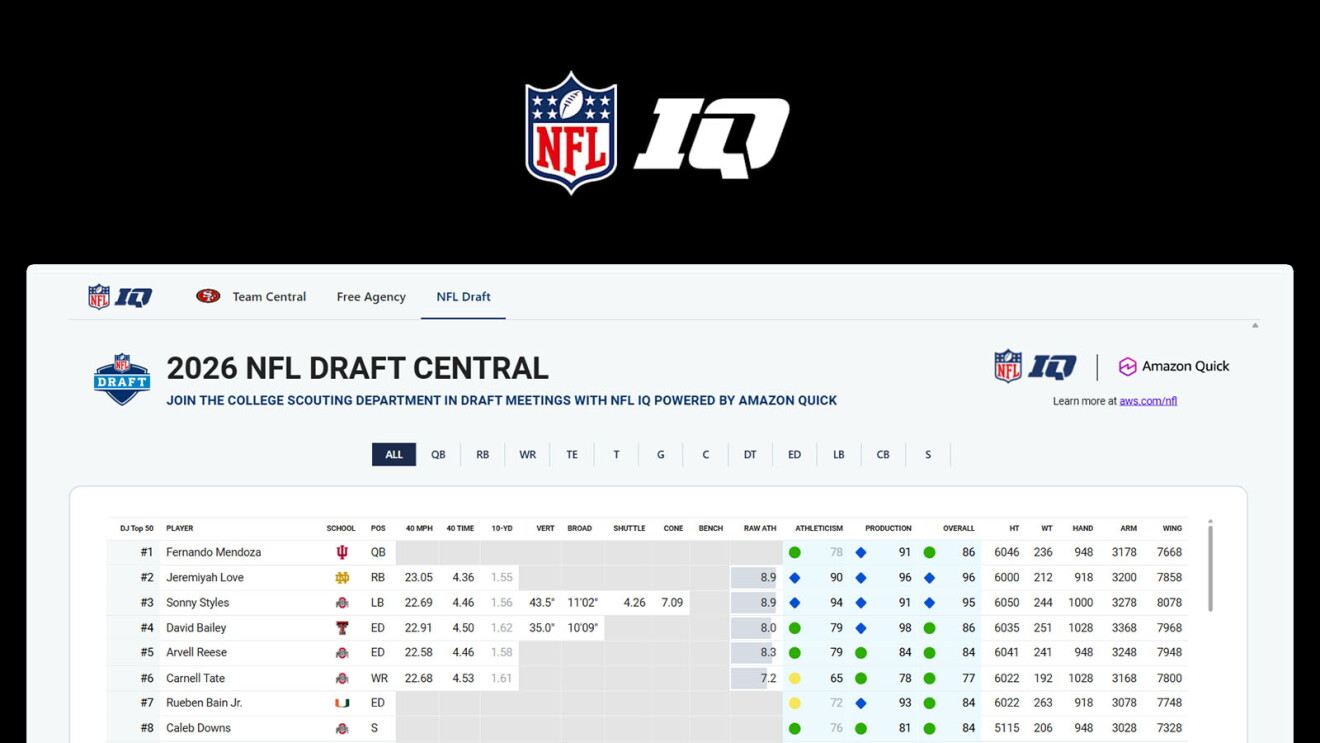
AWS FDEs are already embedded and working with customers such as the Allen Institute, Cox Automotive, the NBA, Ricoh, Southwest Airlines, and the NFL.
"The NFL has millions of fans who want to consume football content throughout the year, including the offseason. We innovate at the pace and scale needed to meet the high expectations of our fans," said Gary Brantley, chief information officer of the National Football League. "To create new digital experiences for our fans, the NFL partnered with AWS FDE and got engineers building alongside our team to launch into production in just weeks. Together, we created new fan-facing products like NFL Fantasy AI and NFL IQ that allow fans to interact with NFL data like never before. The engagement from fans and broadcasters was measurable from day one and was made possible by AWS’s delivery model."
AWS engineers as experts inside your team

Since its beginnings, AWS has worked alongside customers across industries to help them build production systems, providing time-tested frameworks, proven patterns, and learnings. We’ve been building AI solutions for customers since 2017—and for the past three years, the AWS Generative AI Innovation Center’s engineers have worked on thousands of customer solutions. They collaborated with BMW to reduce service disruptions across 23 million connected vehicles, helped Jabil build a manufacturing assistant for the factory floor, and partnered with Lyft to resolve driver support issues 87% faster.
Now, as customers ask us to dive deeper with them, go beyond individual use cases, and help grow their AI capabilities, we’re expanding our commitment to this approach. AWS FDEs come with that experience and deep product development expertise to work with customer teams as builders. They bring what AWS has learned from decades of engagements and millions of customer use cases.
Getting started with AWS Forward Deployed Engineering
AWS FDE is built for organizations that have moved past experimentation and need production AI systems running real business processes—particularly in regulated industries, financial services, and government, where security, governance, and speed to production are non-negotiable.
Customers can contact their AWS account team to learn how AWS FDE can help them reach their AI goals.
Trending news and stories
- Prime Big Deal Days is back October 6-7: Here’s what to expect
- Sellers can now manage sales across Amazon, eBay, Shopify, TikTok, and Walmart from Seller Central
- Prime Big Deal Days 2026: Early deals you can shop right now
- Amazon raises minimum starting pay for full-time core operations employees to $20/hour, with average pay reaching nearly $24/hour