
Key takeaways
- AI-powered application assisting scientists with drug design paired with lab testing creates a loop where each experiment improves the next.
- Scientists can access leading AI models, view benchmarks, and use an AI agent to guide experiments.
- The application is designed to make AI models more accessible to scientists, not just those with AI and coding skills.
- With Memorial Sloan Kettering, the application accelerated antibody design for potential pediatric cancer therapies from months to weeks.
Today, AWS announced Amazon Bio Discovery, a new AI-powered application designed to help scientists design and test novel drugs more quickly and confidently.
Amazon Bio Discovery gives scientists direct access to a broad catalog of specialized AI models called biological foundation models (bioFMs) that are trained on vast biological datasets. These models generate and evaluate potential drug molecules, known as candidates, helping scientists accelerate antibody therapies during the early stages of drug discovery. But access alone is not enough.
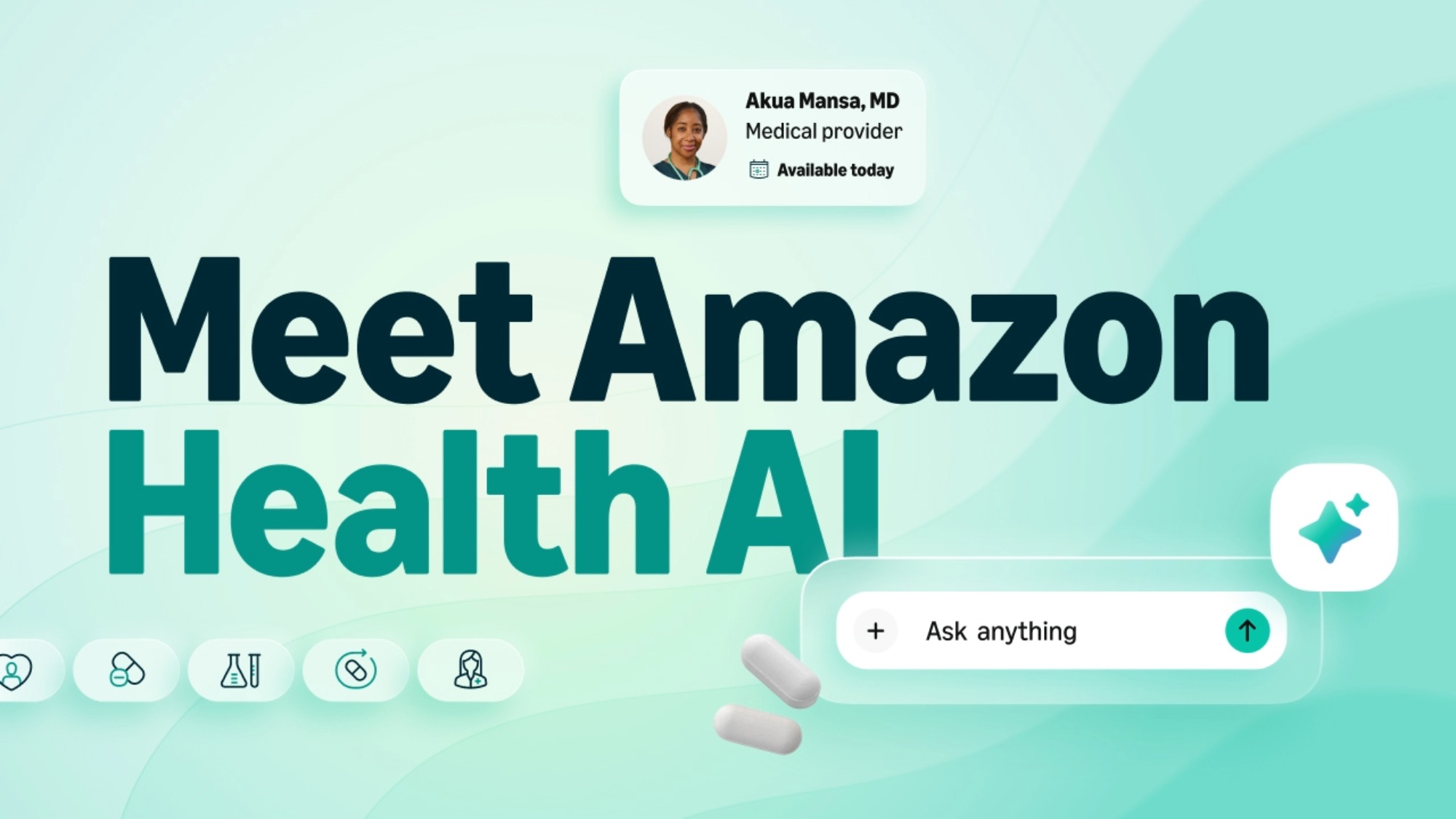
With Amazon Bio Discovery, scientists can converse naturally in their preferred terminology with an AI agent—a smart assistant that automates complex tasks—to select the right models for their research goals, optimize the inputs, and evaluate candidates for experimentation. Scientists can also train models on their prior experimental data to make more accurate predictions. Furthermore, they can easily send candidates to physical labs for synthesis and testing—with results routing back to the application for rapid iteration, creating a lab-in-the-loop experimentation cycle.
Breaking down barriers to AI adoption in drug discovery
Over the last several years, progress in generative AI has created an explosion of new machine learning models ranging from predicting the physical structure of proteins to evaluating candidates based on their chemical properties. While these models show promise, they require coding skills and the ability to manage computing infrastructure. Selecting models alone is challenging because there are dozens of such models, and it’s difficult to benchmark them against each other. As a result, many scientists struggle to use AI models independently, and computational biologists—the experts who have specialized AI skills that could help them—are in short supply.
Taking candidates from computational design to physical synthesis is also complicated. Data lives in disconnected systems, and scientists must manage multiple lab partners and manually coordinate timelines and pricing.
Amazon Bio Discovery addresses these challenges with three key capabilities: a benchmarked library of AI models and analysis packages, an AI agent that helps researchers design experiments, and integrated lab partners that test the most promising antibody candidates and route results back to the scientists. This feedback loop improves the next round of design.
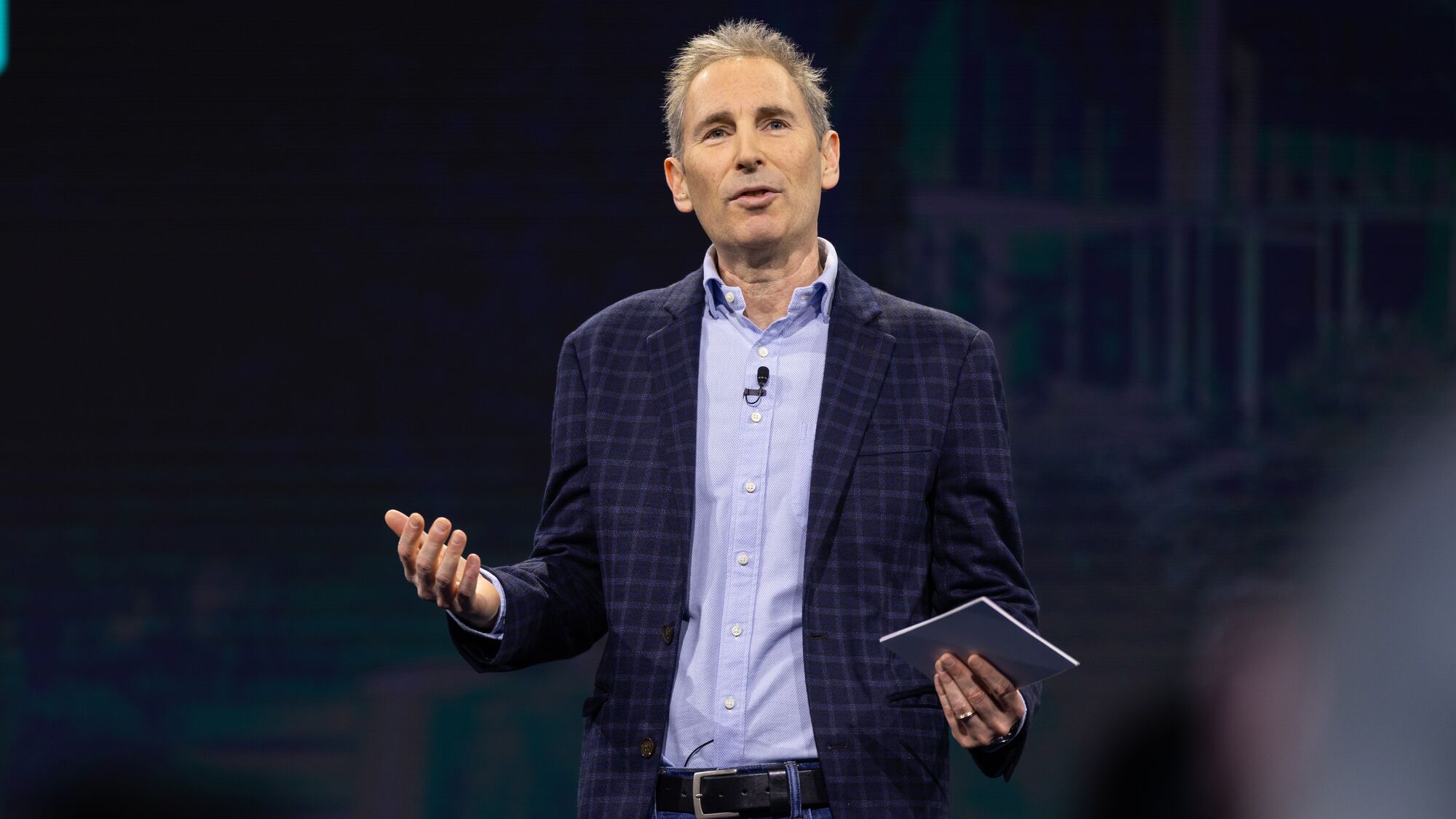
"AI agents make powerful scientific capabilities accessible to all drug researchers, not just those with computational expertise," said Rajiv Chopra, vice president of AWS Healthcare AI and Life Sciences. "These AI systems can help scientists design drug molecules, coordinate testing, learn from results, and get smarter with each experiment. This combination of cutting-edge AI and the robust, secure infrastructure AWS has built for regulated industries allows scientists to accelerate antibody discovery in ways that weren't possible before."
Amazon Bio Discovery is built on the same foundation that the pharmaceutical industry already trusts. Today, 19 of the top 20 global pharmaceutical companies use AWS to power their most sensitive research workloads. Amazon Bio Discovery brings enterprise-grade scale, performance, privacy, and security to researchers across all pharmaceutical, biotech, and academic research organizations. It provides complete data isolation and gives customers ownership over all their proprietary data and intellectual property.
 AI agent helps scientists set up and run AI-powered drug discovery workflows.
Use AI in research with ease and confidence
Amazon Bio Discovery provides scientists with a broad catalog of AI models for drug discovery, including leading open-source and commercial models from partners like Apheris and Boltz, with Biohub and Profluent coming soon. More importantly, an AI agent walks scientists through every step—from designing experiments to selecting the most promising AI-designed candidates for lab testing. Scientists can use natural language to create experiment recipes—step-by-step workflows that combine different models and analyses—and benchmark which model works best for their research needs. To further support model selection, an extensive and growing antibody benchmark dataset is available to show the likelihood of a drug candidate that can be manufactured easily, stay stable across a temperature range, and have suitable biological properties.
 Amazon Bio Discovery’s catalog of open-source and commercial AI models for drug discovery.
Improve AI models with scientists’ prior experimental data
Fine-tuning AI models with proprietary experimental data produces smarter predictions, better candidates, and fewer experiment iterations. However, this requires dedicated machine learning teams and expensive infrastructure, making it out of reach for most scientists.
Amazon Bio Discovery changes this by enabling scientists to securely feed prior experimental data from their organization's lab results into the application. They can use their own lab data to train custom models with just a few clicks—no need to build complex training pipelines or write custom code. All fine-tuned models remain private and accessible only to the user or their organization. For organizations that have already built their own in-house models, computational biologists can easily deploy and host those models within Amazon Bio Discovery. Together, these features help both scientists and computational biologists collaborate more efficiently, creating a continuous improvement cycle that accelerates research over time.
 Improve predictions by fine tuning models with prior experimental lab data.
Close the drug discovery loop with built-in lab partners
Once scientists identify top antibody candidates, they can send them directly to Amazon Bio Discovery's integrated network of laboratory partners who physically synthesize and test molecules. Partners including Twist Bioscience, Ginkgo Bioworks—with A-Alpha Bio coming soon—provide services with transparent pricing and turnaround times. Tests measure essential information that helps scientists decide which candidates can proceed to further development.
 Analyze and select the top candidates to send to a physical lab for testing.
Lab results flow back into the organization’s application environment, keeping all data connected and improving the next design cycle. One application replaces manual handoffs and disconnected systems, closing the experimental loop.
Designing novel antibodies with Memorial Sloan Kettering Cancer Center
Nai-Kong Cheung M.D., Ph.D., Enid A. Haupt Chair in Pediatric Oncology at Memorial Sloan Kettering Cancer Center (MSK), faced a familiar challenge. The process of identifying a promising approach to attack cancer cells and developing an antibody drug candidate using traditional design methods takes too long.
In partnership with MSK, the Amazon Bio Discovery team worked with Cheung to tackle this challenge. Using Amazon Bio Discovery’s agent to orchestrate multiple models, they designed nearly 300,000 novel antibody molecules. From there, they sent the 100,000 top candidates to Twist Bioscience for testing. What typically takes up to a year using traditional design methods took weeks from designing the candidates to sending them for lab testing.
"We're glad to be able to join forces with Amazon Bio Discovery to develop the next generation of antibodies that will potentially speed up the process to help patients worldwide,” said Cheung. “As researchers, we spent 20 years just to prove that the first generation of antibody worked, and then we spent another 13 years getting it into the human form before getting FDA approval. This path has been very inefficient. Patients come here with a clock. We need results sooner.”
In addition to MSK, Bayer, the Broad Institute, Fred Hutch Cancer Center, and Voyager Therapeutics are among early adopters using Amazon Bio Discovery.
Get started
Amazon Bio Discovery is available today. To learn more, read the industry announcement blog post or sign up for a free trial.
Trending news and stories
- The race our nation can’t afford to lose, plus a new commitment from us and a fresh set of community investments
- Amazon's Holiday Kids Gift Book is back with 600+ toys, games, and gifts for every age
- Introducing all-new Amazon Alexa Tablets—powerful tablets with Alexa+ built in
- Amazon introduces a completely redesigned Kindle family