Helping families access the food they need
Food insecurity affects 47 million people in the U.S. each year. From moving truckloads of produce to delivering meals directly to families’ doorsteps, Amazon is using its scale, speed, and logistics expertise to improve access to food in communities.
Amazon built a delivery network that can get almost any item where it needs to go, and fast. Now, we’re applying that same expertise to fight food insecurity—transporting food from suppliers to food banks, from food banks to families’ doorsteps, and to communities where distance can be barrier to food assistance. One delivery at a time, we’re helping expand access to food at no cost to food banks or the families they serve.
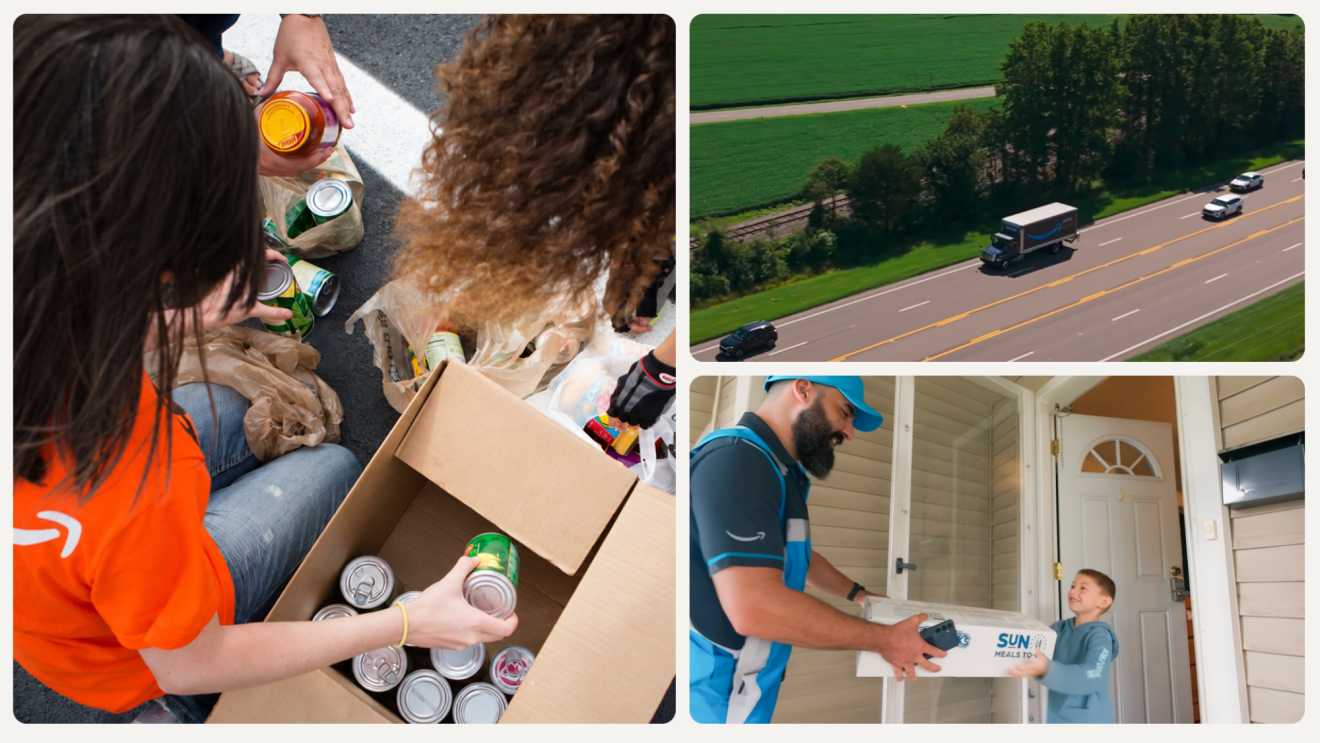
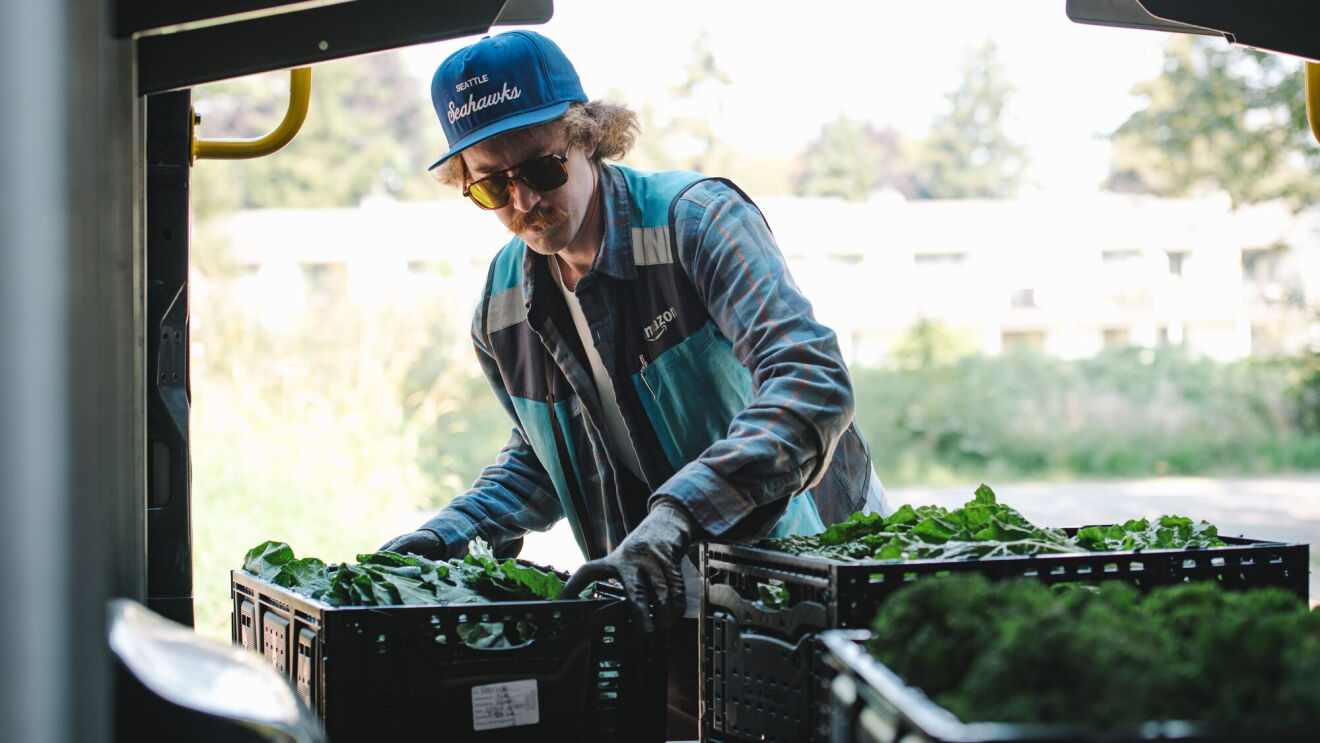
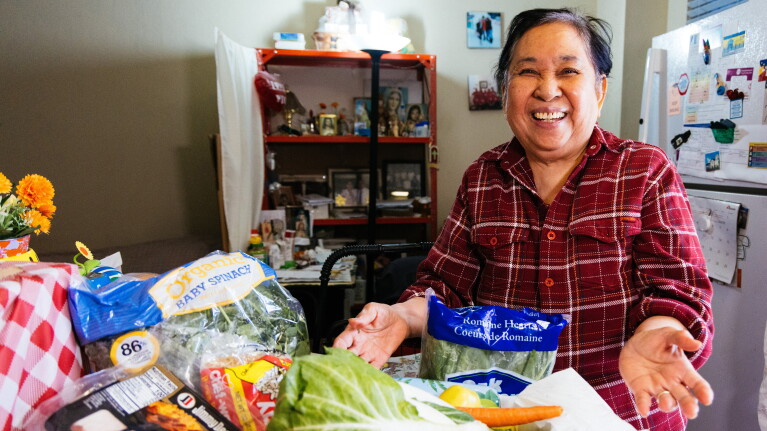 Amazon delivers nutritious food from local food banks directly to families’ doorsteps, for free, helping people who can’t easily reach food banks because of work schedules, transportation limitations, or mobility challenges. Since 2020, we’ve delivered more than 60 million meals to over 200,000 households.
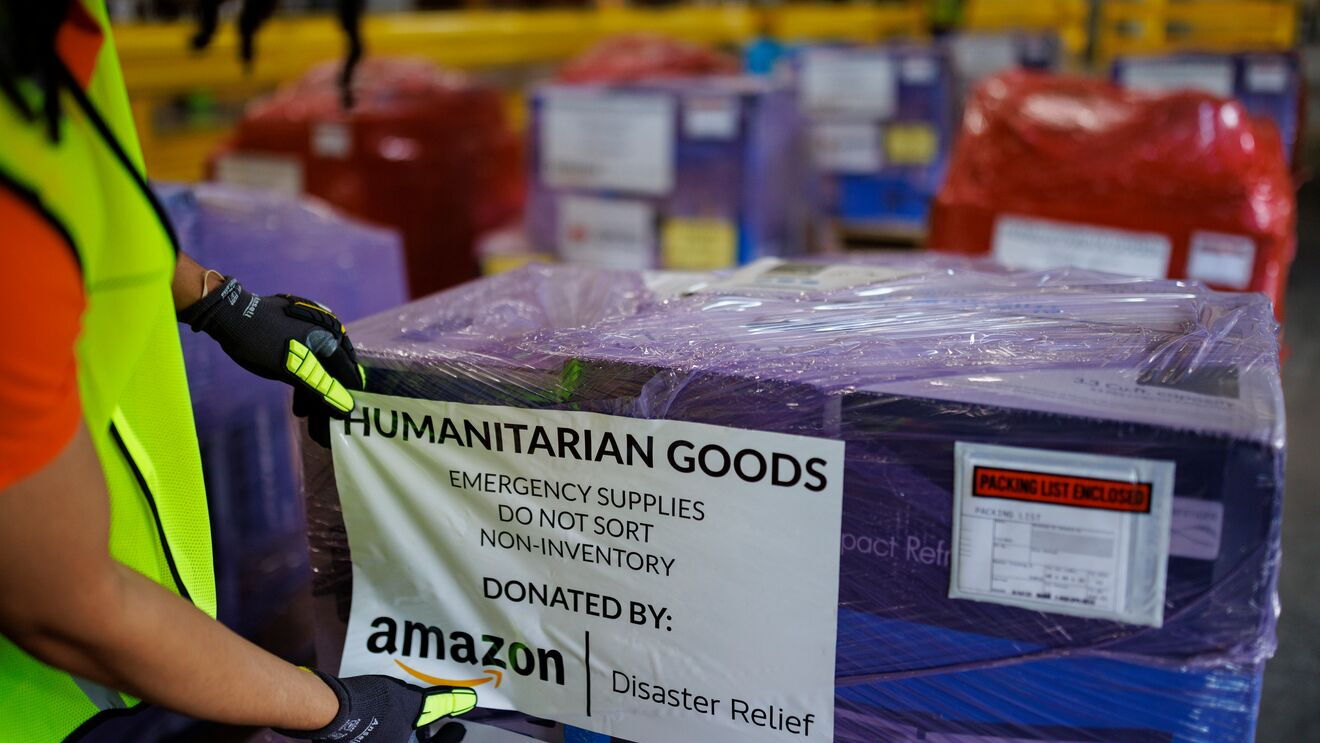
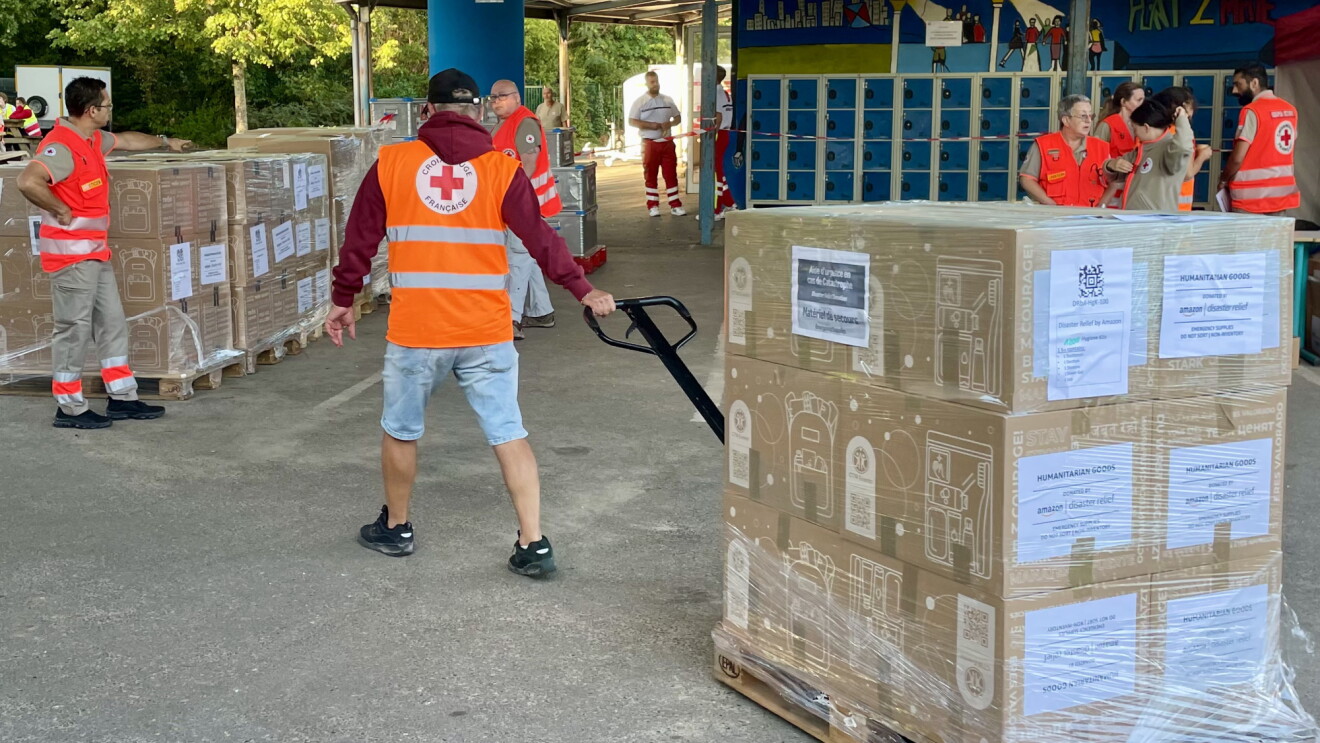
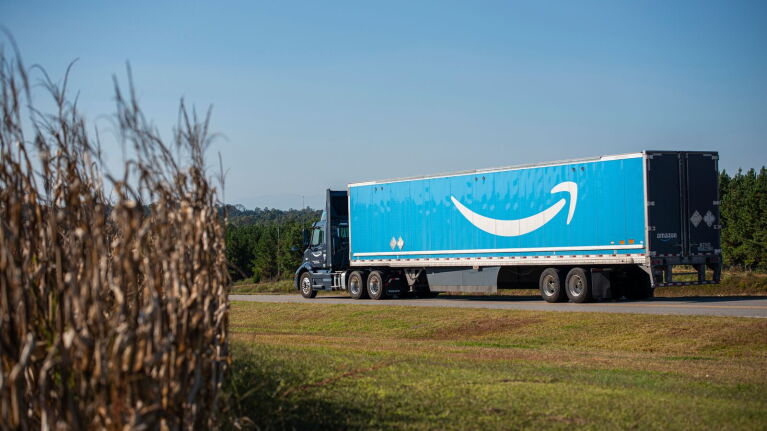 Amazon transports food in bulk where it’s needed most, for free—moving tens of thousands of pounds each week from suppliers to food banks and community distribution points. Since launch, we’ve supported 700 nonprofits across 15 countries, transporting over 100 million essential items, including more than 70 million meals.
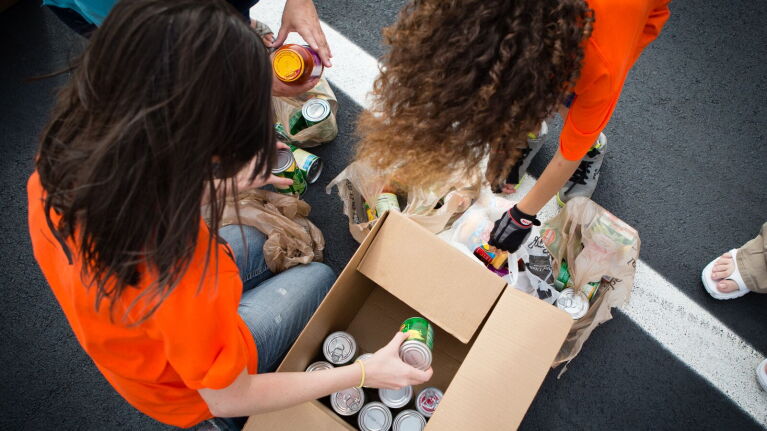 Rural communities face unique challenges due to long distances and limited transportation options. Using our growing rural delivery network, Amazon is innovating with our nonprofit partner, No Kid Hungry, to deliver meals directly to students living in rural communities—ensuring children can receive food even when school is out for the summer.


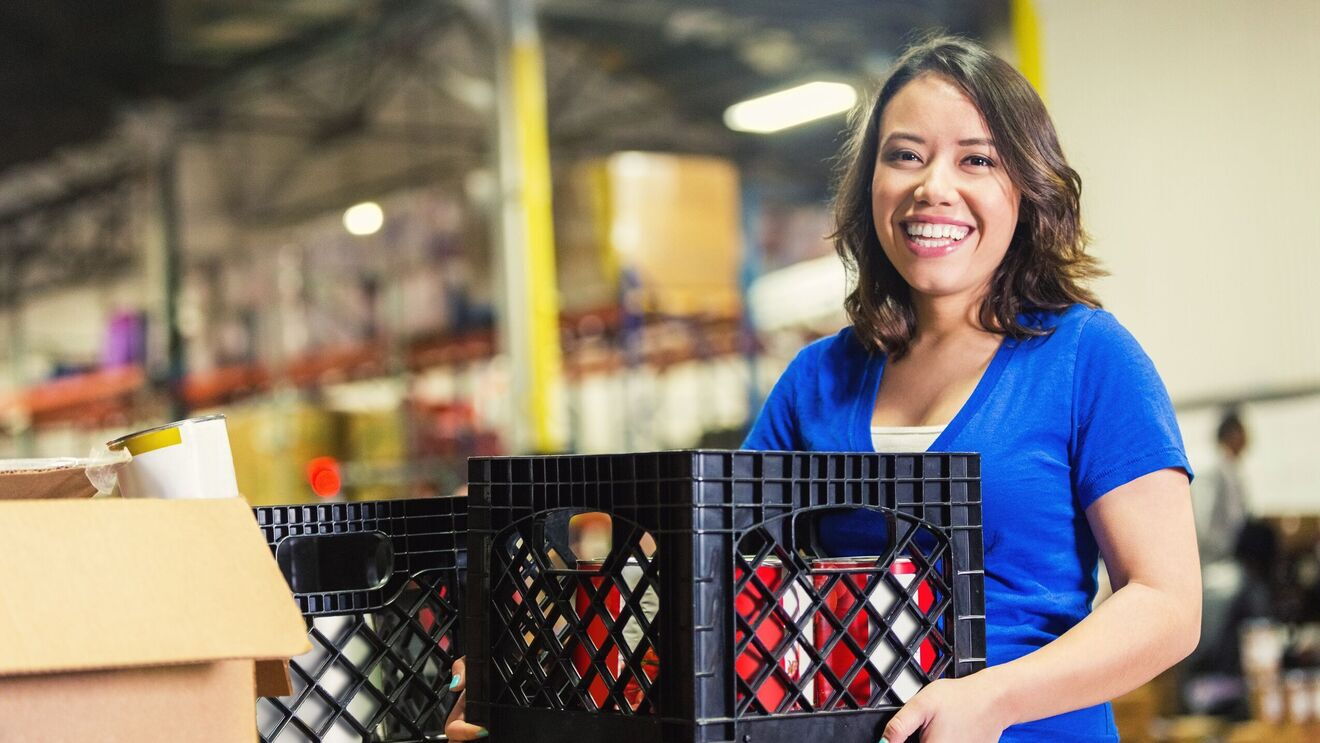
Delivering change: How home delivery transforms lives
Research shows that home delivery saves families approximately $100 per month in time and travel costs. Through Amazon's home delivery, food insecure families receive meals from food banks right to their doorsteps, saving them time, energy, and resources while experiencing improved emotional well-being compared to those participating in food pickup programs.
Partner With Us
Ready to bring home delivery to your community? We welcome applications from food banks and pantries in the United States and United Kingdom.
How home delivery works: Amazon provides the transportation and supporting technology at no cost—leveraging the same powerful network that serves millions of customers daily—including Delivery Service Partners, Amazon Flex, and our rural delivery infrastructure. Food banks identify recipients, source food, pack boxes, and schedule deliveries.
To get started, explore our detailed program information page. After reviewing, submit an interest survey and our team will follow up with next steps.
How home delivery works: Amazon provides the transportation and supporting technology at no cost—leveraging the same powerful network that serves millions of customers daily—including Delivery Service Partners, Amazon Flex, and our rural delivery infrastructure. Food banks identify recipients, source food, pack boxes, and schedule deliveries.
To get started, explore our detailed program information page. After reviewing, submit an interest survey and our team will follow up with next steps.
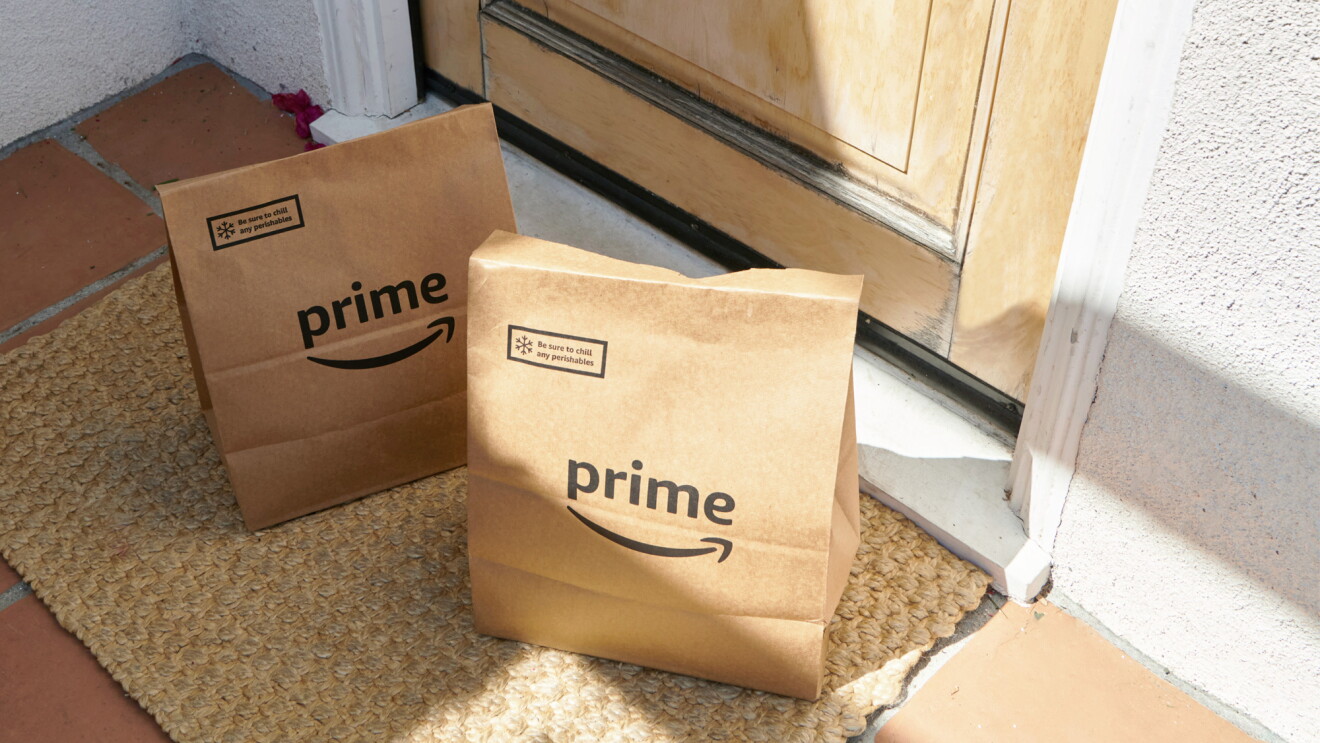
Amazon Access: A resource to help customers save
Amazon Access is a hub of savings programs designed to make shopping more affordable for customers facing financial challenges. From discounted Prime memberships to SNAP EBT payment options, we’re helping millions of families access everyday essentials.
More ways we're helping address food insecurity
 Amazon donates excess food from our grocery stores to local food banks and hunger-relief organizations—reducing waste while ensuring nutritious food reaches families in need. In 2025, more than 90 million meals were donated across the U.S.
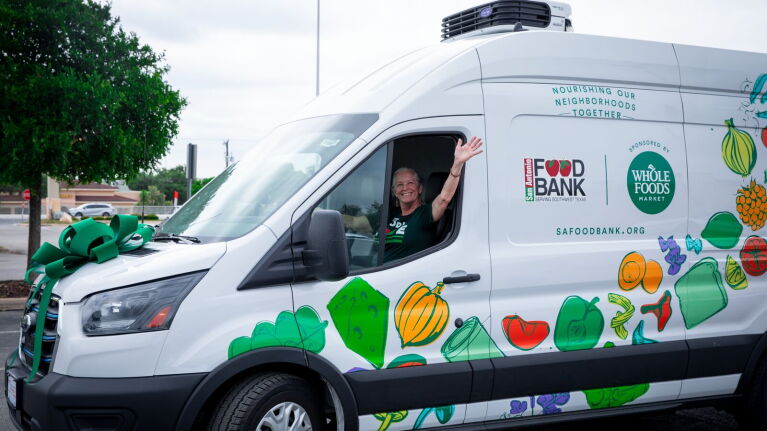 Through the Nourishing Our Neighborhoods program, Whole Foods Market donates electric, refrigerated vans to food rescue organizations across the U.S., UK, and Canada. Local Whole Foods Market stores also support communities through in-kind donations, monetary contributions, and volunteer time.
 Amazon Web Services (AWS) helps organizations build and scale cloud and AI powered solutions that increase food security for those who need it most. Through AWS technology and technical expertise, we help customers deliver social impact at scale and streamline their operations.