
Key takeaways
- Amazon’s Peter DeSantis says AI needs "a couple more orders of magnitude" of improvement before it becomes truly transformative.
- New model architectures will emerge beyond today's transformers, allowing AI to respond as fast as humans talk.
- DeSantis emphasizes that humans will remain at the center of AI's most complex innovations.
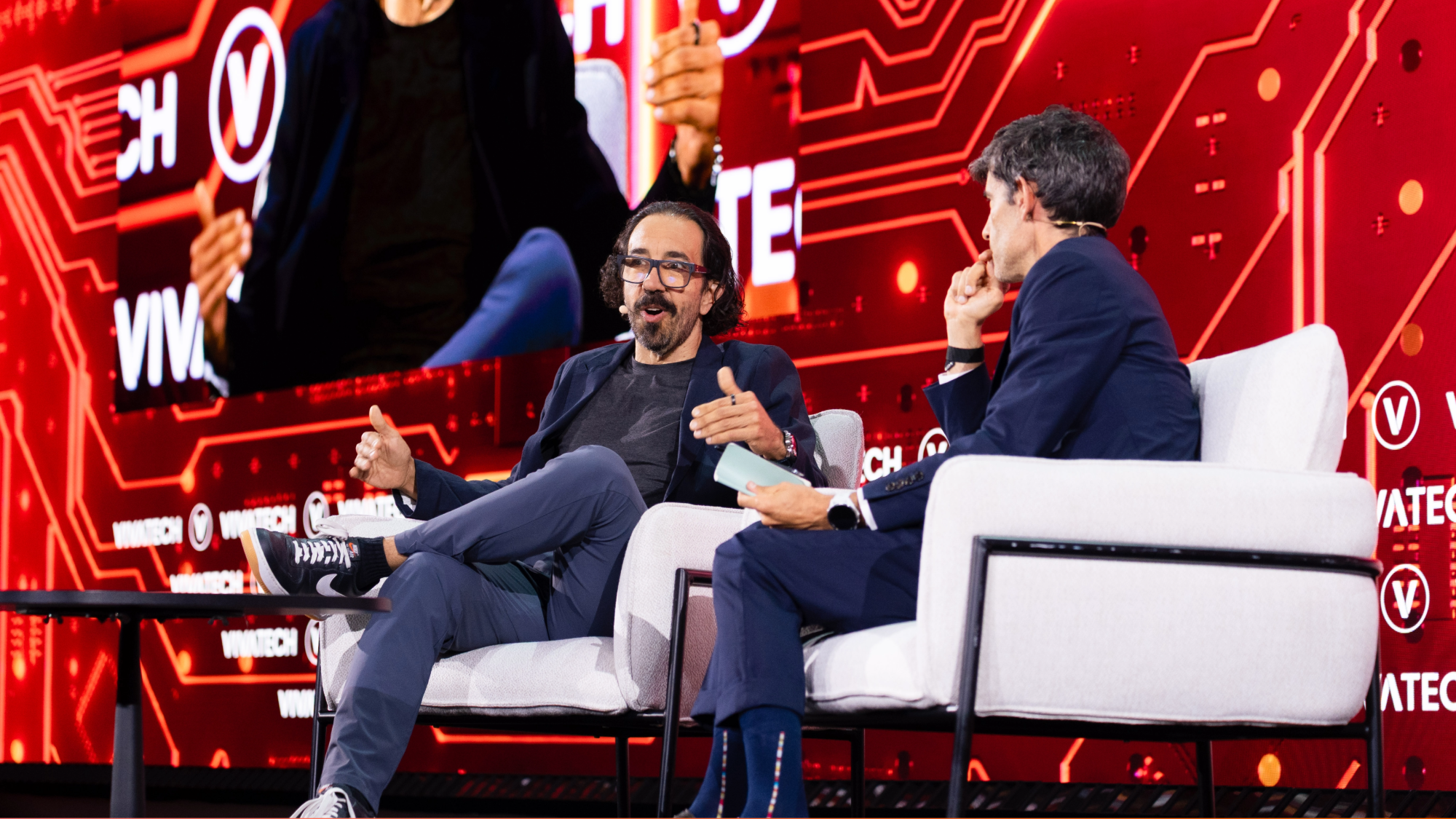
At the VivaTech 2026 event in Paris on June 17, Amazon’s Senior Vice President Peter DeSantis sat down for a wide-ranging conversation on the state of AI. His core message: despite the breathless pace of progress, we're nowhere near done.
Speaking with Nick Thompson, CEO of The Atlantic, DeSantis said, "We've seen an order of magnitude improvement in the efficiency of the tasks that models can do over the last year or two, and I think we need a couple more orders of magnitude before this gets truly interesting in any way, shape, or form. We are just at the beginning of innovation at all layers of the stack."

At Amazon, DeSantis oversees the organization uniting foundational AI models, custom silicon, and quantum computing. After 27 years at Amazon—from EC2's earliest days to helping spearhead the acquisition of Annapurna Labs—he brings his perspective to a debate increasingly dominated by hype.
Why today's AI models are just the beginning
While prominent voices have declared AGI is just years away, DeSantis sees it differently. He emphasizes that the transformer architecture that powers today's models will continue improving, but the way AI will be used in the future will require the development of entirely new architectures.
Regardless of the hardware innovations that get us there and the sophisticated software that is to come, "I believe humans are still going to be at the center of our most complex innovations for the foreseeable future," DeSantis said.
He added that part of that innovation will require AI models to react as rapidly and dynamically as human interaction, which is "a 40-millisecond clock," according to DeSantis. AI will need to see and make sense of our movements, stammering, backchanneling, and all the other subtleties of human communication, which will require much quicker response times.
That kind of responsiveness demands entirely new approaches to both hardware and software—which is why DeSantis sees the current moment as a starting line, not a finish line.

How chips and models accelerate each other
DeSantis argued that the next wave of progress depends on chips and models developing in lockstep—a dynamic that's still underappreciated across the industry.
"If the chips are not telling the model designers what capabilities are coming and where they can optimize, then we're not doing the science necessary to take advantage of those capabilities until the chips are available, and then you're waiting months and months," he said.
For DeSantis, the result, when done right, is: "Those two things are going to start spinning a flywheel of better models, better chips, lower cost, and better efficiency."
That flywheel is already turning. AI startups building world models—systems that simulate physics rather than generate text—are choosing Trainium and achieving nearly double the industry-average compute efficiency.
Trending news and stories
- Investing more than $230 million in higher pay and expanded benefits for Whole Foods Market team members
- Millions of students can now get access to a free year of Kiro from AWS
- Amazon Leo adds 6 new Arianespace launches, expanding its launch partnership
- Amazon’s 2026 Top 100+ Toys list: Something for every kid at heart