
Key takeaways
- Amazon Nova Act trains model capabilities, orchestration logic, and tool controls as one integrated system.
- AWS AI infrastructure makes it possible to build and run reliable agents securely at scale.
- Amazon uses simulated “gym” environments to train agents before real-world deployment.
AI agents represent a fundamental shift in how artificial intelligence works. Unlike chatbots that respond to isolated prompts or generative AI that creates content on demand, agentic AI systems are software that can reason, plan, and act to accomplish goals with little to no human involvement.

What makes AI truly agentic?
True agentic AI has two critical requirements: high trust and high reliability. A chatbot can summarize a contract when you ask and maybe even email it to a colleague. But an agent can review a vendor agreement, flag nonstandard terms, route it to legal for approval, and follow up if no response comes within 48 hours.
Agentic systems think holistically, evaluating results and exercising judgment to adjust their approach. They might autonomously handle code reviews, process insurance claims, or plan complex travel itineraries—all while adapting to obstacles and changing conditions.
Why agentic AI matters now
The business world is reaching a tipping point with agentic AI. While generative AI transformed how people search and create, agentic AI turns intelligence into action by adding planning, reasoning, and the ability to execute multi-step workflows.
"The field has made extraordinary progress on AI capability. These systems can reason, write code, and hold conversations. They're incredibly useful when a person is reviewing their work," said Bryan Silverthorn, who leads Amazon's artificial general intelligence (AGI) Lab. "The next challenge, where Amazon is focused, is closing the gap between what businesses trust AI agents to do when someone is watching and what they trust them to do on their own.”
Organizations eager to embrace agentic AI face foundational challenges. Agents can produce different outputs even with identical inputs, yet businesses require predictable outcomes.
The technology behind Amazon's AI agents
Building reliable agentic AI requires a comprehensive technology stack and rigorous training methodology. Amazon's approach ensures agents can operate at scale while maintaining the trust enterprises require.

Foundation models form the core of agentic systems. Amazon Bedrock provides access to leading models, including Anthropic's Claude, OpenAI's models, and Amazon Nova—all optimized for reasoning and tool use.
Amazon Nova Act was designed from the ground up for reliability and action. An agent-building service, Nova Act trains model capabilities, orchestration logic, and tool controls together as one integrated system. By focusing on reliability, Nova Act specifically addresses the trust gap that has kept most agentic AI as experiments rather than deployed products.
For computer-use agents—which navigate computers as human users do—Amazon uses reinforcement learning at scale, essentially building digital gyms where agents practice scrolling, clicking, and interacting with different user interfaces. This training approach enables agents to learn through trial and error so that they can achieve greater than 90%+ reliability, the threshold where automation becomes genuinely useful for enterprises.
"Most AI agents are trained on simplified tasks that appear in benchmarks, so they break down in the real world when things get messy," said Gaurav Mishra, a research engineer at Amazon's AGI Lab. "We use reinforcement learning to have agents practice in thousands of realistic simulated environments, and we're finding that skills learned in one environment transfer to others. That compounding effect is what moves agents from demo-ready to production-ready."
The infrastructure advantage
Building AI agents that work reliably requires enormous computing power—to run the agents as well as train them. Training an AI model is one of the most computationally intensive tasks in the history of computing, and the costs can be staggering.
Amazon has spent more than a decade solving this problem. In 2015, the company began designing its own specialized computer chips—first for general cloud computing, then specifically for AI. Today, Amazon has delivered more than 2.1 million of its latest AI-specific chips into operation, and leading AI companies like Anthropic use Amazon's infrastructure to train their most advanced models.
The advantage of designing your own chips is straightforward: when you control the hardware and the software, you can make AI significantly more affordable. Amazon estimates its custom chips reduce AI training costs by up to 50% compared to alternatives—savings that ultimately get passed on to customers and make it possible to run AI agents at a scale that would otherwise be cost-prohibitive.
Lower costs mean more agents doing more work for more people. That's how AI moves from a technology only a few people can afford to something every business can use.

Where agentic AI creates business value today
AI agents are already delivering measurable results across industries.
Customers like 3M and Accenture reported 80% time savings on information retrieval for employees using Amazon Quick. The concert platform Bandsintown used Amazon Nova Act to automate event verification, deploying the agent in weeks without deep technical integration and keeping its customers informed of the latest local events. Amazon's AI shopping assistant was used by over 300 million customers and saw an even stronger response than anticipated, helping deliver nearly $12 billion in incremental annualized sales last year.
Internally, Amazon uses agentic AI at massive scale. The company’s Compliance team deployed agents to handle 2 billion transactions daily with 96% accuracy. And Amazon Kiro uses AI agents that plan, build, test, and deploy code—helping developers ship production software faster with fewer iterations.
These are early results. As agents get more reliable and less expensive to run, the range of work they can take on will only grow. From verifying concert listings to processing billions of compliance checks, these aren't experiments—they're AI agents doing real work, at substantial scale, today.
What's next for agentic AI
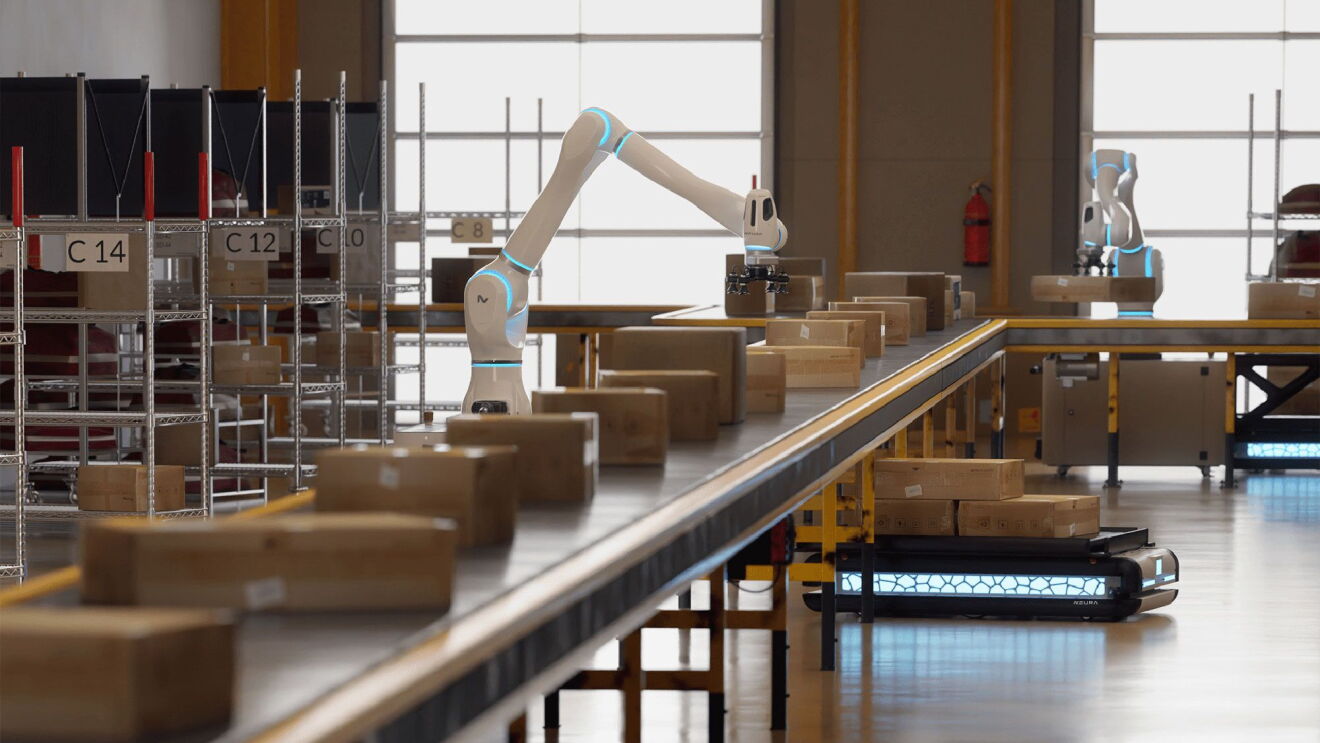
The industry agrees: the next phase of AI agents isn’t chatbots, but agents that use computers, complete workflows, and take real action. Where Amazon differs is in how we get there. Teaching AI to use computers reliably looks a lot like a robotics problem. An agent must perceive its environment, plan a sequence of steps, adapt when things change, and know when to stop. And it must do this thousands of times with the consistency and reliability businesses require.

Reliability is the foundation, but the real vision is bigger: agents you onboard like teammates—collaborative AI that operates on high-level goals, works across applications, learns from feedback, and knows when to ask for help.
Amazon deploys agentic systems across its operations every day, and that combination of frontier research and real-world deployment is what separates agents that demo from agents that work.
As Silverthorn puts it, "The question is not whether AI agents are capable enough. It’s whether they are reliable enough to trust with real business processes. That’s the threshold we are working to cross for every industry.”
Trending news and stories
- The race our nation can’t afford to lose, plus a new commitment from us and a fresh set of community investments
- Introducing all-new Amazon Alexa Tablets—powerful tablets with Alexa+ built in
- Amazon's Holiday Kids Gift Book is back with 600+ toys, games, and gifts for every age
- Amazon introduces a completely redesigned Kindle family