
Key takeaways
- DeSantis has spent 27 years at Amazon, leading transformative technologies from EC2's launch to AWS Infrastructure.
- His new organization unites AI models, custom silicon, and quantum computing—technologies he sees as naturally reinforcing each other.
- Amazon's combination of world-class compute resources and real-world applications attracts scientists who want their work to ship at massive scale.
When Peter DeSantis joined Amazon in 1998, the company was known primarily as an online bookstore. Over the next 27 years, he would help build some of the most transformative technologies in computing history—from leading Amazon EC2’s launch in 2006 to spearheading the 2015 acquisition of Annapurna Labs, which builds Amazon's custom silicon.
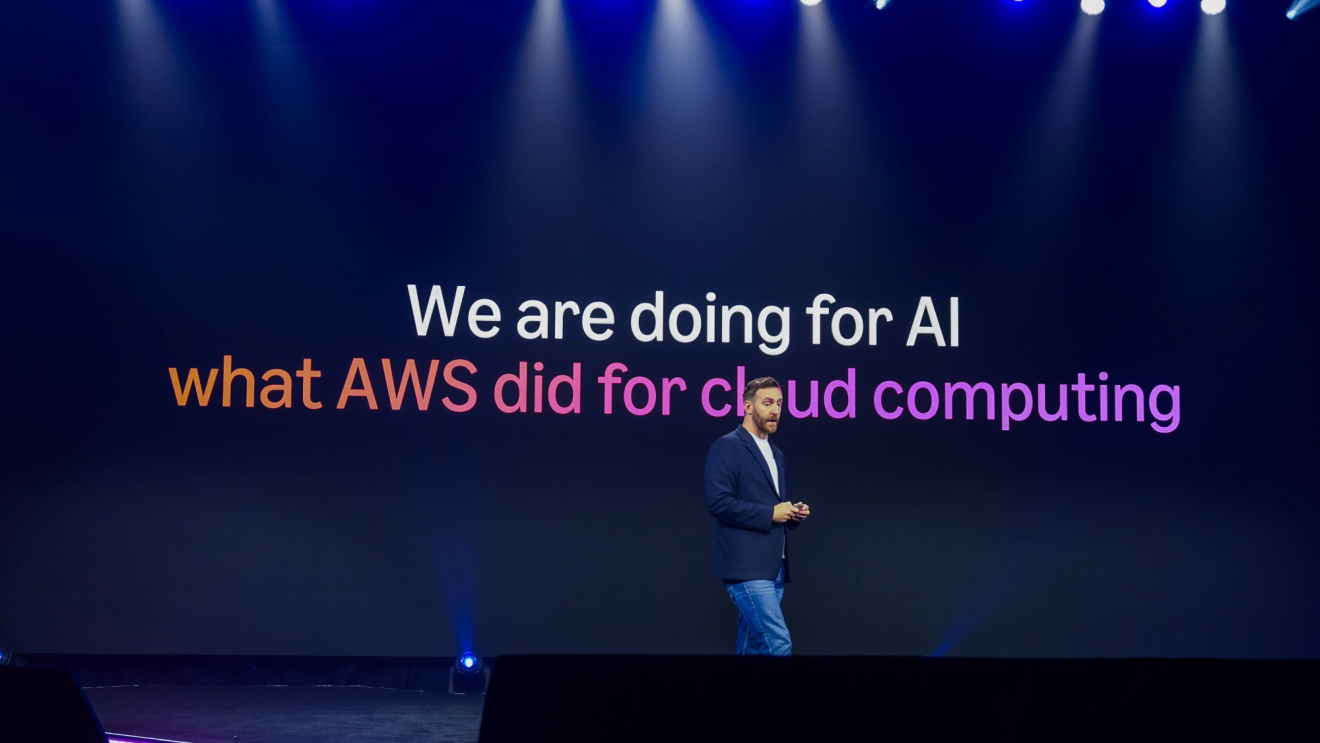
Now, as Senior Vice President overseeing a new organization that spans the most expansive AI models, custom silicon, and quantum computing, DeSantis is bringing together some of the most compelling emerging technologies of today. His sweeping portfolio includes the teams building Amazon Nova foundation models, developing Graviton and Trainium chips, and advancing quantum computing solutions—technologies that, in his view, will increasingly reinforce and accelerate each other. The organization is so new that it doesn't have an official name yet (but DeSantis and his teams are working on it).

With a track record of solving problems "at the edge of what's technically possible" while delivering technologies that operate reliably at massive scale, DeSantis combines unusual technical depth with a relentless focus on customer needs. As these foundational technologies mature and interweave, his leadership will help shape how Amazon—and the broader technology industry—approaches the next generation of computing.
Here are 5 things to know about the leader guiding Amazon's most ambitious long-term technology bets—in his own words.
1. DeSantis sees custom chips, AI models, and quantum computing as reinforcing technologies
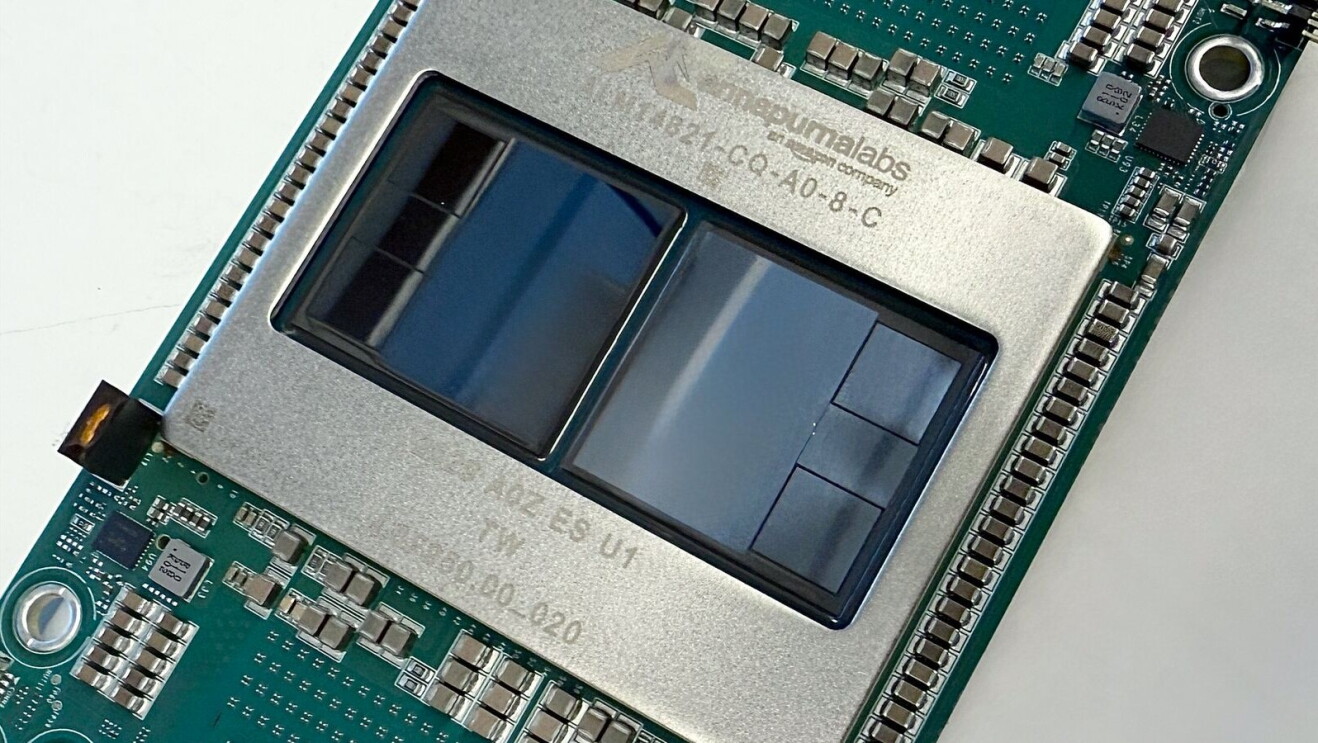 Amazon's Trainium3 chip
All three of them are big, long-term bets for the company, and addressing them requires a similar approach, which is to blend our short-term urgency for delivery and roadmap planning with a long-term vision of where these technologies need to go in order to best serve our business and our customers.
There are also more tangible ways that these technologies will reinforce each other. I think the most obvious one is the foundational model. My belief—and largely the industry's belief—is that these AI models are going to get bigger and more capable and more profoundly impact what we can do with them and how they change our lives. But to do that, we have to invest a large amount of capital and compute to build these models. One of the ways that we can give ourselves an advantage in how we build these models is by using our deep investments in chips to deliver both performance and cost efficiency that will allow us to differentiate our model development.

The science that's happening inside of our foundational model teams—knowing where those models are going to go because of where the science is going—is going to influence our chips roadmaps. And chips take many years to build. Getting these two groups correctly working with each other, which, in a very Amazon way, will be loosely coupled, not tightly coupled, so that they are helpful to each other but not slowing each other down—it has a lot of potential.
Quantum is, of the three, the longest-term thing that we're working on. It's going to be many years before we see the impact of quantum computing on the world, but I have very high conviction we will see it in our not-so-distant future. Ultimately, we are building a quantum chip. And now there's a lot of science that's happening in terms of how we use that chip in very, very different ways to build a very, very different kind of computer. As we get closer and closer to the point where we're ready to build that, scale that chip up and bring it to customers' hands, the things we've learned in our Annapurna chips business are going to be very complementary to that investment. It'll help us move even faster, scale even faster, and hopefully get to the very significant societal and technology goodness that's going to come with having a quantum computer.
2. He's most excited about getting Graviton 5, Trainium3, and Nova Forge into customers' hands
I'm excited about a ton of things in the chips business, which I'm most familiar with because I've been involved in it since we got started over a decade ago. We just released Graviton 5 at re:Invent, which is by far our highest-performing general purpose processor ever. It will deliver the things that our customers have been most excited about with Graviton, which is differentiated performance, differentiated cost, and it will deliver that to almost every imaginable workload. Whereas if you go back a couple generations with Graviton, there was a subset of workloads that couldn't take advantage of it. Graviton 5 has truly gotten Graviton to the point where any workload that you want to run in the cloud probably runs best on Graviton. And the customer enthusiasm for Graviton has been huge, and we just released it, so the excitement is there. Now we have to bring it in volume. That's been an exciting part of getting the year started.
Similarly, Trainium3 was just released and is one of the most exciting AI accelerators in the market. We're talking to a large number of customers that are excited about trying it, and we're excited to get it into their hands, get feedback from them, and hopefully get them running in meaningful ways on it.
I spent a bunch of time at re:Invent this year with our customers on how they're thinking about Nova and particularly some of the new capabilities we launched. I would personally say Nova Forge, which is our capability that allows you to take our Nova models and take your data and your business expertise and produce what we call a Novella—a variant of that Nova model that's been deeply customized for your use case—is resonating with customers. I just got done talking to that team, and it's important that we get that in customers' hands.
3. He plans to deepen Nova integration across retail, Alexa, ads, and operations
 Amazon introduces new frontier Nova models, a Nova Forge service for organizations to build their own models, and Nova Act for building agents.
Nova is such an important part of our strategy in all of our core businesses—whether it's retail, or Alexa, or ads, or even operations—and each of these businesses has fundamentally different needs. A model that works great for shopping doesn't automatically work for Alexa. A model optimized for ads has different requirements than one built for fulfillment centers.
So the real challenge isn't just building a great foundation model. It's figuring out how to make one model flexible enough that each business can shape it to their specific problems without losing the core intelligence underneath. That's harder than it sounds. We're still early in understanding what that looks like at scale. We've seen promising signals with teams taking Nova and customizing it for their use cases, which led to the recent launch of Nova Forge—allowing any business to build its own frontier model.
But it's still early days. We're learning that we need to think differently about what comes next. I'm very much looking forward to having deeper conversations with our teams—learning how it's going today and where it can be improved as we look ahead. The honest answer is we're figuring this out together. My job is to listen, learn, and make sure we're building the right capabilities to support them. I expect that will involve conversations with my peers, but also much deeper conversations with their teams.
4. DeSantis says Amazon attracts missionaries who want to build transformative technology that ships
Amazon is the best place for missionaries who want to build for customers.
We’re uniquely long-term focused as a company. If we are convicted about something, we will see it through to success. The best example I know is AWS itself. When I first joined AWS, there was a lot of skepticism across the company about our investment in this new business. There was concern it would distract us and a belief that it would never be meaningful for Amazon. That seems silly now, but that’s really what a lot of people thought—internally and externally. Our leadership and team stayed convicted, and we all see how that turned out. We have similar conviction in chips, AI foundational models, and quantum computing.
We also have some really unique assets to build with at Amazon. Our scientists have direct access to world-class compute resources—including GPUs and custom Trainium chips—AWS's global infrastructure, and real-world applications spanning Alexa, retail, logistics, and enterprise services. It’s really hard to find any of these anywhere else, but here we’re blessed with all these tailwinds to our investments.

That combination attracts missionaries who want to build transformative technology that actually ships and makes a real difference in customers' lives. It's not just about publishing papers or winning benchmarks—it's about seeing your work in the hands of customers at massive scale.
5. After 27 years, he says Amazon still operates like the startup he joined
One of the things that keeps me here is that, in a lot of the most important ways, the company hasn't changed. We're still focused on customers. We're still focused on building cool things. We are still in many, many ways like the startup that I joined 27 years ago. We're obviously much bigger, and so there's a lot more going on, which is fun.
We've always been a company where there's been a ton of ground-up innovation that happens all over the place. Even when we were much smaller, you were often surprised that somebody was working on something that you had never heard about. Even with my relatively broad vantage point on what's going on in the company, I stumble into all sorts of things every day that I didn't know we were doing—which is cool.
Learn more about how Amazon is transforming customers' lives with generative AI and agentic AI innovations.