
Key takeaways
- Launching from French Guiana, LE-01 deployed 32 satellites bringing the total constellation to 200+.
- The LE-01 mission is the first of 18 contracted launches with Arianespace, their largest commercial contract.
- It is the first of 80+ heavy-lift launches on the Leo manifest.
- Amazon and Arianespace’s partnership supports jobs and economic growth across Europe.
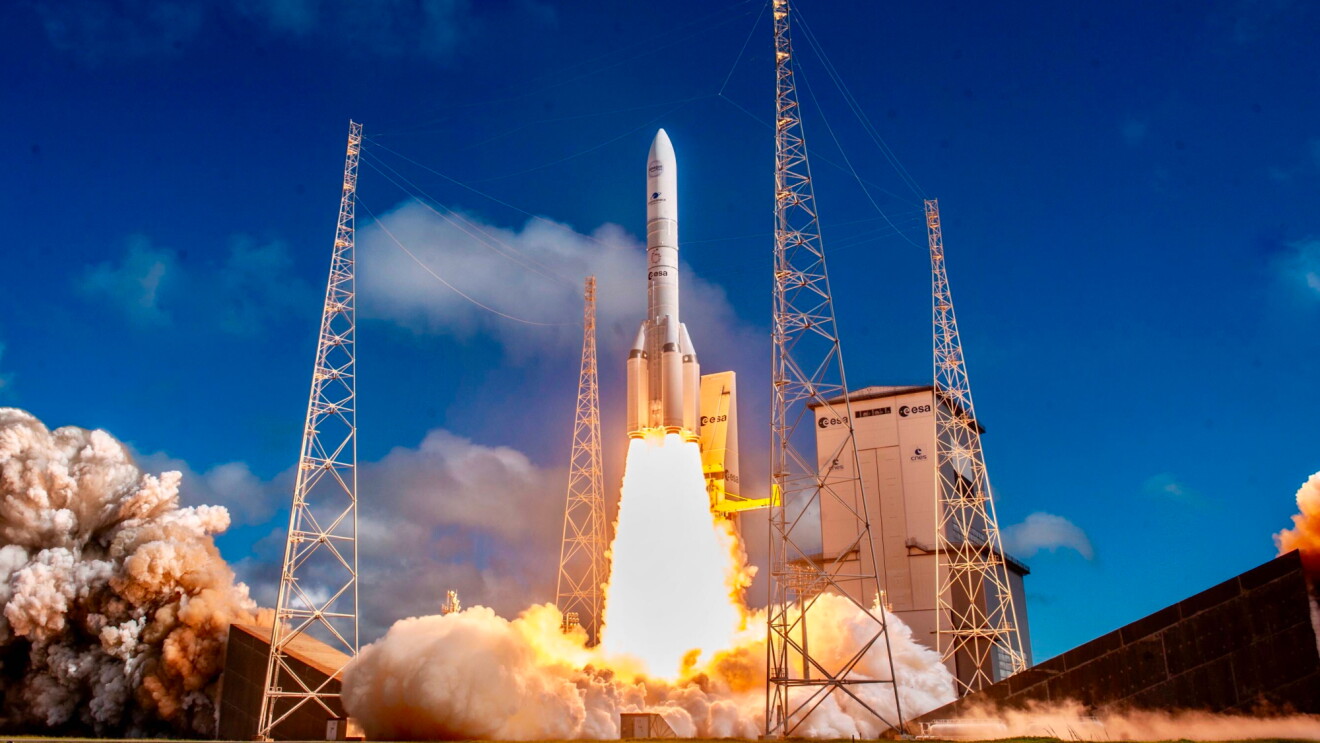
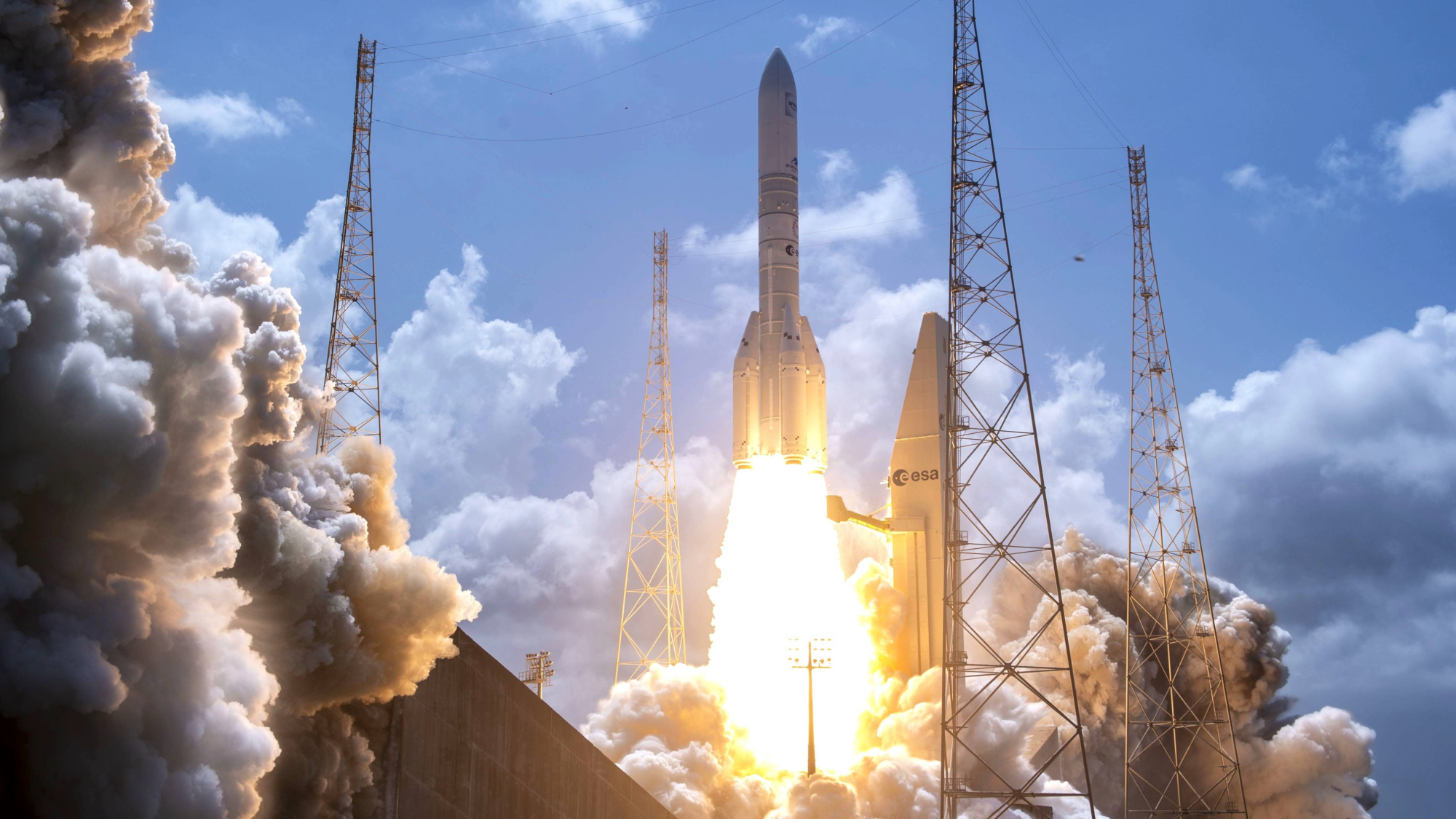
Updated on February 12, 2026: Amazon Leo successfully completed its first heavy-lift mission of 2026 aboard Arianespace's Ariane 64 rocket at 4:45 p.m. UTC on Thursday, February 12. The LE-01 mission deployed 32 satellites into low Earth orbit, bringing the total constellation to 200+ satellites.
David Cavaillolès, Arianespace’s CEO said: "Today’s successful flight marks a major milestone for Arianespace, for our customer Amazon Leo, and for the whole European space sector. With the first flight of Ariane 64, Europe’s heavy-lift launcher has demonstrated its ability to deliver the most demanding large-scale constellation missions. We are proud to support Amazon Leo with a reliable, high-performance European launch solution as we begin a series of 18 missions enabling the deployment of their constellation. We thank Amazon Leo for their confidence and are proud to support them as a trusted launch partner."
The original article follows.
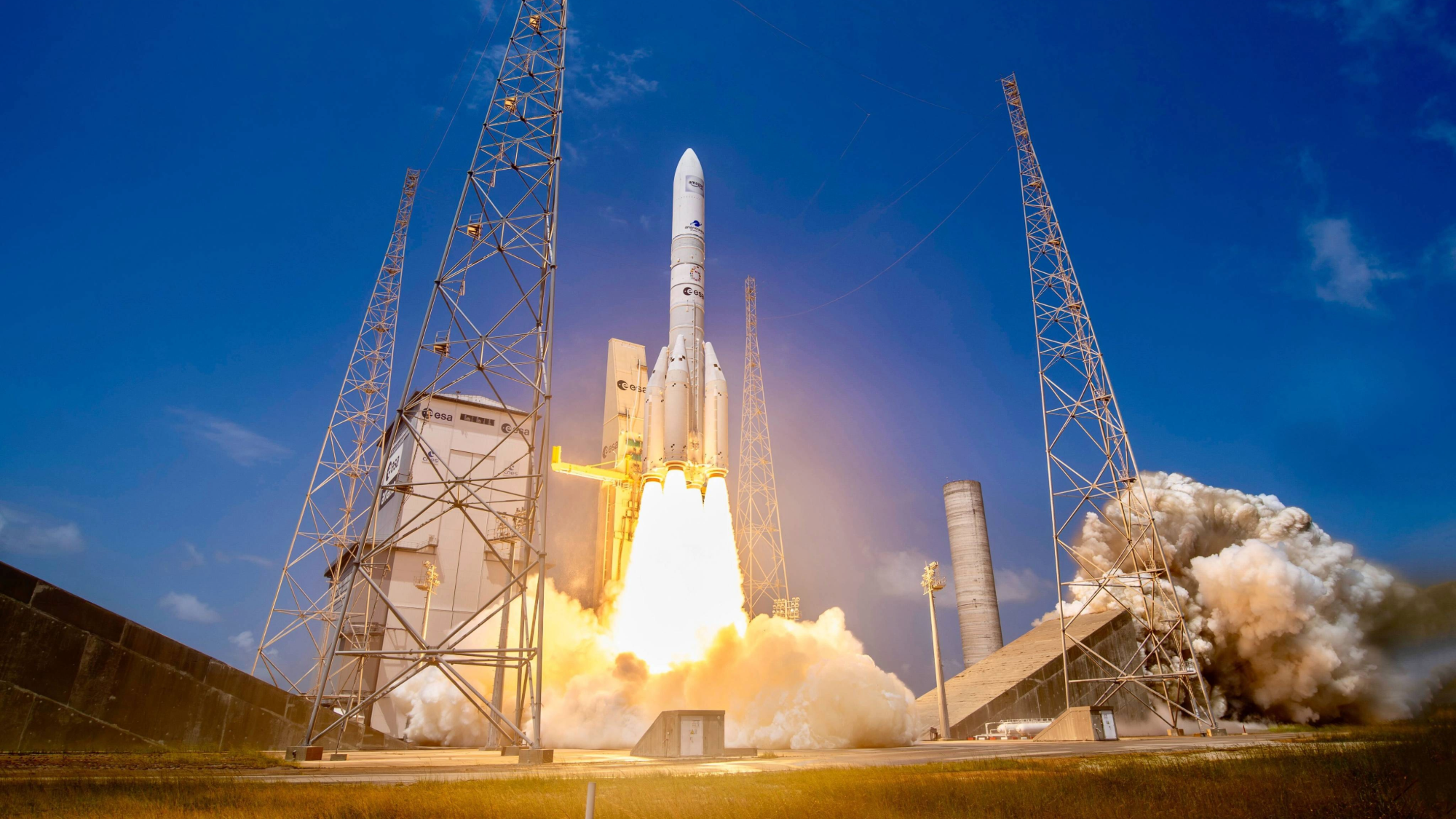
Amazon Leo is preparing for its first heavy-lift mission of 2026 aboard Arianespace's Ariane 64 rocket, scheduled to launch February 12 from the Guiana Space Centre in Kourou, French Guiana.
Named Leo Europe 01 (LE-01) for the first of 18 missions with Arianespace, the mission will deploy 32 satellites into low Earth orbit. This is also the eighth Amazon Leo mission to date and will bring the total number of satellites in the constellation to 200+ spacecraft, bringing Amazon a step closer to its mission of delivering fast, reliable internet to customers beyond the reach of existing networks.
You can watch the live broadcast of the LE-01 launch on YouTube, beginning at 8:45 a.m. PT (4:45 p.m. UTC) on February 12.
The LE-01 mission
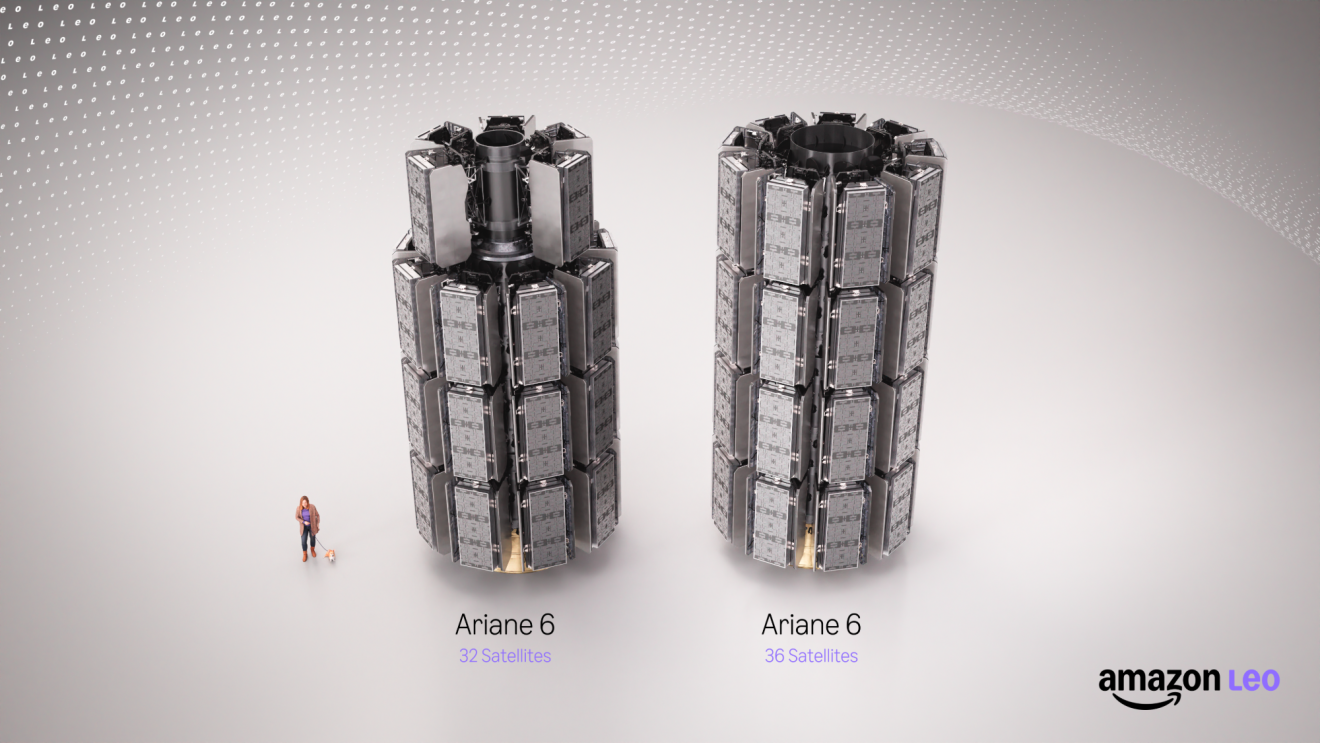
The LE-01 launch will utilize the Ariane 64 rocket configuration—the more powerful, four-booster variant of the Ariane 6 rocket designed for maximum payload capacity, capable of delivering up to 20 metric tons to low Earth orbit. This additional performance will allow us to send 32 satellites into orbit, making it the largest Leo payload launched to date.
Following liftoff from Europe’s Spaceport in French Guiana, Ariane 64 will shed its solid rocket boosters and payload fairing within the first few minutes of flight before its upper stage takes over, placing the mission on a precise trajectory toward its target orbit through a series of carefully timed engine burns.
 Attachment of four solid rocket boosters to Ariane 64 for Amazon Leo’s LE-01 missionPhoto by Arianespace
Satellite deployment will begin approximately 90 minutes into the mission, with satellites released sequentially over a 25-minute period. At that point, flight control teams at the Amazon Leo Mission Operations Center in Redmond, Washington, take over spacecraft operations, conducting initial health checks before raising satellites to their assigned altitude of 630 kilometers (km).
Future Leo missions on Ariane 6 are designed to carry even more satellites per launch as additional performance upgrades and mission optimizations come online, further increasing the rocket’s lift capability over time. As Amazon continues to scale its constellation, Ariane 64—alongside other new heavy-lift rockets on the Leo manifest—will play a critical role in accelerating deployment while optimizing mission efficiency and cost, with each launch delivering more satellites to orbit in a single flight.
"LE-01 marks several important firsts for Amazon Leo," said Rajeev Badyal, vice president of Amazon Leo. "This is our first launch of 2026, our inaugural mission with Arianespace as part of our 18-launch agreement, and the first of three new heavy-lift rockets joining our manifest this year. These powerful launch vehicles allow us to deploy more satellites per mission, which will help us get service to customers as quickly as possible. Teams have done everything they can to prepare for a nominal first mission and we’re looking forward to many more Leo Europe missions in 2026."
Amazon Leo and Arianespace's European partnership in space
 Amazon Leo’s encapsulated satellites in transit to the launch padPhoto by Arianespace
In 2022, Amazon secured 18 launches with Arianespace, representing the largest commercial contract Arianespace has ever signed. As Arianespace's largest commercial customer, Amazon is working alongside European partners to build its satellite network.
“Ahead of the first Ariane 64 flight servicing Amazon Leo’s constellation, our teams are fully focused and eager for launch. This mission marks the first of 18 launches Arianespace will conduct for Amazon Leo and it will showcase new capabilities of Europe’s Ariane 6 heavy-lift launcher. We are proud to contribute to the deployment of this ambitious constellation, expanding access to reliable internet around the world,” said David Cavaillolès, CEO of Arianespace.
Fast Facts
The LE-01 mission will launch from the Guiana Space Centre, Europe’s spaceport, located in French Guiana, managed by the French space agency (CNES) with the support of European Space Agency (ESA).
Preparing for Amazon Leo’s commercial rollout
There are still billions of people on the planet who lack high-speed internet access, and millions of businesses, governments, and other organizations operating in places without reliable connectivity. Amazon Leo aims to bridge that gap by extending fast, reliable internet to those beyond the reach of existing networks, from individual households and small businesses to large enterprises and government customers.
Amazon Leo will begin rolling out to customers in 2026 once we’ve deployed more satellites and added coverage and capacity to the network, with service beginning in northern and southern latitudes and expanding gradually toward the Equator.