
Key takeaways
- An Amazon general manager oversees everything from safety and financials to associate well-being—which is why Alessandro Carbone compares the role to being mayor of a small town.
- Daily routines include reviewing metrics, walking the floor with associates, and solving complex problems that affect people's lives.
- Carbone traded a law career in Italy for Amazon operations nine years ago—and says stepping outside his comfort zone changed his life.
Alessandro Carbone has a simple way of explaining his job at Amazon. When his 93-year-old grandmother in Italy asked what he does for a living, he told her he's like a mayor of a small town.
"I have 3,000 associates I need to take care of their well-being," Carbone said on the latest episode of the Learn and Be Curious with Doug Herrington podcast. "I need to take care of the roads around the building because I have a huge yard, trailer yard, a parking lot. I have a social responsibility for my township. I have the financials, our cost to serve customers, it's our priority. I pay the bills. I literally pay the electricity."
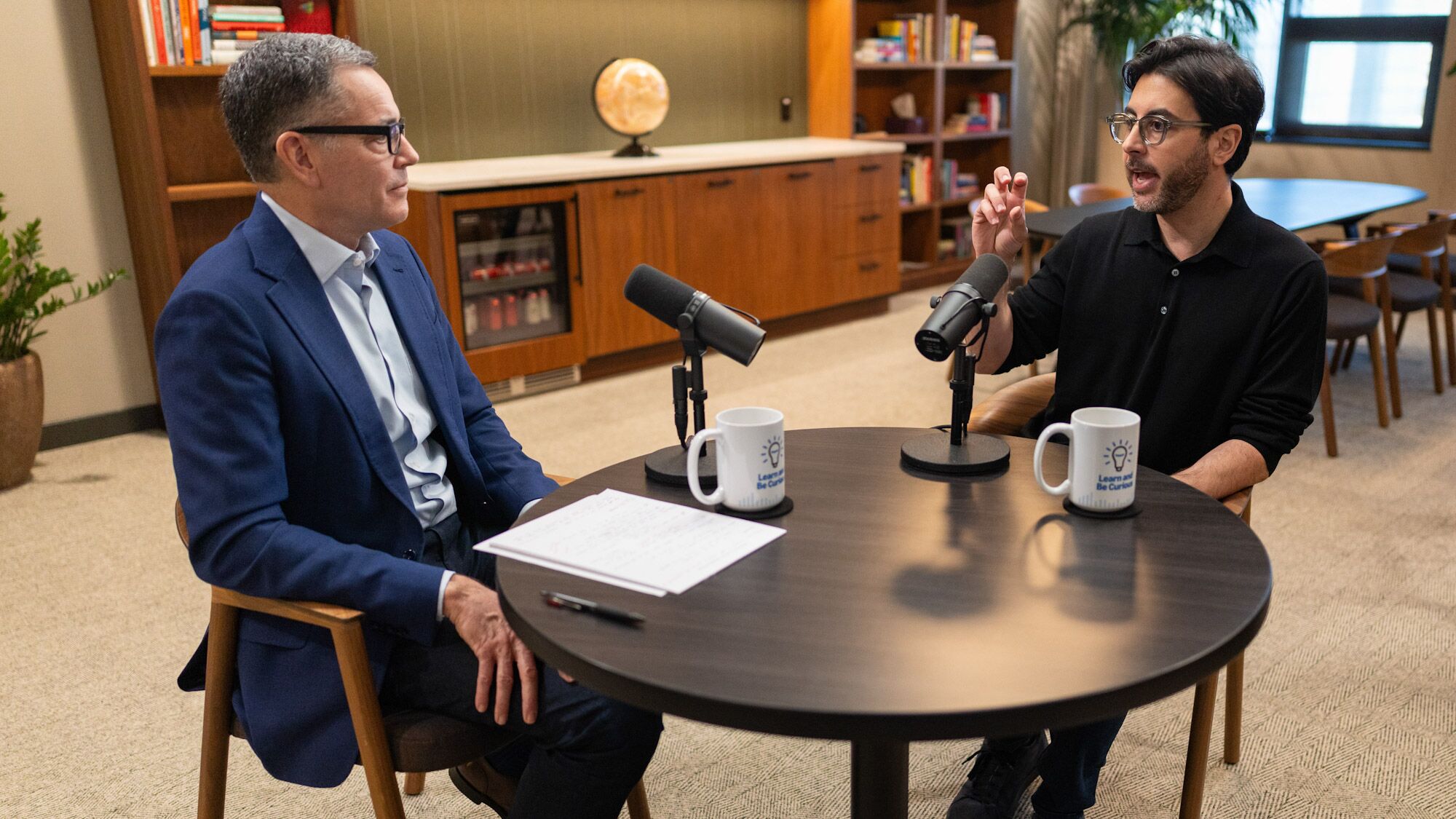
Carbone shared his story with Doug Herrington, Amazon's CEO of Worldwide Stores, on the podcast. He's the general manager of an Amazon fulfillment center in southern New Jersey, outside of Philadelphia. At 665,000 square feet—more than 1.4 million with the mezzanine levels—the building holds up to 20 million individual units and three million unique items. That's roughly the equivalent of 30 big-box retail stores under one roof. Inside, robots bring shelves of products directly to associates at their stations, instead of associates walking to find items.
Carbone’s job is to keep all of it running smoothly.
How an Amazon GM spends the day
Every morning begins with Carbone and his team reviewing daily and weekly performance data to understand what happened the previous day—what went well, what didn't, and where to focus.
AI tools have transformed this part of his job. "Before, you needed to go in 20 different portals, doing your analysis, Excel," Carbone said. "Now there are tools that are telling you what went wrong, what are the root causes, what are potential actions in 10 seconds."
The time savings matters because of what comes next: getting out on the floor. Three times per week, Carbone and his senior leadership team conduct what's called a Gemba walk—a lean manufacturing practice where leaders go to where the work happens and talk directly with the people doing it.
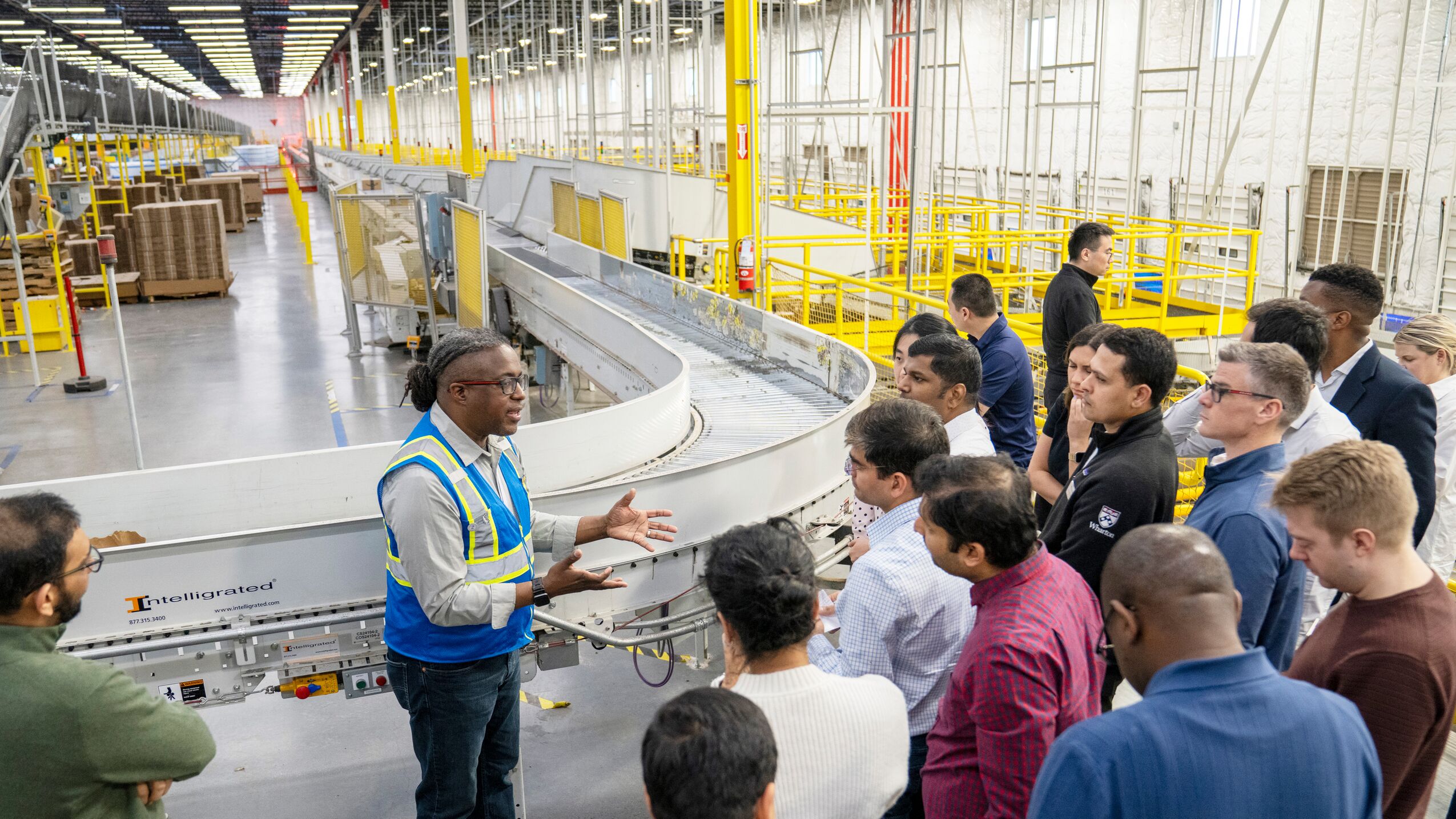
"We walk the floor with an associate and then we listen from them what are the main barriers, the recurring barriers," Carbone said. "And then we put an action plan into place."
Between those structured walks, Carbone moves through the building spontaneously, picking up observations along the way. He also put up a banner with his face and email address, inviting associates to reach out directly. He gets 25 to 30 emails a week—mostly about problems that aren't complicated to understand, but are deeply personal and impactful for the people raising them—like a shift schedule that doesn't work with a family situation.
"Once you start solving one problem at a time, or sometimes I call them in my office and say, listen, here I can't help you, but I have this other option—once you start building this trust, that's where you are changing the culture," he said.
What it takes to keep millions of packages moving
On the operations side, Carbone's building receives about 100 inbound trucks and sends out about 100 outbound trucks every day. The work has to flow continuously—from receiving inventory, to storing it, to picking, packing, and shipping once a customer places an order.
Herrington compared it to water running through a hose: "If you stop it anywhere, you've got big problems. You're going to get a huge bubble that blows up any place in that building, and then the rest of the building gets starved."
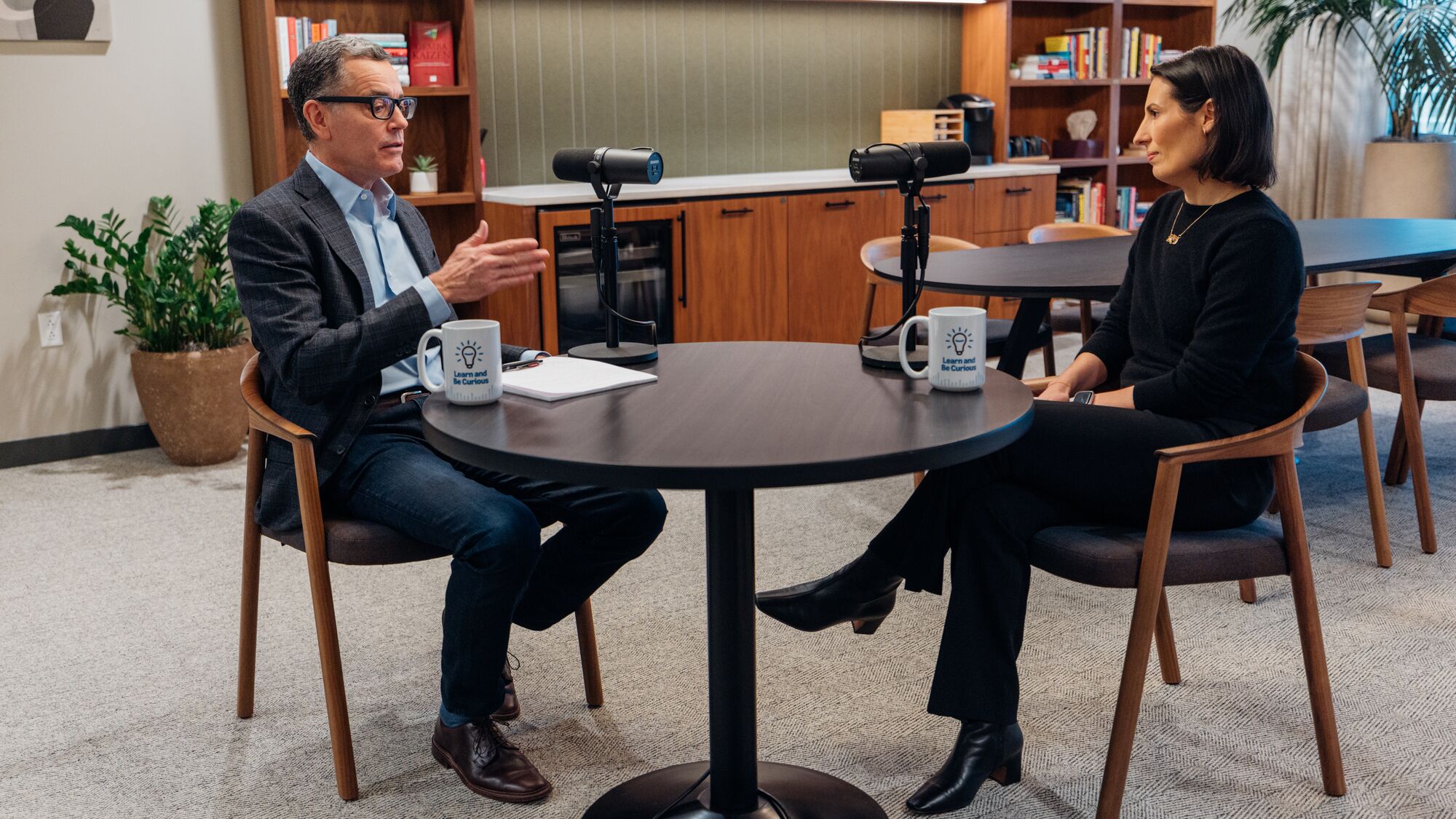
Carbone said his approach comes down to empowering his team rather than micromanaging. "Empowering your team to take risks," he said. "It's not paying off in the first six months, but then it's unlocking a lot of potential. When everyone is leading at their scale, you will see the building flying."
The other half of his operations philosophy is more visible: keeping the building clean and organized. Carbone follows a lean manufacturing principle called 5S—the idea that everything in a workspace has a designated place, marked and maintained.
"If you enter in your building and you go to your station, if everything is at the right place, I think from a psychological point of view, you will do a safer shift because you feel more safe," he said.
His building has strong safety metrics, which Carbone attributes directly to keeping things organized and following standard procedures. Herrington, who has visited more than 200 Amazon sites in the past four years, agreed: "Our best performing buildings have our best safety metrics. And it's because standard work and a clean, well-organized building are leading to the same outcomes."
From Italian law to Amazon operations
Carbone's path to running a fulfillment center was unconventional. Nine years ago, he was practicing law in Italy, working in consultancy, bankruptcy, and mergers and acquisitions. He decided to pursue an MBA in Switzerland, and during that program, he applied for an internship with Amazon's Pathways program—a three-year track that develops operations leaders from the ground up.
What made him stay wasn't the operations work itself. It was the culture.

"There was no competition," Carbone said. "I came from a law firm where there is some competition, really not helping each other every day. At Amazon, a senior operations manager was helping me until night building this model in Excel. So I said, okay, this is what I was looking for."
Since then, he's worked in Germany, Italy, and the United States. Along the way, he met his wife Veronica—also a fulfillment center general manager—during that 2017 internship. Their daughter, Gaea, was born in January.
The career advice he keeps coming back to
When Herrington asked what advice Carbone would give to young professionals considering a nontraditional career path, his answer was simple.
"When you stretch yourself and when you push yourself to learn new things, this is where you are improving. And this is not helpful only in the professional way. It's a great life skill."
Listen to the full episode of Learn and Be Curious with Doug Herrington, now available wherever you listen to podcasts.
Trending news and stories