
Key takeaways
- Amazon has launched 200+ satellites to date and has another 200+ stacked and ready for launch.
- Upcoming Atlas V payloads will increase to 29 satellites, the rocket’s heaviest payload ever.
- 20+ missions planned for year two of deployment, including first on New Glenn and Vulcan Centaur.
- Amazon invested $200+ million in upgrades at Cape Canaveral to support increased launch cadence.
Amazon Leo is continuing the full-scale deployment of our growing satellite constellation, with more than 200 satellites deployed and hundreds of additional flight-ready spacecraft on standby for launch. Amazon currently operates the third-largest satellite system in orbit, and with three additional missions planned over the next month, the program is on pace to complete 11 launches in our first year of deployment.
We’re prepared to move even faster in year two—a direct result of our long-term investments in satellite production, launch capacity, and infrastructure. Every satellite adds coverage and capacity to the network, and we’re on pace to more than double our annual launch rate to over 20 missions and send even more satellites to space at a time.
Amazon Leo satellite production and processing
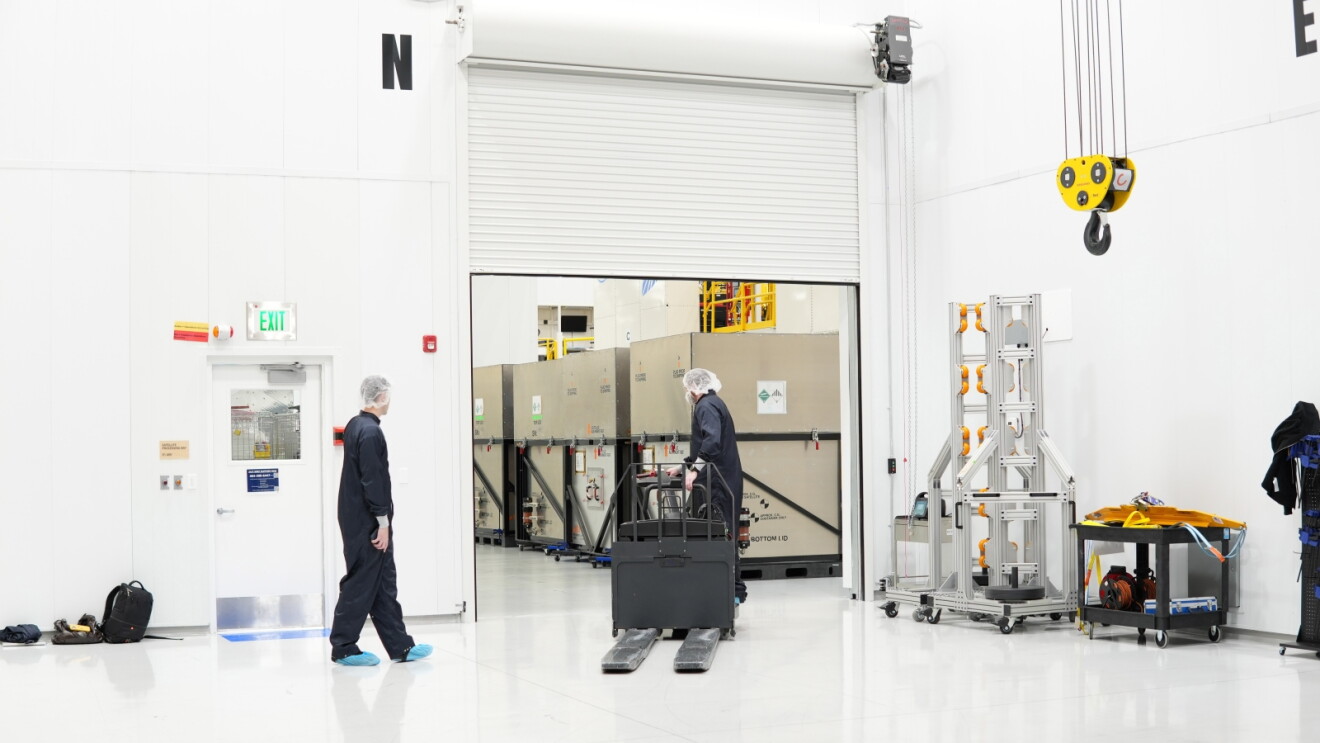
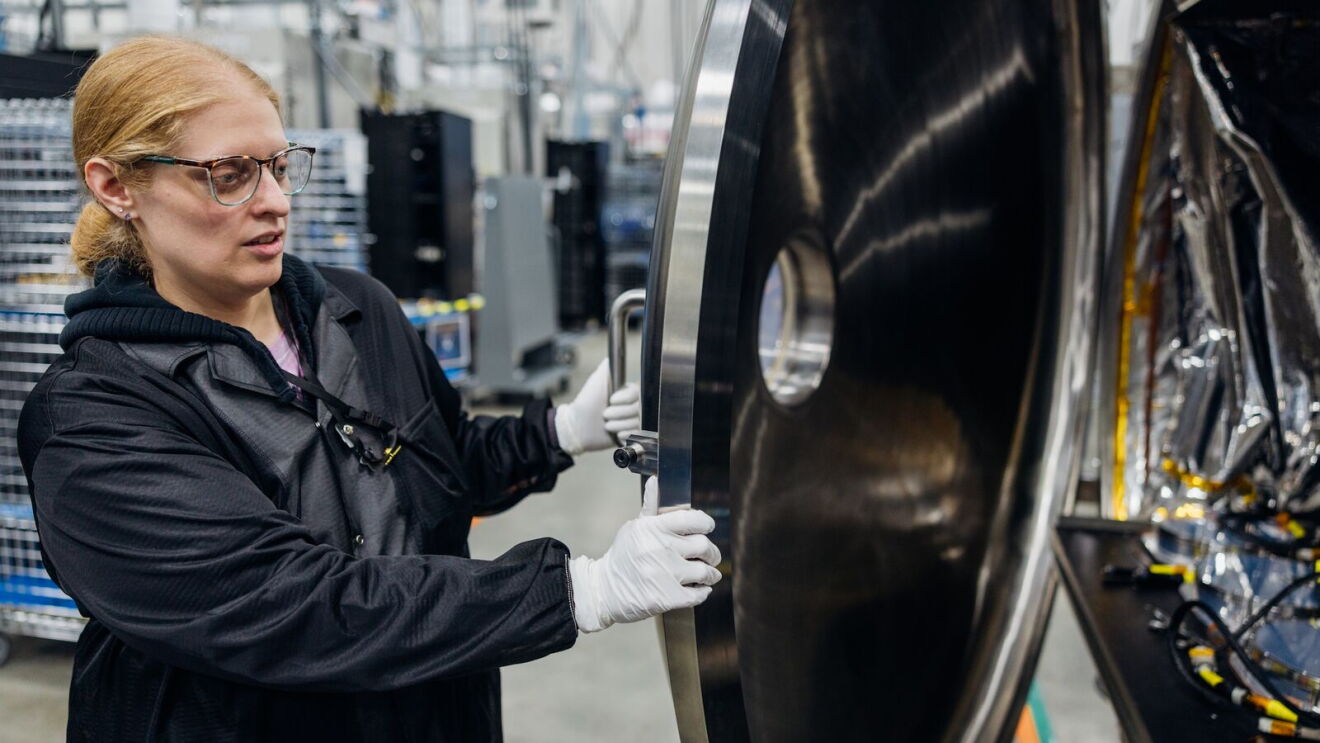
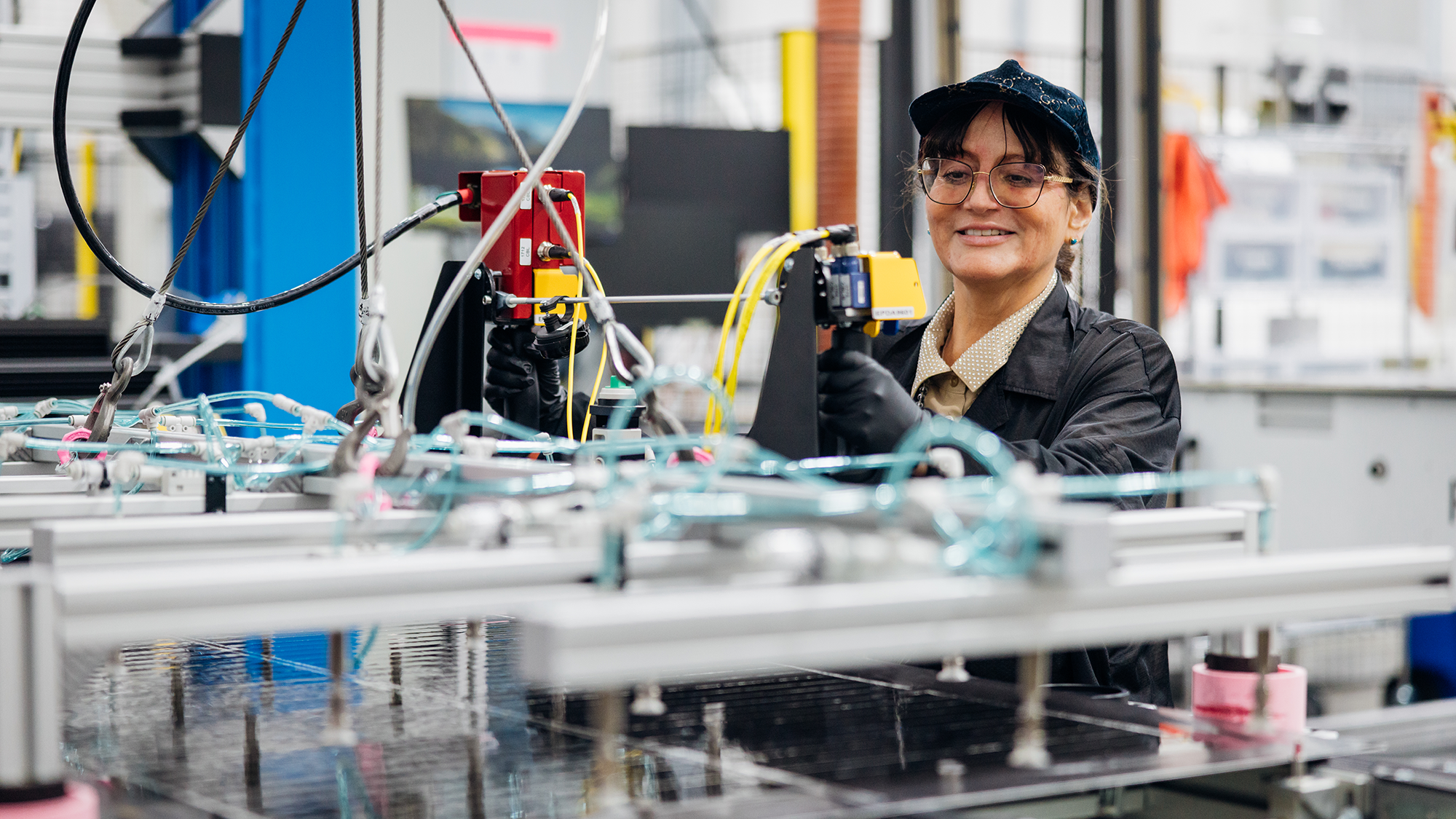
We build, test, and qualify Leo satellites at our dedicated production facility in Kirkland, Washington. The facility has the capacity to build as many as 30 satellites per week, and although we’ve adjusted weekly production targets to reflect launch vehicle readiness and availability, the Leo team continues to manufacture multiple satellites per day, and we currently have hundreds of flight-ready satellites on standby for launch.
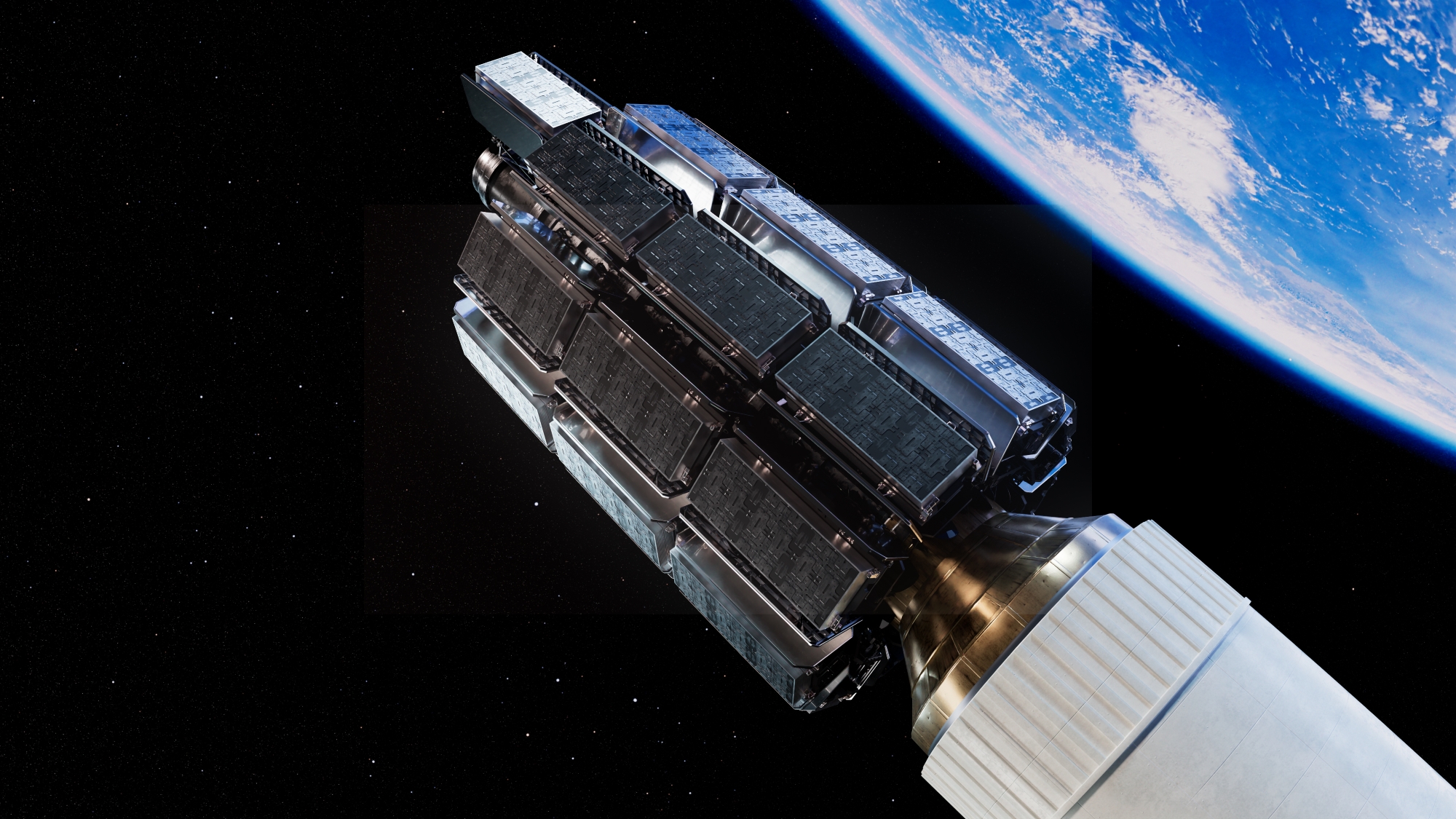
Many of those satellites have already been shipped to processing facilities in Florida and French Guiana. As of mid-March, we have six fully stacked payloads at our satellite processing facility in Florida—more than 200 satellites in total—and another payload being prepared in French Guiana.
More satellites per launch
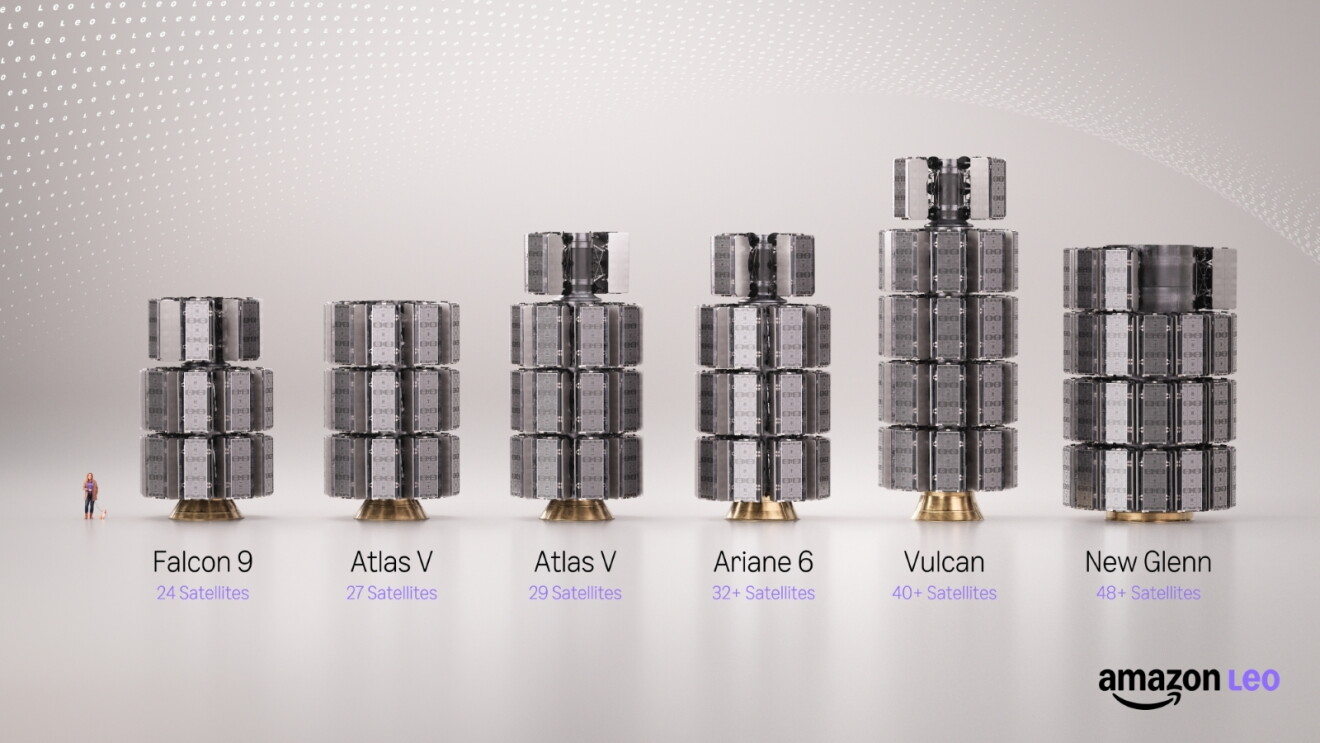
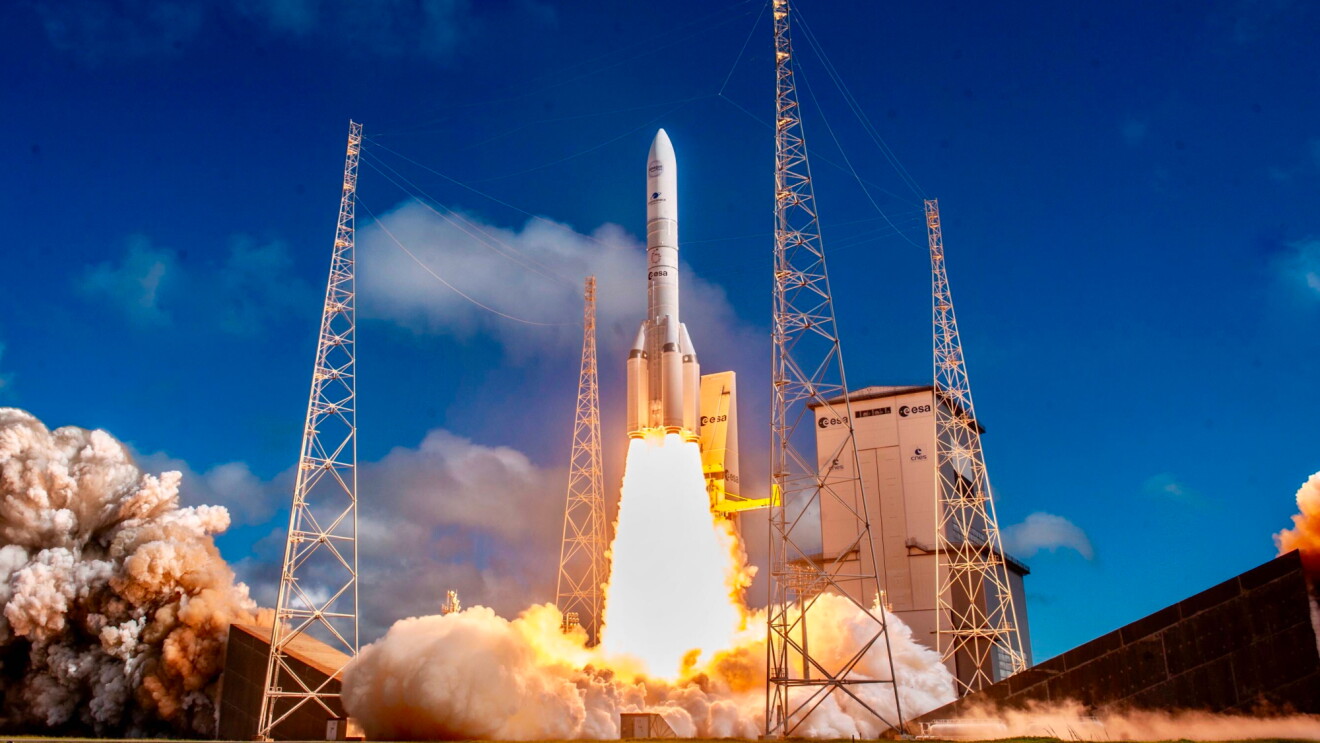
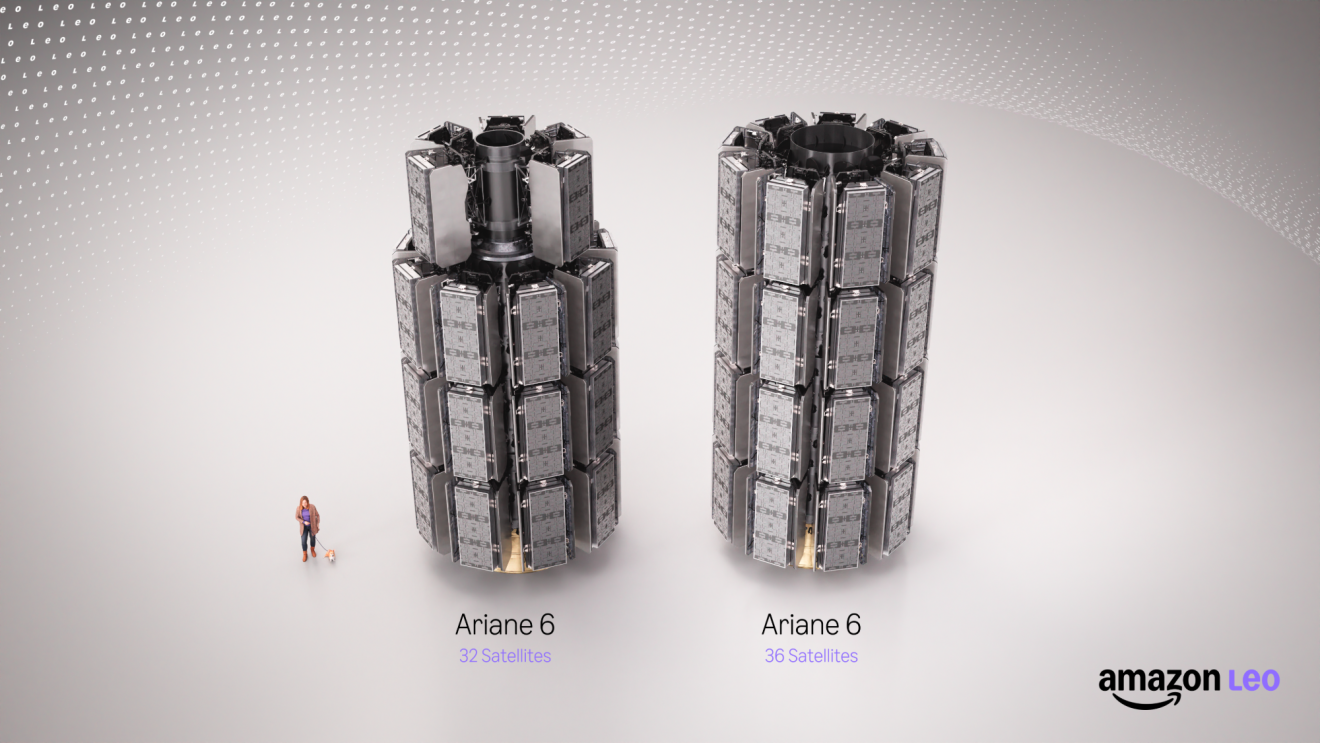
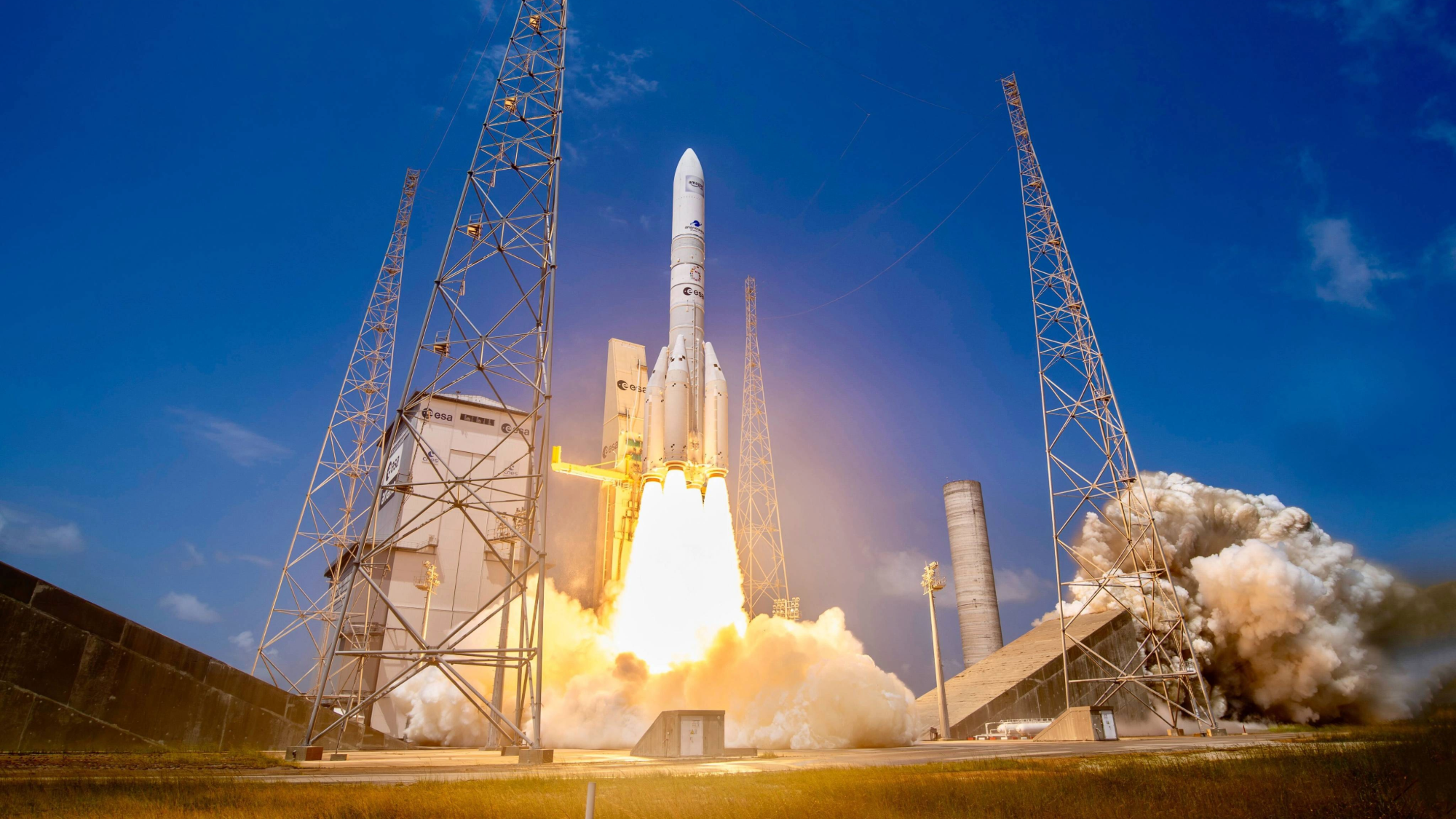
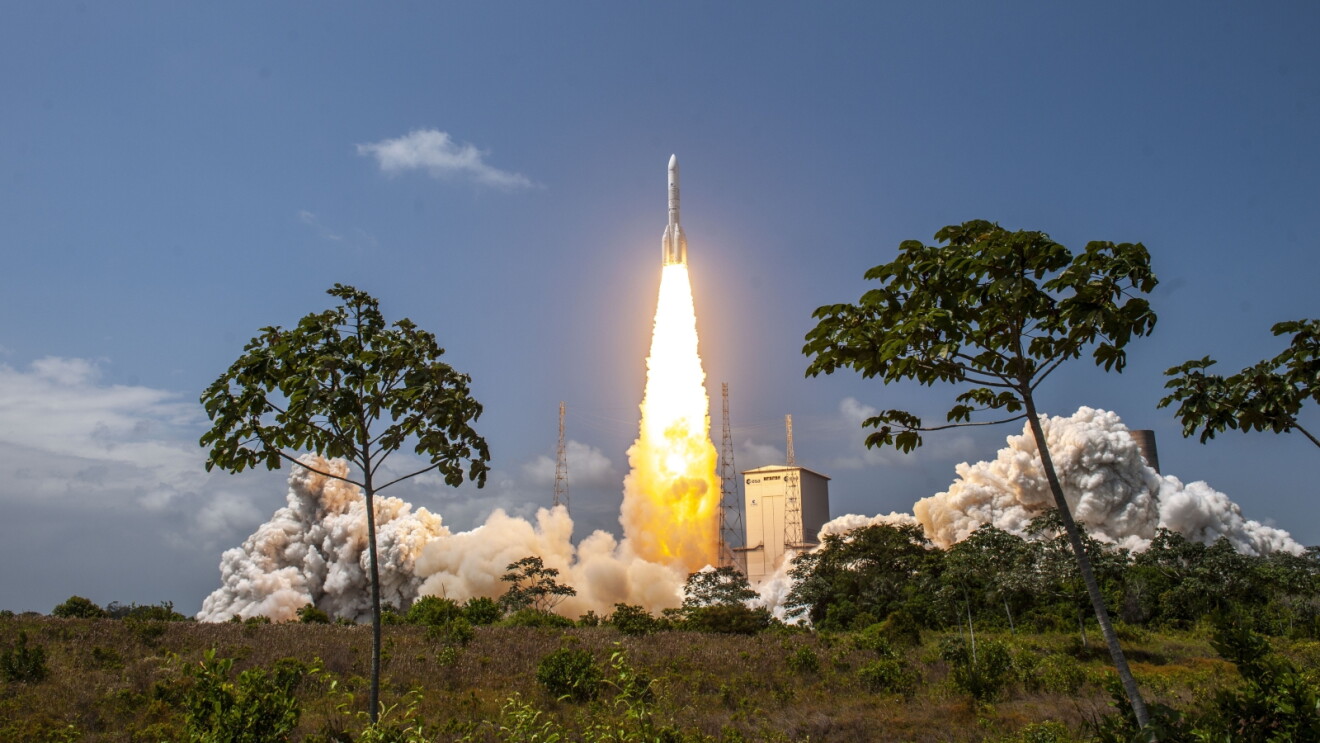
The majority of Leo satellites this year will launch on new heavy-lift rockets that will allow us to deploy more satellites per mission and reduce the cost of deployment over time. We completed the first of these, Leo Europe 1 (LE-01), on February 12 using Arianespace’s Ariane 64 rocket. LE-01 sent 32 Leo satellites to space, and future booster upgrades will allow us to support even larger payloads on Ariane 64.
The other heavy-lift rockets on our manifest, Blue Origin’s New Glenn and United Launch Alliance’s (ULA) Vulcan Centaur, will fly our largest Leo payloads. Initial missions on New Glenn will accommodate 48 satellites in the rocket’s 7-meter-wide fairing, and initial missions on Vulcan Centaur will accommodate 40 satellites. As with Ariane 64, both vehicles have enough space to accommodate additional satellites, and we expect our payload sizes to increase over time as Blue Origin and ULA improve vehicle performance.
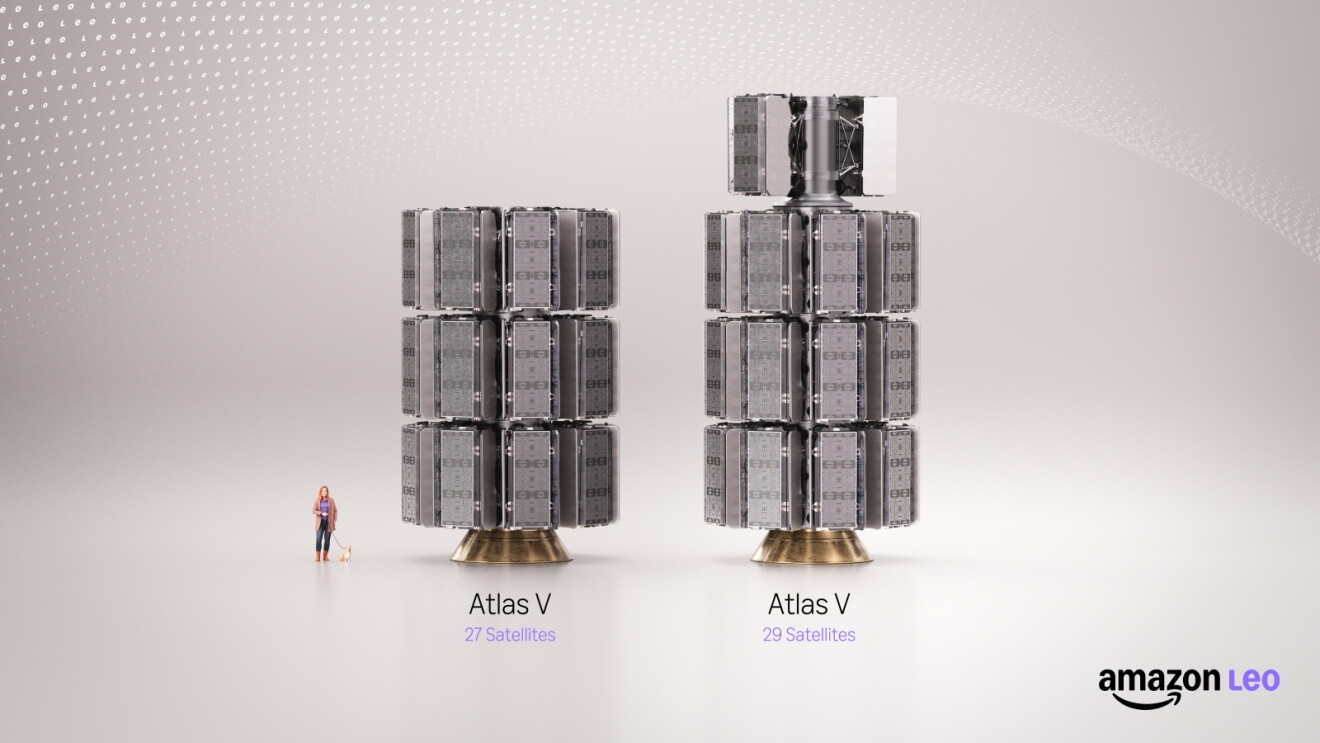
We’ve applied a similar focus to our remaining Atlas V payloads, which will increase from 27 satellites to 29 satellites beginning with Leo Atlas 5 (LA-05). The increase is a result of detailed engineering work between Amazon Leo and ULA, and is made possible by a new, higher-performing version of the RL10C engine used on the rocket’s Centaur upper stage. While the engine has flown on previous missions, LA-05 marks the first time the program has completed the extensive engineering and safety analysis required to use it with our larger payload. Our engineering teams capitalized on the additional performance margin, adding a fourth level to the previous three-tier dispenser configuration for Atlas V. With 29 satellites aboard, LA-05 will mark the heaviest payload ever flown on an Atlas V.
Investing in launch infrastructure
01 / 03
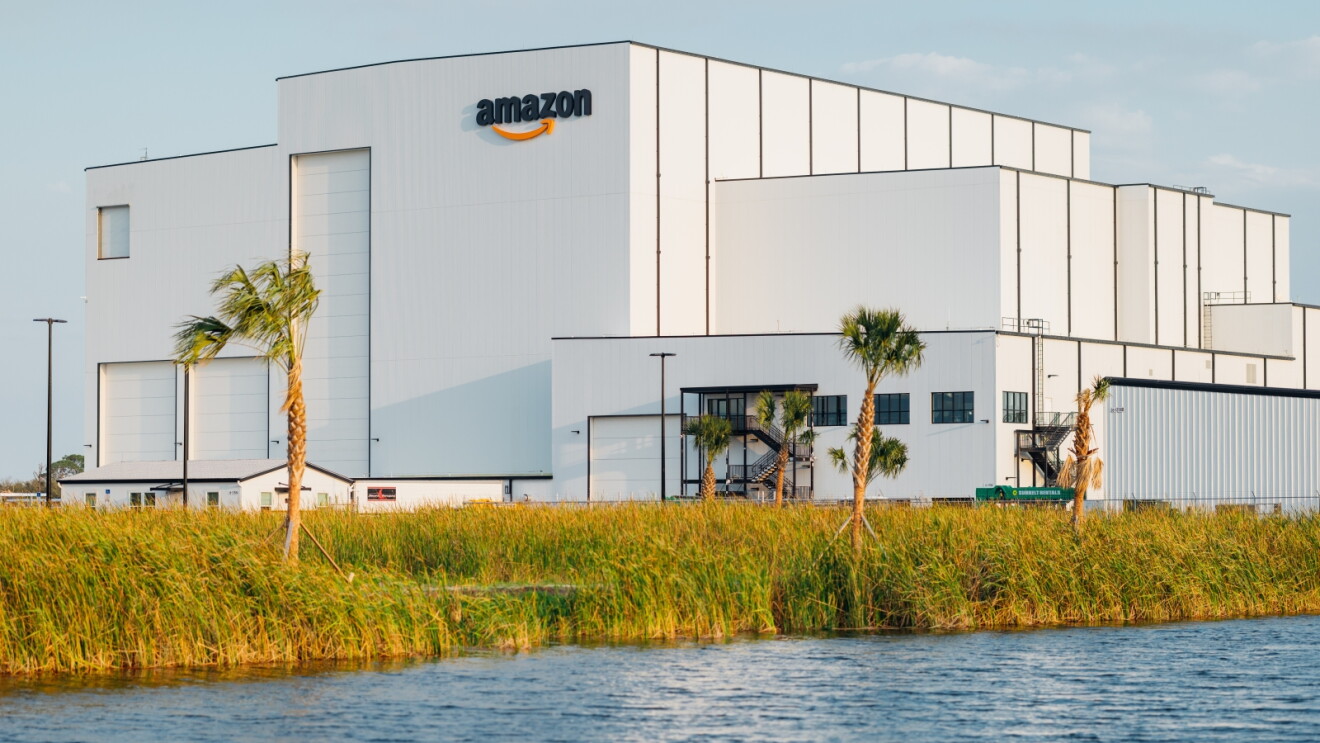
Amazon has also made significant investments in new facilities and infrastructure to support a higher cadence of Leo missions. The most important component is our dedicated, 100,000-square-foot payload processing facility in Florida, the largest facility of its kind in the world. We’re making similar investments at Vandenberg Space Force Base in California to support future Amazon Leo missions from the West Coast.
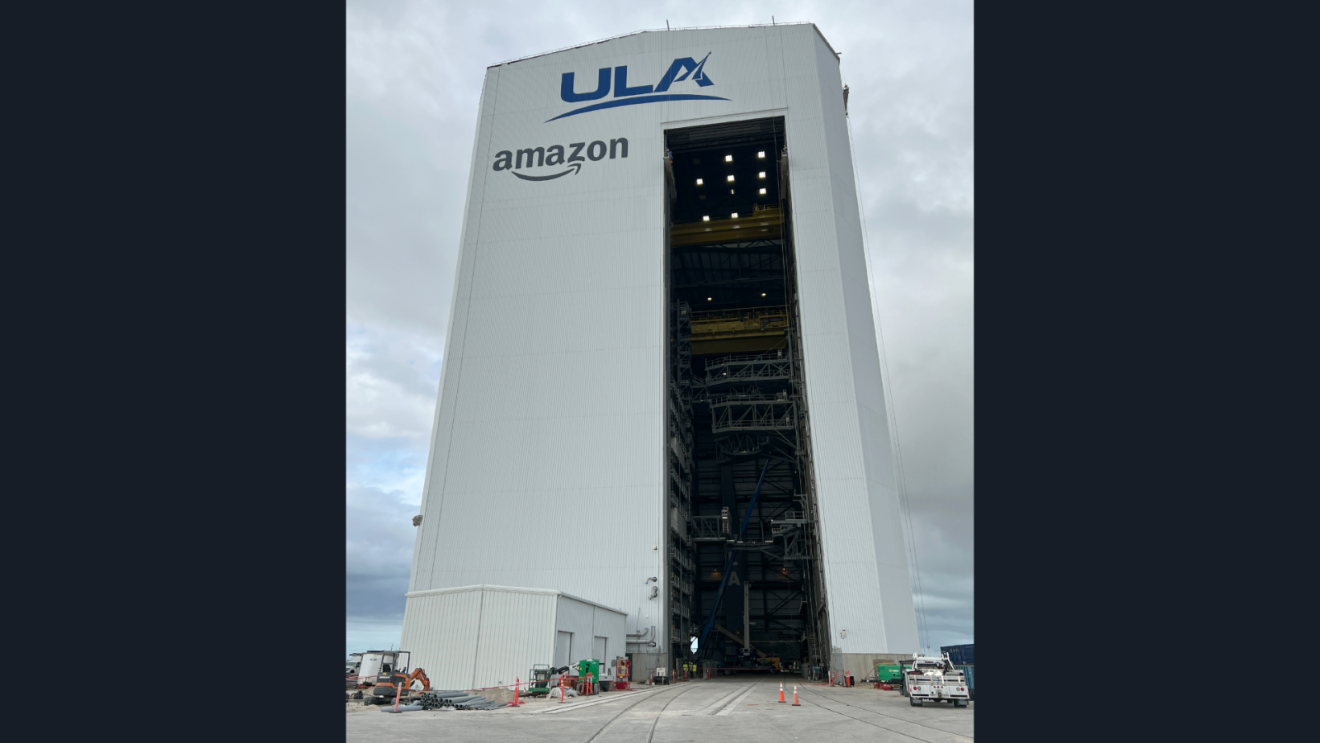
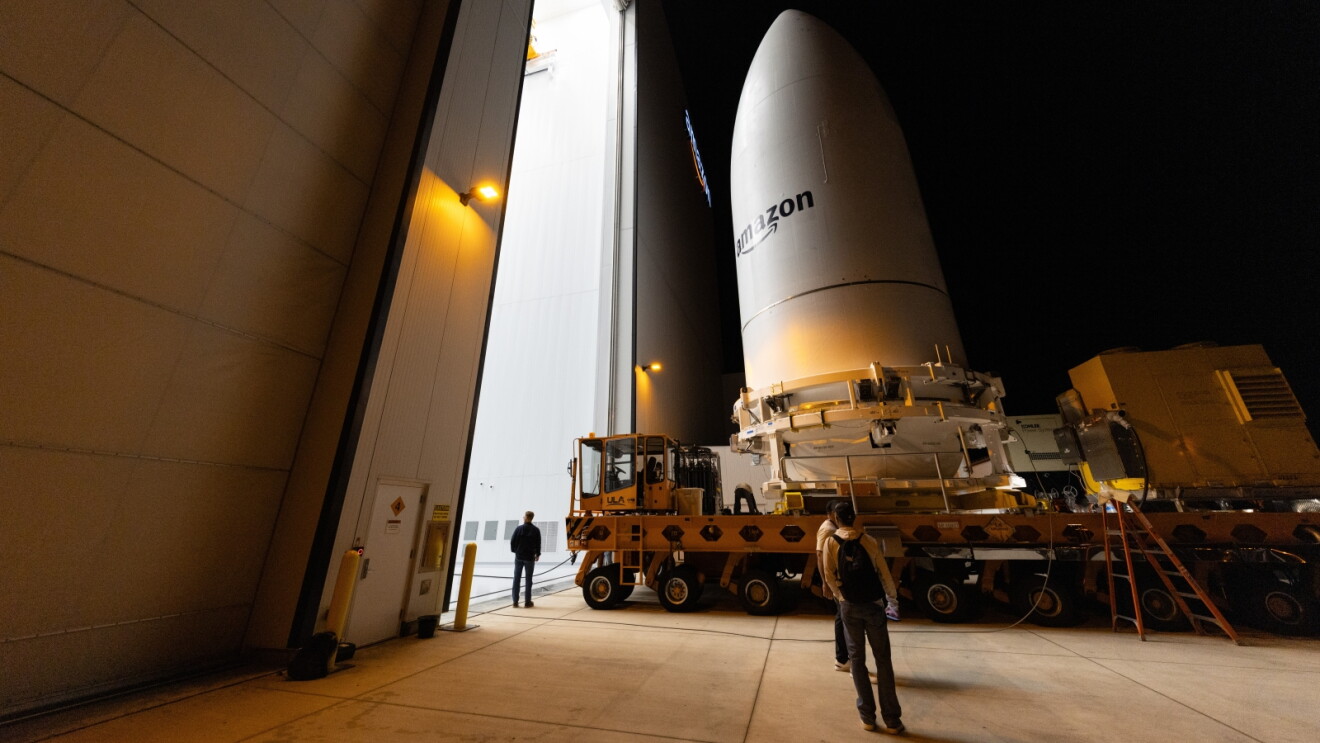
We’ve also invested more than $200 million in infrastructure and service upgrades at ULA launch facilities at Cape Canaveral Space Force Station in Florida. These include a dedicated vertical integration facility for Amazon Leo (VIF-A), a new rail system and second mobile launch platform to transport the stacked rocket to the pad, and a second transport ship for carrying rocket boosters from ULA's factory in Alabama to Cape Canaveral. The improvements will allow ULA to double their launch capacity and reduce turnaround time between launches, benefiting Amazon Leo and other ULA government and commercial customers operating from Space Launch Complex 41.
Building for the future with 100+ launches
While Amazon secured an initial block of 80 launches to support our first-generation satellite constellation, we also have approval to deploy a second-generation system, and we’ve continued to secure launch capacity to help accelerate near-term deployment plans and support our longer-term plans for Amazon Leo. Late last year, we secured another 10 launches on SpaceX’s Falcon 9 rocket and we converted options with Blue Origin to give us a total of 24 firm launches on New Glenn. Together, those additional missions provide capacity to deploy another 800+ satellites, and bring our total Leo launch manifest to more than 100 missions.
Follow along for the latest on our upcoming missions, and visit leo.amazon.com to learn more about Amazon Leo service.
Trending news and stories
- Prime Big Deal Days is back October 6-7: Here’s what to expect
- Amazon is giving every US employee a discount on groceries
- Amazon raises minimum starting pay for full-time core operations employees to $20/hour, with average pay reaching nearly $24/hour
- Prime Big Deal Days 2026: Early deals you can shop right now