Key takeaways
- Amazon has more than 50,000 electric delivery vans in its global fleet.
- Amazon has put more than 15 electric vehicle models on the road to test and learn, from e-cargo bikes and three-wheelers to heavy-duty trucks.
- Amazon carefully selects each vehicle type to fit specific routes and regions across its global operations.
As Amazon continues to work toward achieving net-zero carbon emissions by 2040, the company is constantly innovating to transform our operations and positively impact local communities. This includes investing in safe nuclear power for our data centers, building facilities with lower-carbon engineered wood, and reducing packaging and making the materials we use easier to recycle.

Amazon is also pioneering lower-emission ways to get packages to doorsteps. The company has rolled out more than 50,000 electric delivery vans across its global fleet—halfway to its goal of at least 100,000 by 2030—as part of a broader push that includes a growing number of different electric vehicles in cities and countries around the globe.
These vehicles each have their own look and style, but their mission is the same: transporting everything from vacuum cleaners to shampoo through its fulfillment network and to customers, while helping reduce tailpipe emissions and noise.
Amazon carefully selects these makes and models to meet the specific needs of different regions and routes across its operations, as each vehicle has its own strengths and characteristics.
Learn more about the electric vehicles in Amazon's transportation network.
Electric cargo bikes

- Fun facts:
- The e-cargo bikes in our network includes two-, three-, and four-wheel vehicles. All have pedals as well as motors to provide pedal assistance.
- E-bikes are ideal for navigating deliveries in congested cities, where deliveries are also located closer together. E-bikes help relieve congested city streets and avoid tailpipe emissions.
- Amazon began testing e-cargo bikes in 2017. Delivery Associates are now using e-bikes to make deliveries in New York City and Washington D.C. The company has also launched more than 70 micromobility hubs across more than 50 cities in Europe.
- The e-cargo bikes in our network includes two-, three-, and four-wheel vehicles. All have pedals as well as motors to provide pedal assistance.
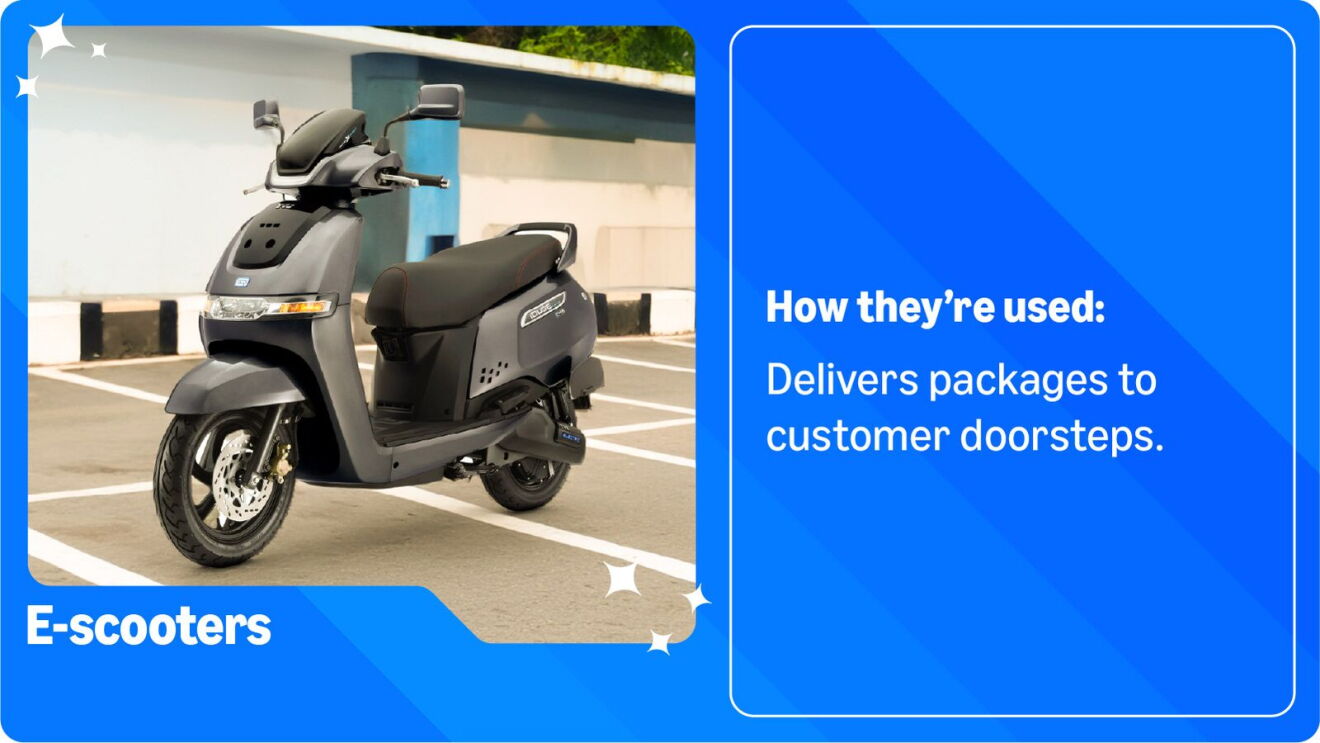
E-Scooters
- Fun facts:
- India is the world's largest two-wheeler market and has a deep-rooted two-wheeler culture that naturally extends to delivery services. These vehicles’ advantages include superior maneuverability in congested streets, cost-effectiveness, easy parking, and faster navigation in urban areas compared to larger vehicles.
- Over 80% of Amazon deliveries in India are conducted via two-wheelers.
Three-Wheelers

- Fun facts:
- These vehicles are also referred to as goods vans.
- Amazon collaborated with manufacturers to develop innovative three-wheel electric vehicles that match the capacity of internal combustion engine four-wheel vehicles.

Electric delivery vans

- Fun facts:
- The electric vans from Rivian were custom-designed with Amazon teams, and the process of designing, testing, and first rolling out the vans happened in just under three years! Learn more about the design process and tour the van with a delivery associate.
- Electric vans do not require a special license, but Delivery Associates receive additional training before getting behind the wheel.
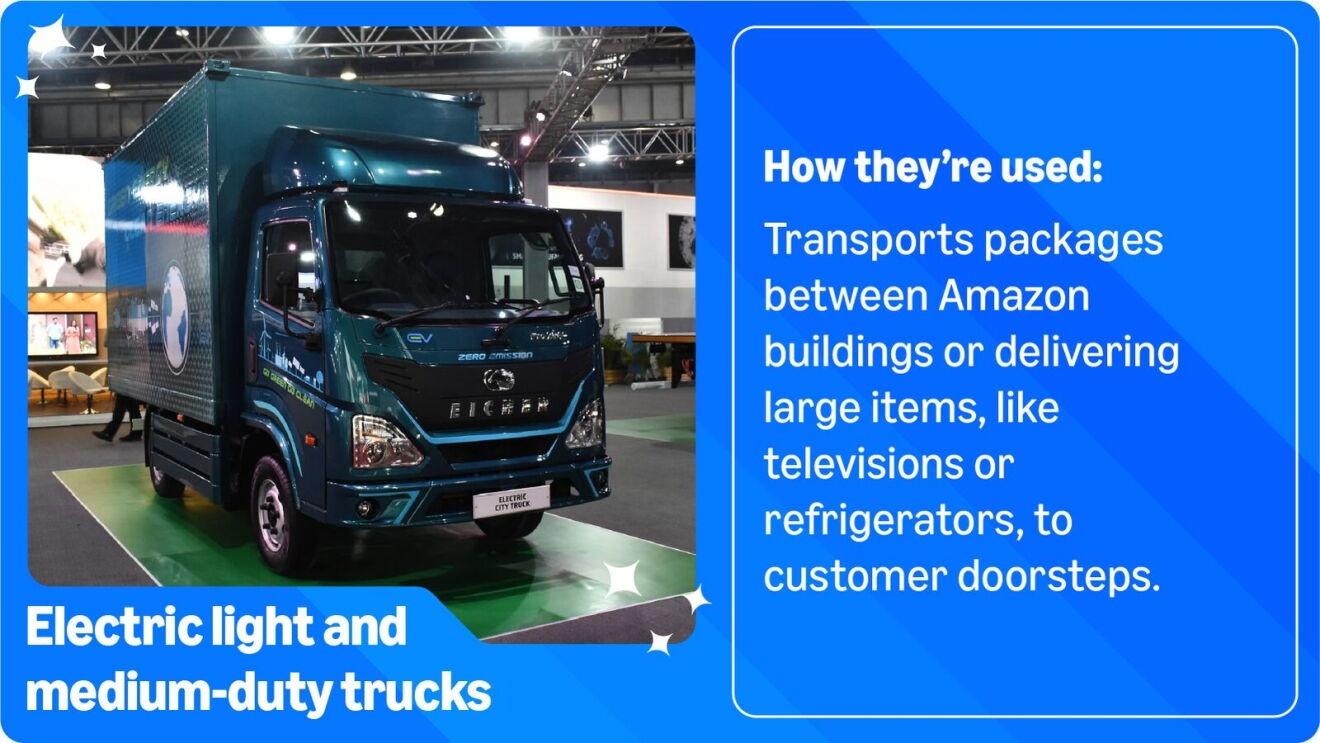
Electric light and medium-duty trucks
- Fun facts:
- Drivers appreciate the quieter, more comfortable ride these vehicles provide.
- We plan to introduce over 1,000 of these trucks into our operations in India over the next five years, joining the more than 10,000 electric vehicles already on the road.
Electric heavy-duty trucks

- Fun facts:
- These vehicles are also referred to electric heavy-goods vehicles or semi-trucks.
- The term for driving a truck without the trailer attached is “bobtailing.”
- Amazon's first-ever electric trucks supporting our Global Logistics, or “drayage,” operations hit the road in 2024. “We're getting great reviews from drivers—they love the smooth, quiet ride and the comfortable design of the cab,” shared Apoorva Prasad, vice president of Amazon Global Logistics.
- Last year, Amazon announced its largest-ever single order of over 200 electric-heavy duty trucks in Europe. There are over 100 in operation and the company is on track to more than double that fleet by the end of the year.

Next, learn more about the delivery station putting dozens of sustainability strategies to the test.
Trending news and stories
- Investing more than $230 million in higher pay and expanded benefits for Whole Foods Market team members
- Millions of students can now get access to a free year of Kiro from AWS
- Amazon Leo adds 6 new Arianespace launches, expanding its launch partnership
- Amazon’s 2026 Top 100+ Toys list: Something for every kid at heart