

Key takeaways
- AWS offers multicloud tools, supports open standards, and waives data-transfer fees when switching providers.
- AI enhances customer choice by enabling easier data transport between IT providers.
- Competition is thriving, with prices falling and new cloud providers emerging globally.
At AWS, customer obsession is the foundation of everything we do. We empower our customers to choose the IT services that work best for them and their diverse needs, whether that means AWS’s own services or other IT providers. This commitment to customer freedom is embedded in AWS’s principles. Not only do we offer a range of services, but we help customers mix and match the services they want, reduce fees and technical obstacles to interoperability, and allow customers to move their data around.
Just as AWS pioneered cloud services that made it far easier for customers to freely move between IT providers, we continue that tradition today—not because we are required to, but because our customers demand it. Amid recent regulatory developments, we welcome the opportunity to contribute to the ongoing public dialogue on how to ensure innovation and competition thrive in this sector—one that AI is revolutionizing by the day.

How are cloud and AI promoting competition?
AWS’s commitment to customer choice exists within an IT industry that is rapidly evolving. When AWS launched in 2006, virtually all organizations ran their IT “on premises” in their own offices or data centers. This required significant upfront investments and made switching expensive, as it often involved replacing hardware and software entirely.
Today, more than 85% of IT services remain on premises, according to one leading analyst. But now customers have far more choices: They can choose from well-established cloud providers like AWS, Microsoft, Google, and Oracle. Strong European cloud providers have emerged, such as OVH Cloud, IONOS, Scaleway, and SAP, along with EU telecom providers like Deutsche Telekom. Chinese cloud providers like Alibaba, Huawei, Tencent, and Baidu continue strengthening their offerings. And over the last several years, the massive AI boom has spurred new cloud providers around the world, with entrants like CoreWeave, Lambda Labs, Vultr, Nebius, IREN, Fluidstack, Nscale, and Crusoe.
Many other IT providers, such as Dell and HPE, are expanding their AI offerings. The growth opportunity for these and many other new cloud providers is attracting billions of dollars in infrastructure investments worldwide.
This competition is working for customers: as cloud computing has grown, prices have fallen, with AWS alone reducing prices at least 161 times since its launch. Independent researchers found that AWS’s quality-adjusted prices fell over an eight-year period by an average of 7% annually for compute, 11% for databases, and 17% for storage products. Researchers also found that the global price index for on-demand general-purpose compute offerings has decreased 39% between 2016 and 2023. This sustained competition and declining prices are occurring even as prices across other sectors of the global economy continue to rise.
AWS enables customer choice
AWS has been at the forefront of developing solutions customers can use to build and deploy applications in any environment, and we continue to lead in facilitating customer choice in the age of AI. Over the next few years, we expect to see billions of AI agents working alongside humans to augment their capabilities, accelerate innovation, and improve productivity across every industry. There will be thousands of companies making and deploying AI applications, services, and agents, and this period of change will be as transformative as the advent of the internet.
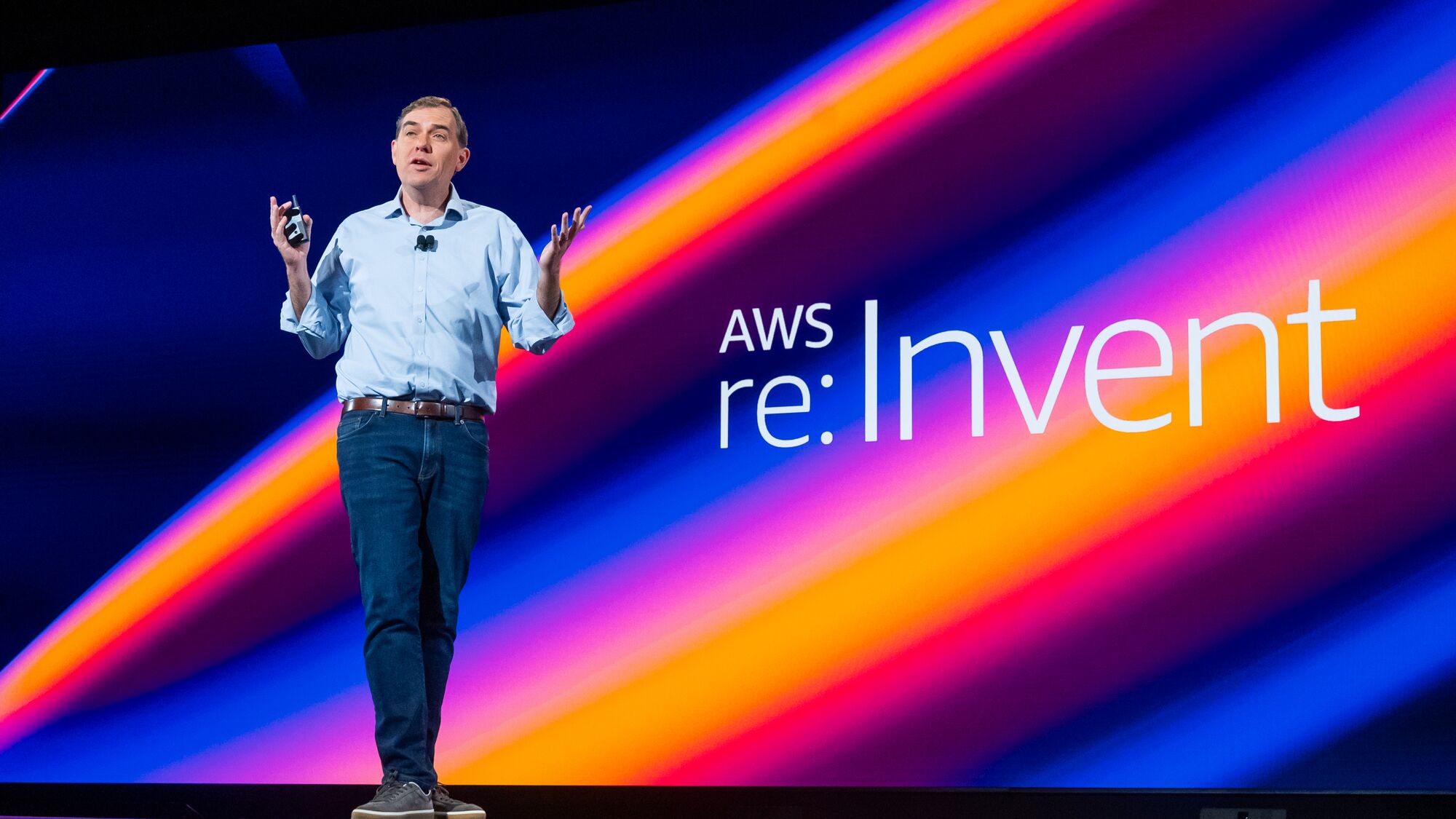
To facilitate customer choice and flexibility in this new era, AWS is developing and adopting groundbreaking tools for customers building AI agents and applications. Here are a few recent examples, including a wave of innovations announced in December 2025 at our annual conference, AWS re:Invent:
- Enabling customers to work with multiple cloud providers. AWS Interconnect - multicloud is a new capability that simplifies multicloud connectivity between AWS and other cloud providers. AWS Interconnect makes it even easier for customers to connect their systems on AWS with those on other cloud providers. To simplify global connectivity and support wider adoption, AWS Interconnect has published API specifications so that other cloud providers and partners can use the same standards and help improve them. This is the first purpose-built product of its kind; it is starting in preview with Google Cloud as the first launch partner and then with Microsoft Azure later in 2026.
- Adopting open communication standards for AI agents. We adopted open standards from Anthropic (called “MCP”), helping AI agents connect to applications, and Google (called “A2A,” or agent-to-agent), helping AI agents connect to each other. By supporting multiple standards, we ensure developers can choose the best standard for their agentic applications. This supports our customers’ ability to work with any cloud provider and makes it easier for different systems to work together—like common languages that let different computer systems communicate, even if built by other companies.
- Providing broad access to AI frameworks, models, and tools. We’ve designed our toolkits for building AI applications and AI agents to give customers options and flexibility. Our Amazon Bedrock tools for building AI applications empower AWS customers to choose from more than 100 different foundational AI models from dozens of different companies and easily connect their applications to these models. AWS customers can also use Amazon Bedrock AgentCore to build AI agents using any model or tool they choose (even those that don’t currently run on Amazon Bedrock) and then easily run those agents on a different cloud provider if they wish.
- Providing open-source tools that enable customers and competitors to develop AWS-compatible technologies. AWS provides software development kits (SDKs)—tools that speed development by providing ready-made building blocks instead of requiring developers to write from scratch—publicly available under open-source licenses, allowing anyone to write interoperable applications to work with AWS APIs. As an example, Amazon S3 (one of our core storage offerings) offers open APIs and SDKs for customers. This allows competitors and open-source projects to make their storage solutions S3 compatible and ensures customers can use familiar tools while retaining the choice of different IT providers. Strands Agents, AWS-developed open-source AI SDKs, further simplify the development process for AI agents by allowing them to easily communicate with each other in just a few lines of code.
Switching providers has never been easier
Changing IT providers has always required time, effort, and cost, but moving between cloud and other IT services has never been cheaper or easier than it is today. AWS has long had a policy allowing customers to move 100 gigabytes of data per month free to the internet—a benefit that covered over 90% of AWS customers. In 2024, we went a step further and waived data-transfer charges for all customers who want to move their data away from AWS.
Meanwhile, AI is bringing unprecedented changes and innovation to the sector—including how IT customers move their work around. AI is creating demand for new features that drive competition and reducing the complexity of managing IT solutions across different environments.
Customers can now point an AI tool at code written for one cloud provider's services and have it rewrite that code for another's—quickly and efficiently. For example, customers can use AI tools like Kiro (an AWS AI-powered development assistant), AWS Transform, Claude, ChatGPT, or other AI-related services to help rewrite their software to work with different providers. If an IT provider can't offer a specific solution, agentic AI will allow customers to more easily move all or some of their work to another location by automating the process.
Against these transformative AI changes, AWS Interconnect also increases customer flexibility by creating high-speed connections between AWS and other cloud providers. These market-driven developments demonstrate the sector’s remarkable capacity for innovation in addressing customer demand.
Our commitment to customers
Moving forward, AWS will continue to deliver cloud solutions that work for businesses and other organizations worldwide. We welcome thoughtful dialogue with stakeholders globally about how to best serve customers in this rapidly evolving sector. Our commitment remains unchanged: empowering customer choice, fostering flexibility, and competing vigorously to earn customer trust every single day.
Trending news and stories
- Amazon introduces 2 new AI products from Bee: Bee Frontier and Bee Eclipse
- Amazon's Holiday Kids Gift Book is back with 600+ toys, games, and gifts for every age
- Introducing all-new Amazon Alexa Tablets—powerful tablets with Alexa+ built in
- Amazon’s Holiday Beauty Event is back for its sixth year—score up to 30% off across beauty categories