
Key takeaways
- Amazon invested more than $340 billion in the U.S. in 2025, supporting infrastructure and compensation to employees and contributing over $1.8 trillion to the economy since 2010.
- A recent study shows that five years after Amazon opens a large fulfillment center, on average 6,000 more small businesses emerge and 10,000 workers join the local workforce.
- Amazon's investments span all 50 states, reflecting a nationwide commitment across communities of all sizes.
- Amazon uses its scale to make a positive impact through logistics, technology, and local partnerships.
Here’s how Amazon's investments are making an impact:
Page overview
We’ve contributed over $1.8 trillion to the U.S. economy since 2010
Amazon has invested more than $1.8 trillion in the U.S. economy since 2010, helping to fuel economic growth across the country. We have a dedicated satellite processing facility at Space Florida’s Launch and Landing Facility in Cape Canaveral, while Kentucky is home to our flagship Amazon Air Hub that connects us to customers across the country. Our investments look different in every state, but they share a common thread: creating jobs, supporting local economies, and building infrastructure that benefits communities for years to come.
We support 2 million American jobs in the form of 1 million direct jobs—our full- and part-time employees—and an additional 1 million indirect jobs in industries such as construction, logistics, and suppliers whom we rely on every day. Independent sellers, who now account for more than 60% of all items sold in Amazon’s store, provide more than $100 billion in wages to U.S. employees in 2024. These thriving businesses are creating meaningful employment opportunities, with independent sellers now employing over 2 million people across the U.S. to support their Amazon-related operations—an 11% year-over-year increase.
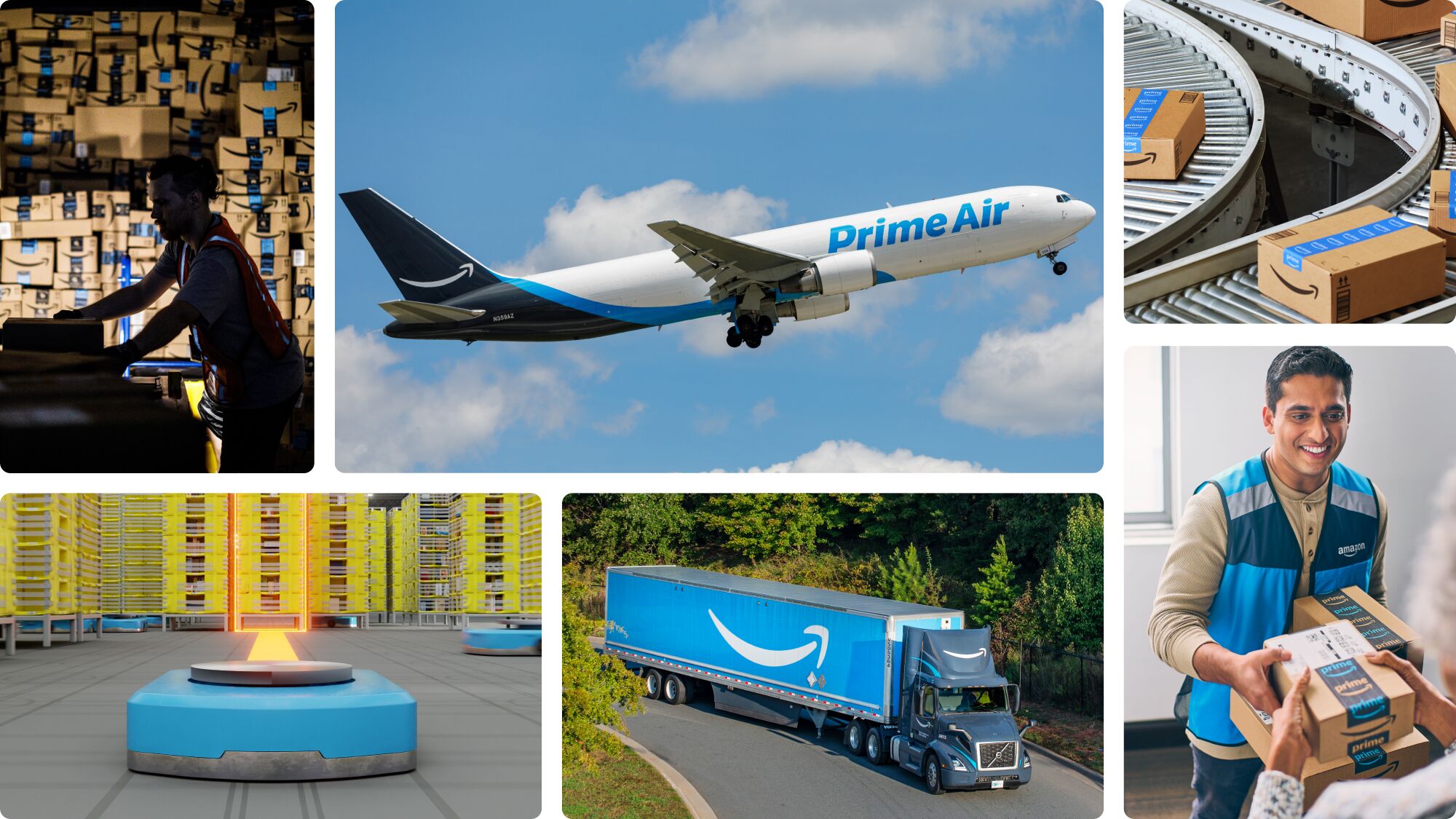
Amazon remains a leading job creator in the U.S., adding more than 800,000 jobs over the last decade, with two out of five operations jobs created in towns with populations less than 50,000. Since 2010, Amazon has invested more than $450 billion in over 1,000 small towns and rural communities across the U.S.
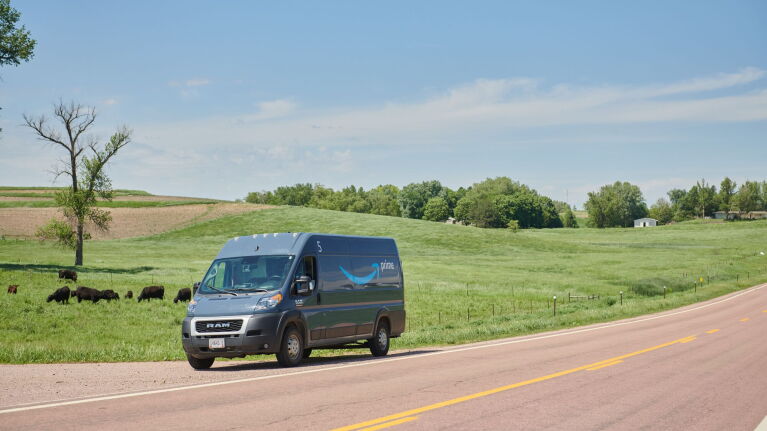
To ensure our customers can benefit from Prime's unlimited fast and free delivery services, regardless of their location, we've invested $4 billion in rural America to grow our rural delivery network. By the end of 2026, we'll grow our footprint to over 200 delivery stations. This expansion has already doubled the average monthly customers in rural areas receiving same-day delivery year-over-year. We estimate this effort will create over 100,000 new jobs and driver opportunities, through a wide range of full-time, part-time, and flexible positions in our buildings and on the roads.
Texas has 13 delivery stations in communities like Abilene, Lubbock, Tyler, and Wichita Falls, while states like Delaware, Maine, Nebraska, Nevada, and Tennessee each have a station reaching communities that might otherwise face long waits for deliveries.
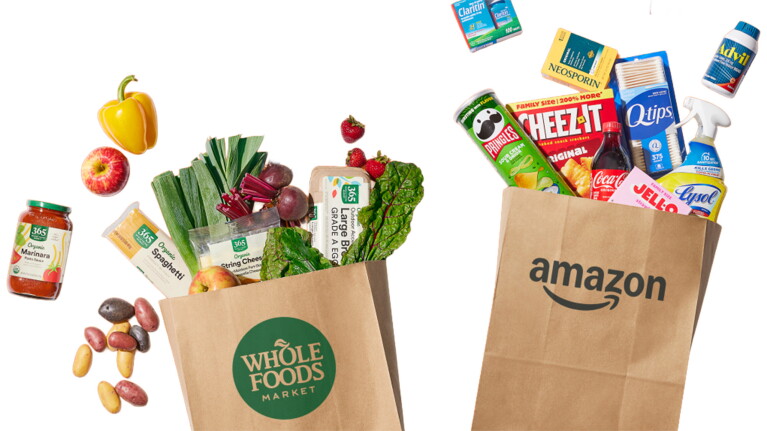
More than 150 million Americans now rely on Amazon for fresh food and everyday necessities through online shopping and Whole Foods. Everyday Essentials—including groceries and household staples—grew nearly twice as fast as all other categories in 2025, now representing one out of every three units sold in our store. This dramatic growth reflects changing consumer needs and demonstrates how our grocery expansion is creating economic opportunity across the entire supply chain, from food suppliers and local producers to delivery drivers who serve American families every day.
Our infrastructure investments create far-reaching impact in local communities. A recent study from Oxford Economics shows that within five years of Amazon opening a large fulfillment center in a county, on average, 6,000 more small businesses emerge, 12,000 fewer people are unemployed, and 10,000 new workers join the workforce. Local paychecks grow, and about 6,000 fewer people rely on Medicaid. These improvements increase economic vitality and affordability for working families while strengthening economic resilience in communities across America.
Georgia and California offer concrete examples of these benefits. Oxford Economics found that, following Amazon’s investments, unemployment in Fulton County, Georgia dropped by 1.3 percentage points, while the proportion of the population in San Bernardino County, California in the bottom 5% income bracket decreased by 0.5%.
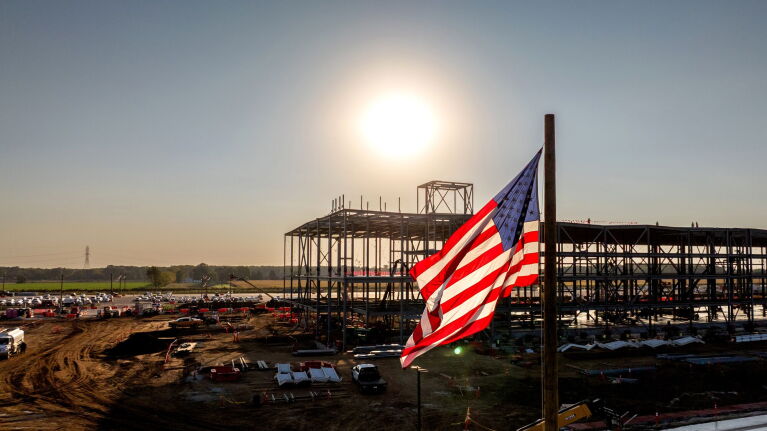
The Progressive Policy Institute ranked Amazon its No. 1 Investment Hero for the sixth straight year in 2025, noting how our investments are helping drive an AI-enabled economy. From 2011 to 2024, Amazon invested more than $184 billion in cloud computing infrastructure, contributing $65 billion to the U.S. GDP and supporting an annual average of 45,800 full-time equivalent jobs. We’ve had long-standing data center infrastructure investments in California, Ohio, Oregon, and Virginia. In 2025, we announced new investments in data center campuses in Georgia ($11 billion), North Carolina ($10 billion), and Pennsylvania ($20 billion), and announced additional investments in Ohio ($1 billion), Mississippi ($3 billion), and Indiana ($15 billion).
These investments help businesses of all sizes—from startups to major enterprises—access cutting-edge AI tools and cloud capabilities that were once available only to the largest technology companies. We’re seeing rapid advancement in AI innovation, and we have invested heavily in building custom chips that deliver performance and cost efficiency. Our purpose-built Trainium chips cut training and inference costs by up to 50% while delivering industry-leading performance.

With more than 1 million employees across the country, Amazon is a leading job creator in the U.S. In 2025, we invested over $1 billion to raise pay and lower the cost of healthcare for our front-line employees. Our average pay has increased to more than $23 per hour—more than 3 times the federal minimum wage—with average total compensation now at more than $30+ an hour when you include the value of our industry-leading benefits package. Beginning this year, employees using the basic plan only pay $5 per week in premiums and $5 for copays, a reduction of 34% in weekly contributions and 87% in copays for primary care, mental health, and most non-specialist visits.
We also want to make it easy for employees to develop their skills to grow their careers. Amazon’s flagship education program, Career Choice, helps hourly employees develop new skills for in-demand fields. The program prepays tuition at over 500 U.S. education partners across the country, ranging from community colleges to universities. To date, it has helped more than 300,000 employees worldwide pursue new career paths and has expanded to all salaried U.S. employees.
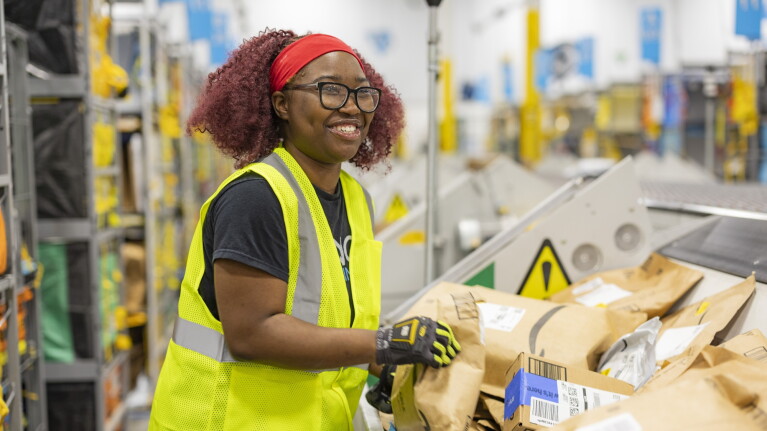
We continue to improve Amazon’s worker safety performance, with the ambitious goal of becoming the benchmark of safety excellence across all industries in which we operate. Since 2019, we’ve invested more than $2.5 billion in our safety efforts, including including innovations, ergonomic improvements, and training programs. Across our operations network, we are retrofitting our sites with adjustable-height workstations and carts, increasing the use of robotics to handle repetitive tasks and heavy lifting, and implementing assistive systems such as Robin and Cardinal to help sort, lift, and place packages.
One of the keys to continuously improving safety year after year is our Prevention through Design approach, which applies engineering controls to reduce or eliminate potential risks before they enter the workplace. An anchor of our safety culture is our Safe to Go philosophy, which guides how our employees operate each day. Safe to Go encourages everyone across our operations to be proactive, and it empowers employees and leaders alike to speak up, slow down, or stop work if something doesn’t feel right.
Amazon is proud to invest in the communities we call home. Amazon’s housing fund is a $3.6 billion commitment to preserve and create more than 35,000 affordable homes—and we've invested $2.4 billion to date, supporting more than 50,800 residents earning moderate to low incomes in our hometown communities. Since 2020, we’ve delivered more than 60 million meals directly to more than 200,000 U.S. households for free. We’ve also helped more than 1.1 million students receive more than 17 million hours of STEM education and computer science through programs like Amazon Future Engineer, which has provided $60 million in scholarships to more than 1,550 students across the U.S.
Last year in Illinois we donated over $12 million to more than 90 local community organizations, while over 3,000 employees in New York engaged in volunteering. In North Carolina we supported over 600,000 computer science learning hours, and in Ohio we reached over 30,000 students and over 1,000 teachers through education programs.
When disasters strike, we apply the same strengths in technology and logistics that get packages to doorsteps every day providing critical aid where it’s needed, fast—including following floods in Washington and Texas, wildfires in California, and a typhoon in Alaska. Since 2017, we’ve donated and delivered more than 30 million relief supplies to communities impacted by more than 200 hurricanes, wildfires, floods, and other disasters.
Trending news and stories
- The race our nation can’t afford to lose, plus a new commitment from us and a fresh set of community investments
- Amazon introduces a completely redesigned Kindle family
- Amazon's Holiday Kids Gift Book is back with 600+ toys, games, and gifts for every age
- Ring introduces four new 4K cameras and a pan-tilt indoor cam