
Key takeaways
- Amazon is one of the top corporate purchasers of carbon-free energy according to BloombergNEF's latest report.
- Amazon's carbon-free energy investments include nuclear, solar, wind, and battery storage.
- These projects add new energy to the grid, stabilize electricity costs, and create thousands of local jobs.
In today’s world, the products and services we need and enjoy require increasing amounts of power from our grids. Amazon is a leader in bringing new carbon-free energy forward to meet this demand while redefining what responsible growth looks like. Since 2020, Amazon has set the industry standard as the world's largest corporate purchaser of renewable energy, like wind and solar energy, as recognized by BloombergNEF. For 2025, BloombergNEF has again recognized Amazon as one of the world's leading corporate purchasers of carbon-free energy, in addition to building the largest carbon-free energy portfolio of any corporation globally.
When companies like Amazon invest in new carbon-free energy projects, we’re not just helping to power our own operations; we're adding brand-new sources of carbon-free energy to the power grid that everyone uses—the same grid that powers homes, hospitals, and schools.
These investments can also help spur the modernization of the energy infrastructure that communities rely on every day, which helps keep electricity costs stable and affordable for families and businesses.
For example, as part of Amazon’s data center investment in Mississippi, we collaborated with Entergy, a local utility, to enable 650 megawatts of new renewable energy that will go onto the grid and serve the equivalent of more than 150,000 homes once operational. Additionally, Entergy is using investments from Amazon and other large customers to fund its $300 million "Superpower Mississippi" grid reliability campaign at no cost to residential customers—with the aim of reducing the overall frequency and duration of outages for the average customer by approximately 50%.
So far, Amazon has invested billions of dollars in more than 40 gigawatts of total carbon-free energy capacity—enough to power the equivalent of more than 12.1 million homes in the United States.
What happens when Amazon invests in carbon-free energy?
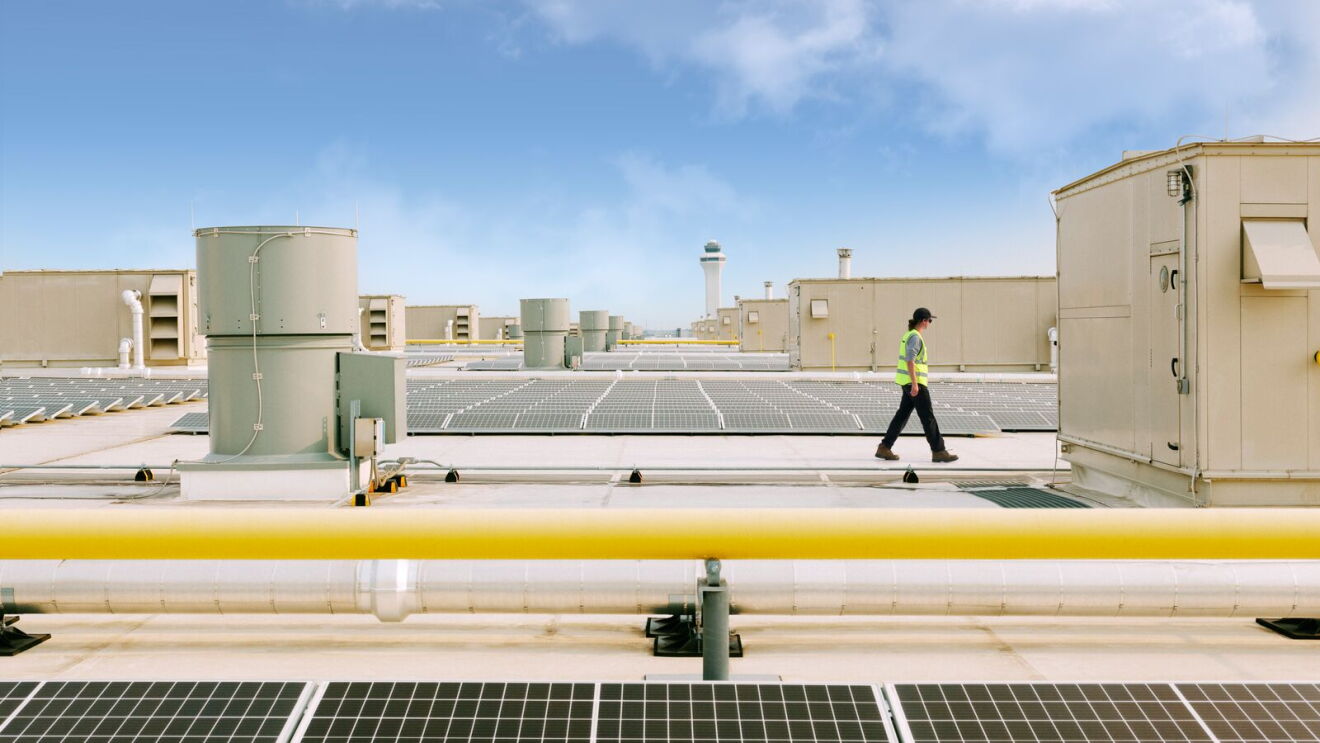
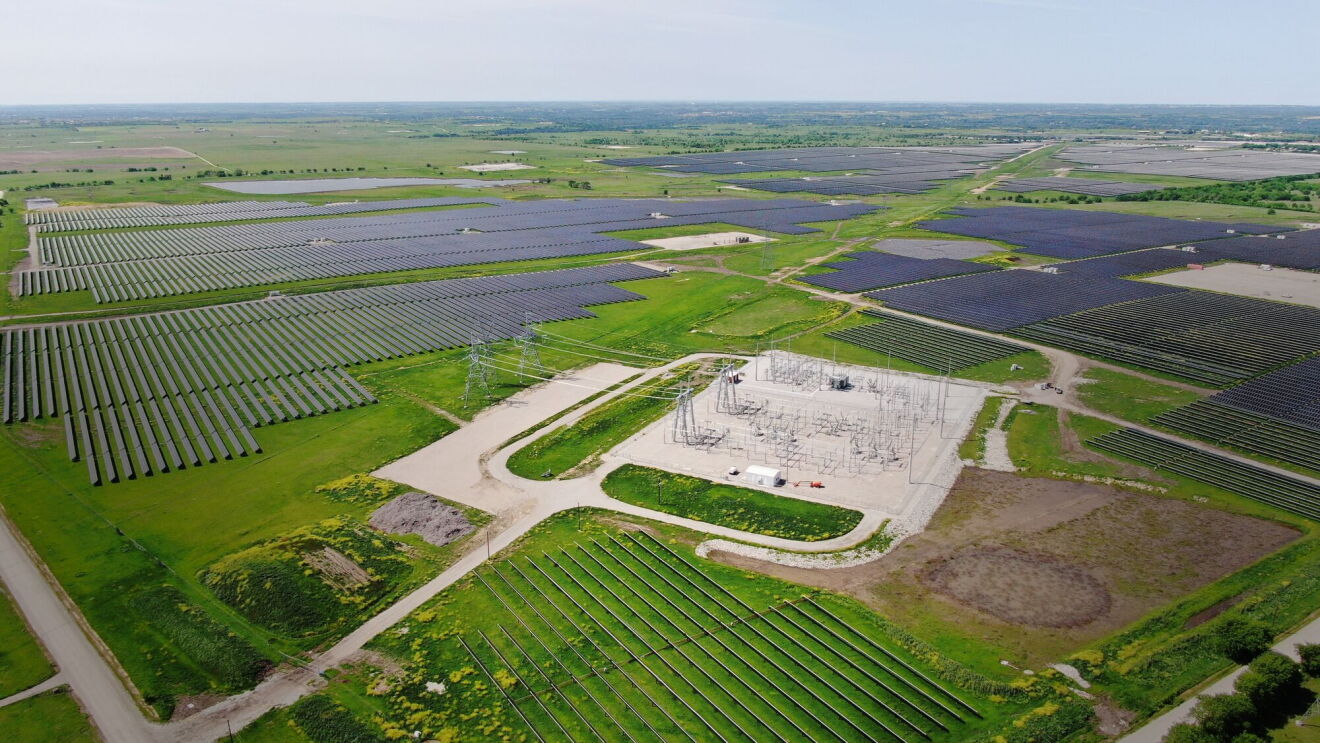
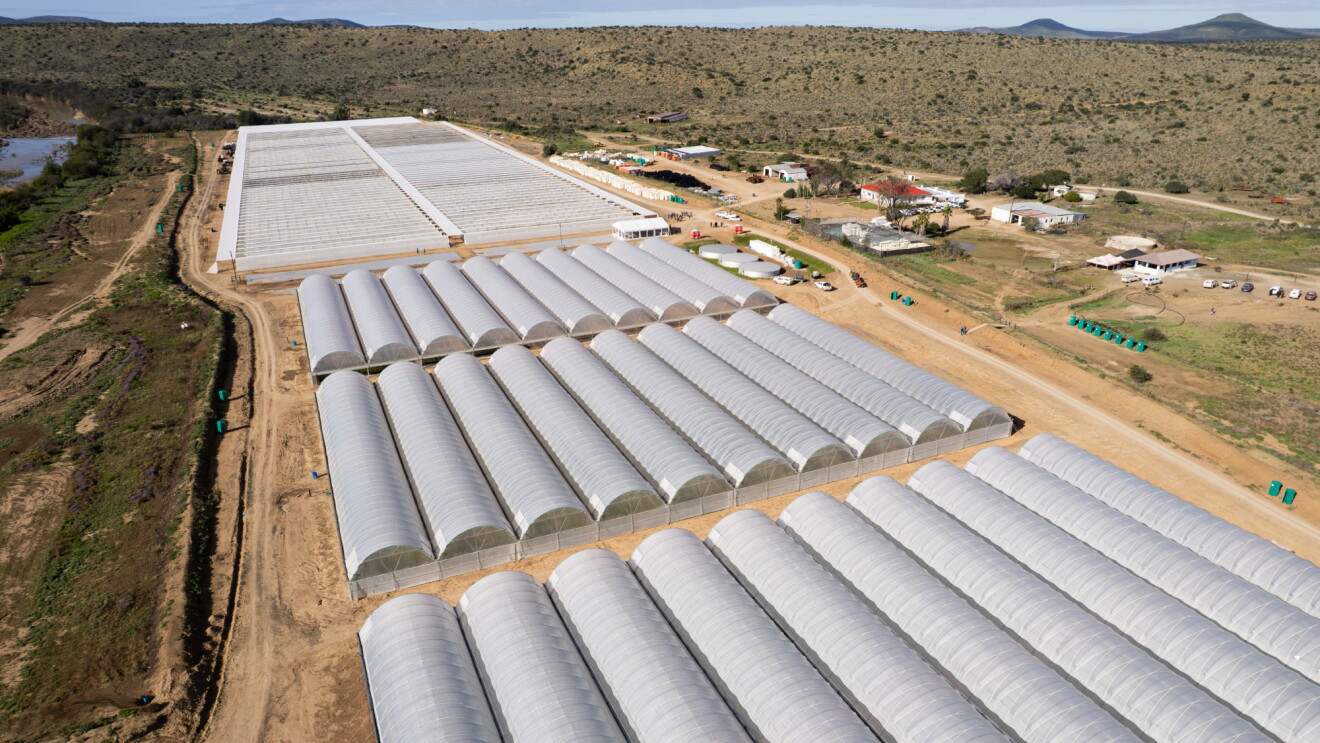
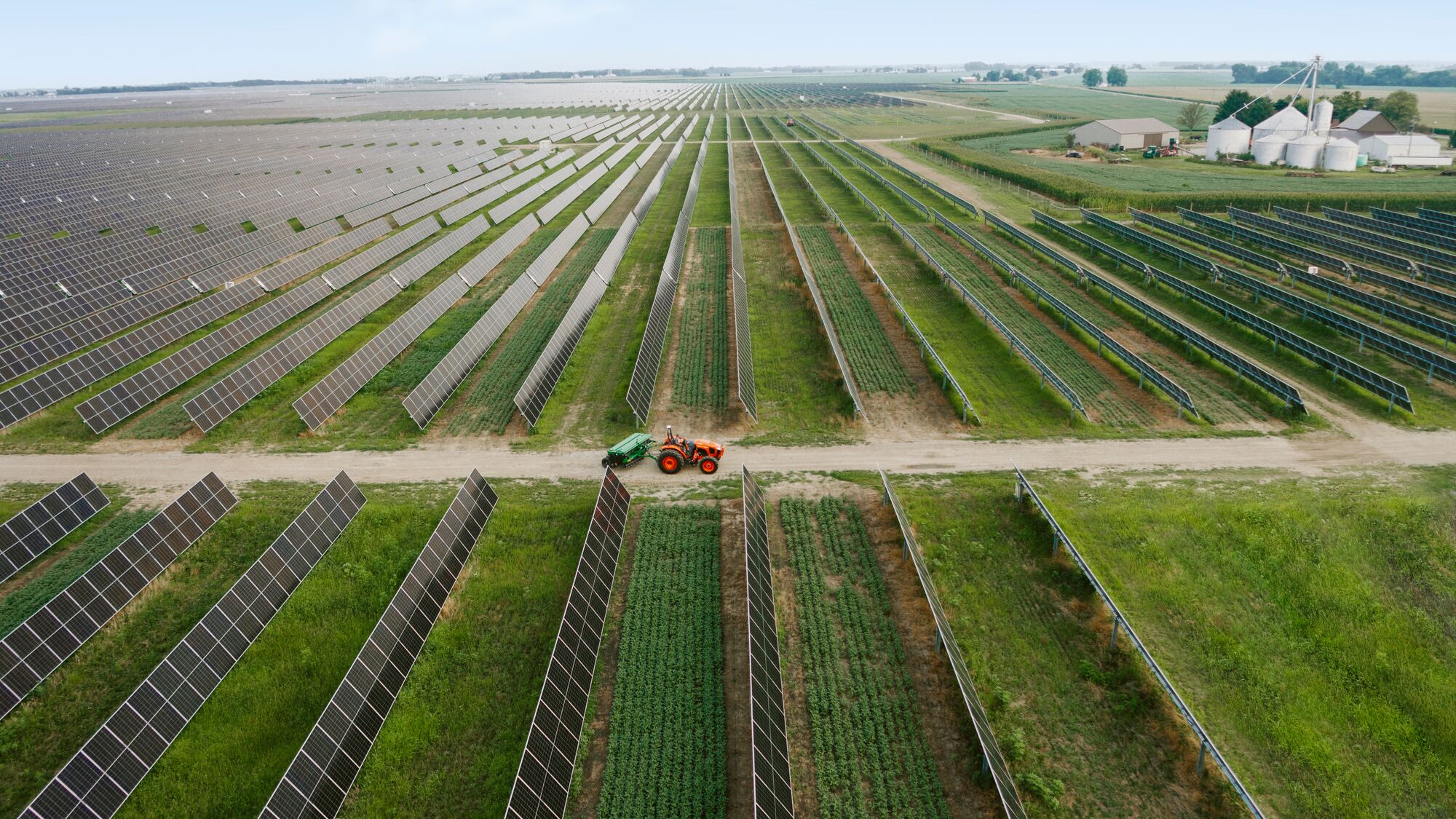
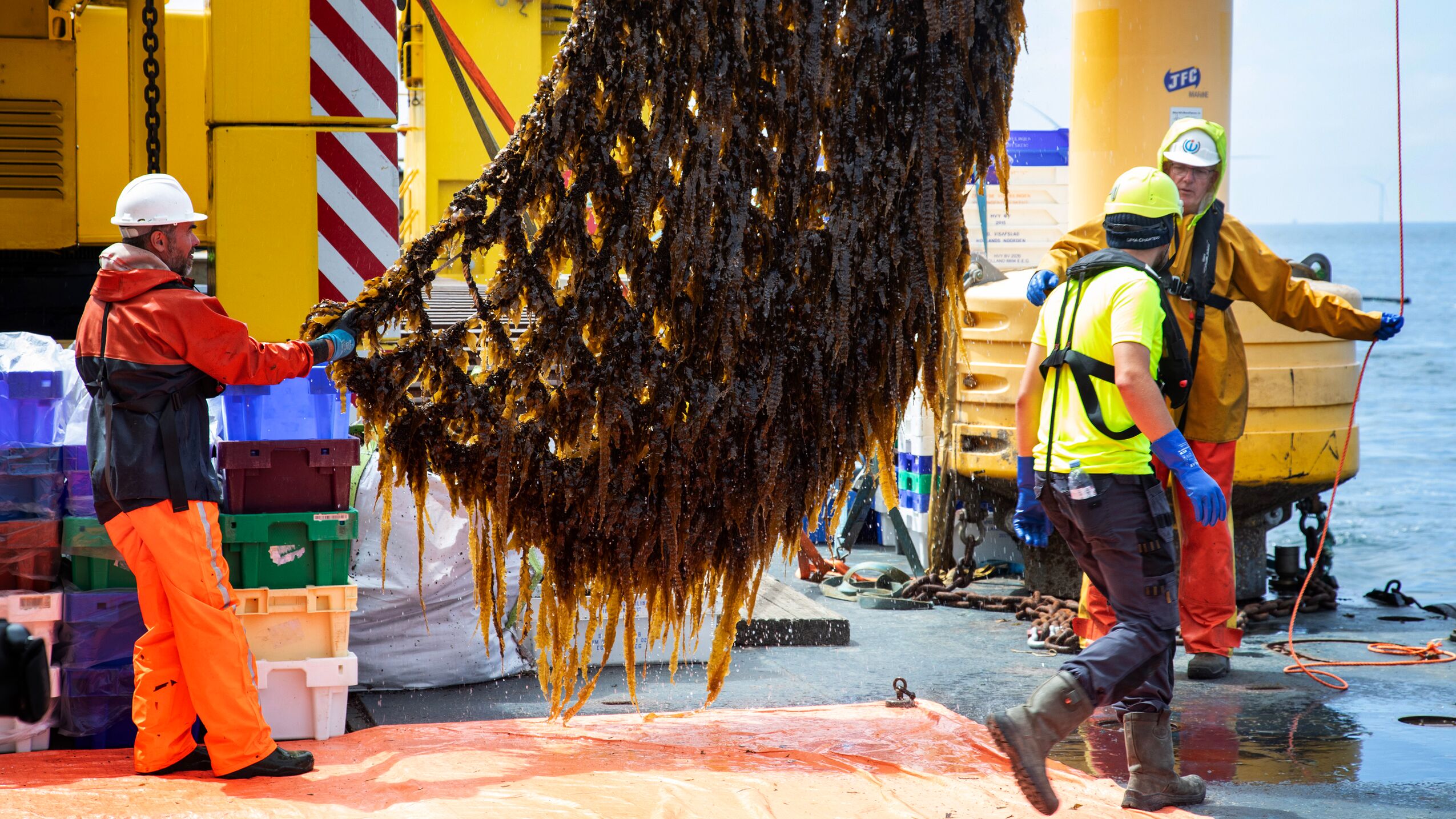
As one of the world’s largest purchasers of carbon-free energy, Amazon’s portfolio spans more than 700 projects across 28 countries. This includes four nuclear power agreements, 11 utility-scale battery storage projects, more than 300 utility-scale solar and wind farms, over 300 onsite solar projects, and six offshore wind farms in Europe.
Beyond just adding new carbon-free energy to the grid, these projects also create thousands of construction jobs and hundreds of permanent positions in local areas, help to improve grid reliability and infrastructure, and power the AI innovation and emerging technologies essential to America's technological leadership.
These projects are also contributing to building momentum across the corporate sector. As more companies invest in carbon-free energy and grid infrastructure, we're seeing the collective impact—creating economies of scale to bring the cost of new technologies down, driving innovation, and strengthening the energy ecosystem for everyone.
“Corporate renewable energy procurement has become one of the largest drivers of new carbon-free energy projects in the United States,” said Ray Long, president and chief executive officer, ACORE, a nonpartisan nonprofit organization that operates at the intersection of affordability, reliability, and clean energy deployment. “Companies like Amazon that commit to long-term power purchase agreements provide the financial certainty that enables developers to build new renewable generation at scale—helping to meet America's growing electricity demands while establishing economies of scale that benefit all communities by adding low-cost carbon-free energy to the grid.”

Advancing next-generation nuclear energy
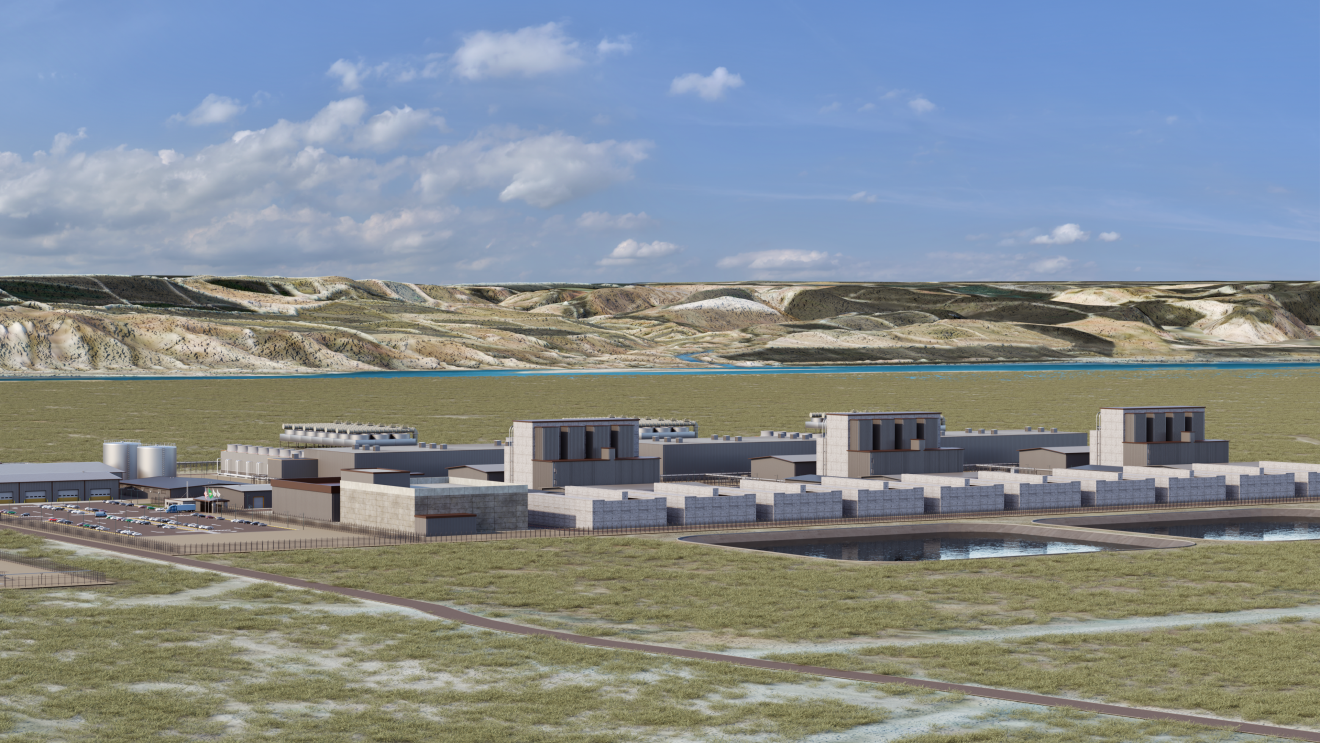 Rendering of the Cascade Advanced Energy Facility, which will have a significantly smaller footprint than traditional nuclear plants.
Nuclear energy provides steady, reliable carbon-free power that can run 24/7, which makes it essential for meeting growing electricity demands while reducing emissions. Amazon is helping to advance next-generation nuclear energy by investing billions of dollars in the development of small modular reactors (SMRs).
In Washington state, our first agreement with Energy Northwest will enable the development of four advanced SMRs with an initial capacity of 320 megawatts, expandable to 960 megawatts—enough to power the equivalent of more than 770,000 U.S. homes—and expected to come online in the early 2030s. Amazon is investing $500 million in X-Energy to help advance more than 5 gigawatts of new nuclear capacity in the U.S. by 2039—enough to power roughly 4 million homes. Additionally, these SMR projects are expected to create over 1,000 construction jobs and more than 100 permanent positions in local communities.
“Nuclear energy is the nation’s largest source of clean electricity, providing reliable baseload power essential to meeting our energy goals,” said Maria Korsnick, president and chief executive officer of the Nuclear Energy Institute. “As electricity demand continues to grow due to AI and data centers, corporate investments in nuclear technologies like small modular reactors are critical to fueling innovation while reducing emissions.
“Amazon's leadership in this space is helping to accelerate the deployment of next-generation nuclear energy that will cleanly and reliably power the world’s digital economy for decades to come.”
Strengthening grid reliability through intelligent energy storage
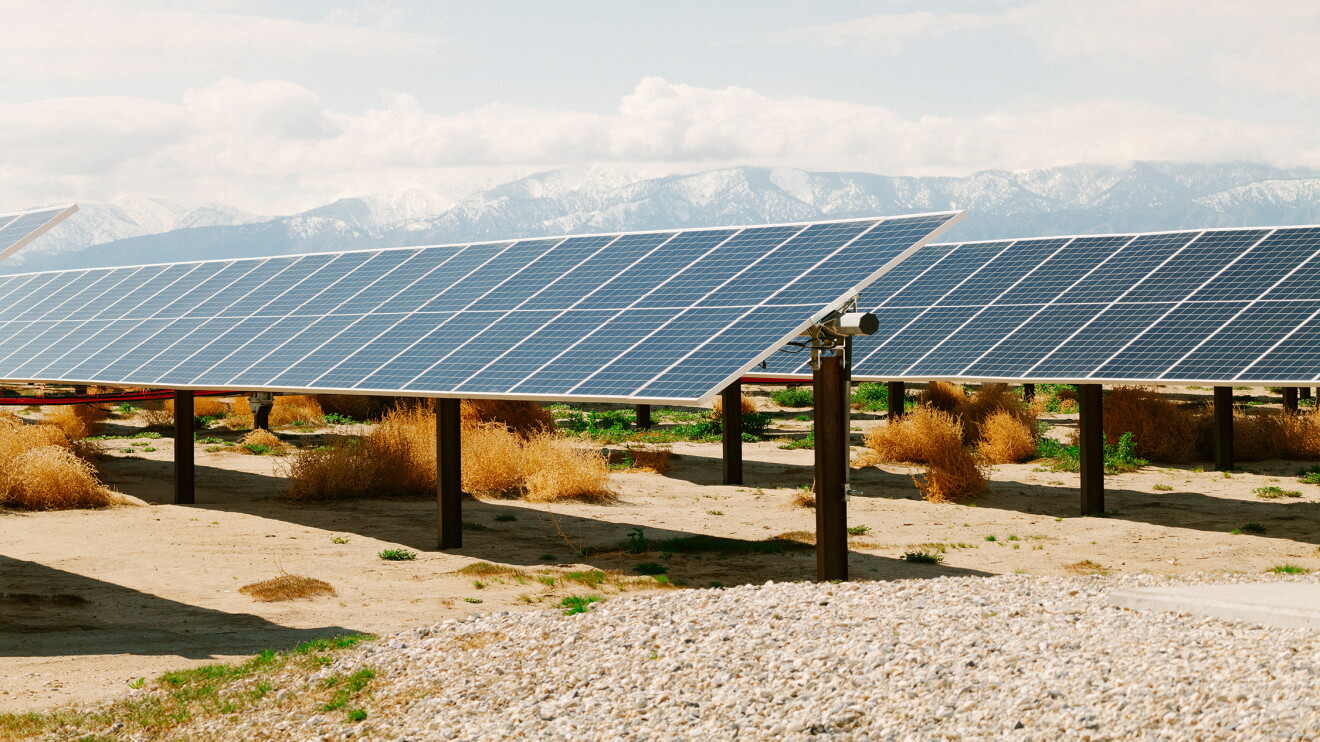
 Assembled in neat rows across a westward stretch of the Mojave Desert in Southern California, solar panels at the Baldy Mesa solar farm are turning ample sunlight into carbon-free energy and sending it into the grid.
One of the biggest challenges with solar and wind energy is that they only generate power when the sun is shining or the wind is blowing. Battery storage solves this problem by storing carbon-free energy when it's abundant and releasing it when it's needed most, like at night or during peak demand periods.
Amazon has invested in 11 utility-scale battery storage projects to date. At our Baldy Mesa project in California, we're using AI-powered machine learning software that analyzes up to 33 billion data points annually to optimize when to store and release energy based on real-time grid conditions—helping stabilize the grid during extreme weather events, such as heat waves, when energy demand spikes. This helps ensure carbon-free energy is available throughout more hours of the day and makes the grid more reliable for everyone.
Leading the industry in resource efficiency
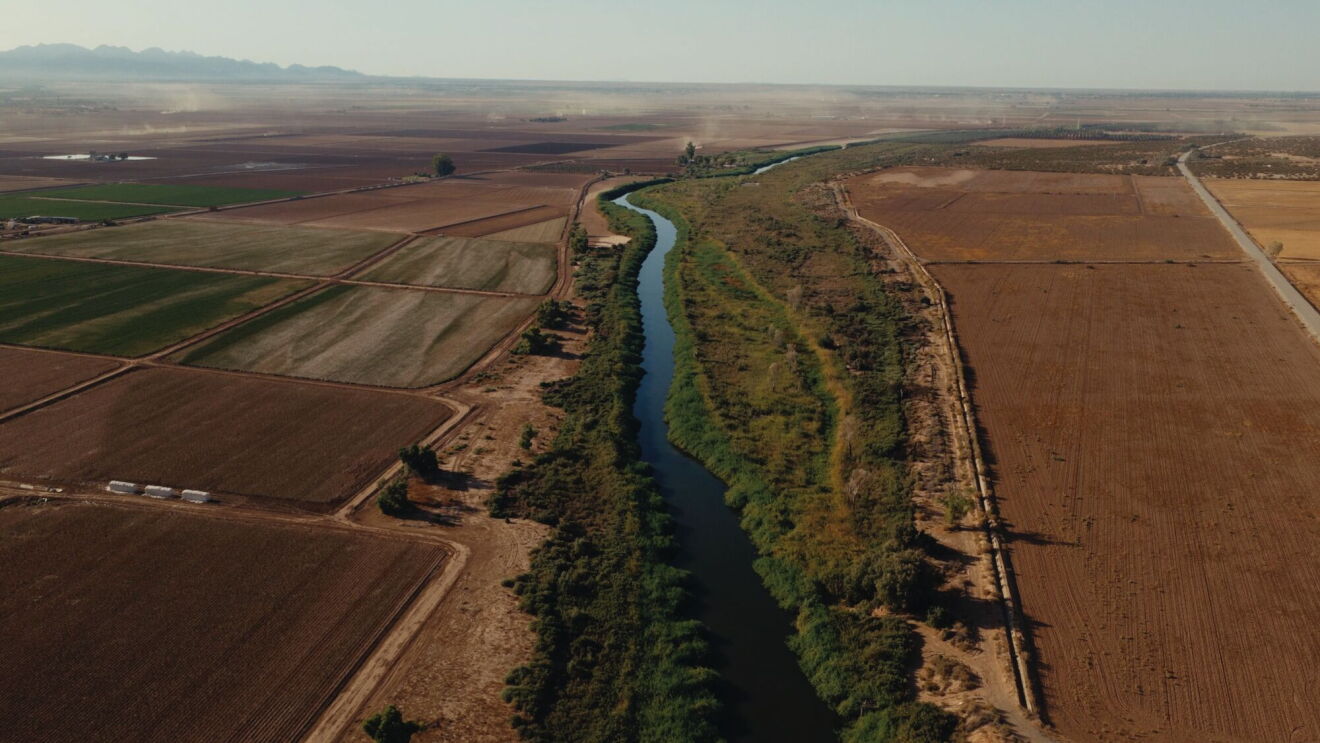
Amazon is committed to preserving water resources across operations. For our data centers, we start by precisely measuring what we need through our Water Usage Effectiveness (WUE) metric, which tracks how much water is required to support computing operations. From there, we work to continuously improve efficiency with a goal of becoming water positive or our data center operations by 2030—meaning we'll return more water to communities and the environment than our direct operations use.
Since 2021, Amazon has achieved a 40% improvement in water use efficiency at data centers, and many of Amazon's facilities require water-based cooling less than 5% of the year. We strive to improve each year, and overall, Amazon's data centers achieved a global WUE of 0.15 L/kWh in 2024—a 17% improvement from 2023.
We’re also constantly working to increase the power efficiency of our data centers as this helps us to use less energy overall. Amazon measures data center energy efficiency through Power Usage Effectiveness (PUE). The lower this number, the more efficient the facility—meaning less energy wasted to deliver the same computing power to customers. Amazon's data centers achieved a global PUE of 1.15 in 2024—significantly outperforming both the public cloud computing industry average and on-premises enterprise data centers.

Reducing energy waste across every part of our operations
Amazon is committed to maximizing energy efficiency across our global operations, including our data center network, electric delivery fleets, and hundreds of fulfillment centers.
Our data centers use advanced cooling systems and AI-driven optimization to minimize energy waste. Amazon's electric delivery fleet is one of the largest globally, with thousands of custom electric vans delivering packages with zero tailpipe emissions. We've redesigned our fulfillment centers to be incredibly efficient, using robotics and AI to minimize wasted energy.
How Amazon is powering the future
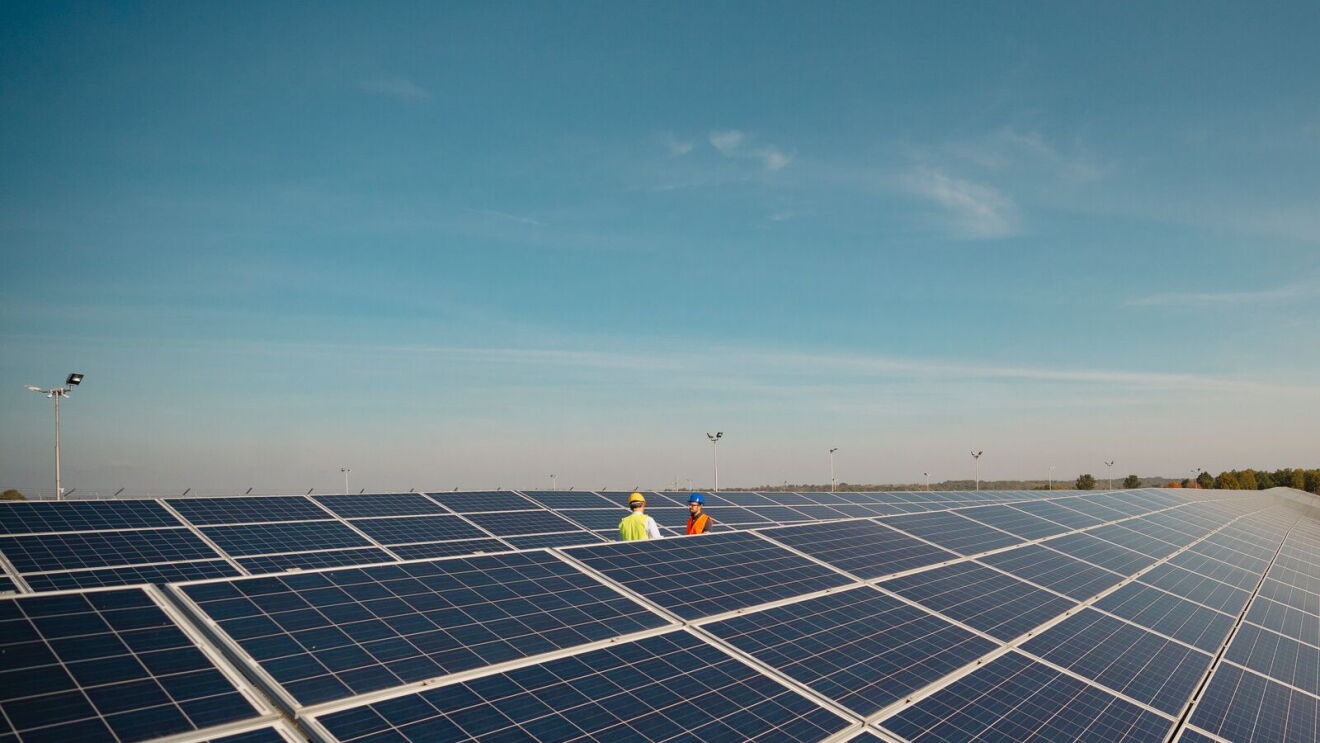
The world needs more energy, and it needs that energy to be carbon-free, reliable, and affordable for everyone.
Amazon's investments in carbon-free energy represent a different approach to corporate responsibility: one where business growth and community benefit are not competing priorities, but complementary goals. When we invest billions in solar farms, wind projects, nuclear facilities, and battery storage, we're not just securing power for our operations—we're helping build the energy infrastructure that will power homes, schools, hospitals, and businesses.
This work reflects our commitment to responsible growth: over 700 projects creating thousands of jobs, advancing new technologies like small modular reactors, and adding carbon-free energy to grids that serve entire communities. This work is complex and challenging, but our teams working behind the scenes—from engineers optimizing grid connections to project managers coordinating with local communities—understand what's at stake: building energy infrastructure that will serve communities for generations to come.
As we work toward our Climate Pledge goal to reach net-zero carbon by 2040, we’ll continue to lead by example and show that meeting the energy demands of today and building a cleaner, more affordable energy future for tomorrow aren't competing priorities—they're the same mission.